Using distributed ledger technology for CBDCs could improve security and efficiency: French bank
Distributed ledger technology could also enhance cross-border transactions for CBDCs
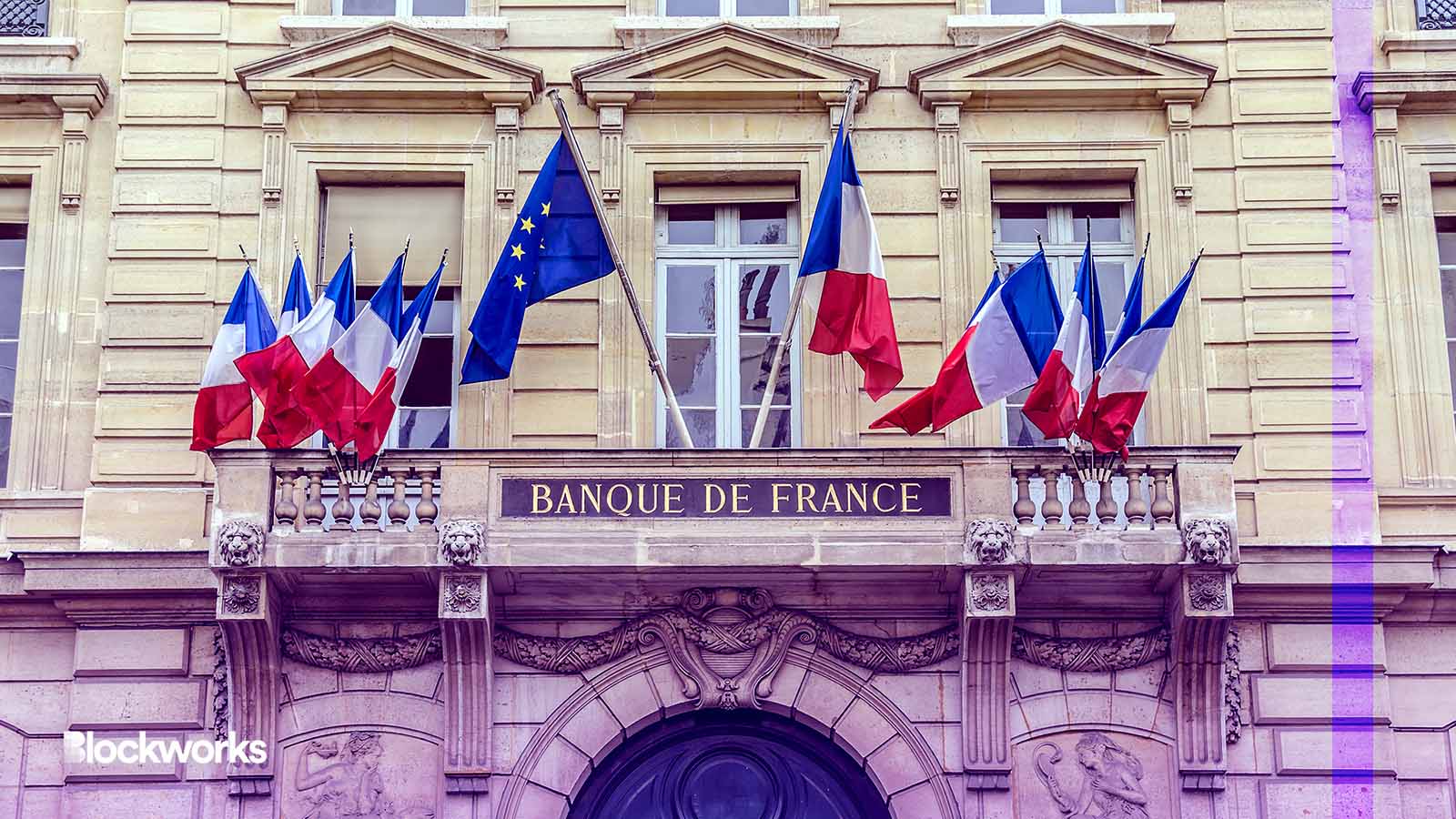
Kiev.Victor/Shutterstock modified by Blockworks
In a new report on central bank digital currencies (CBDCs), the French central bank examined how to integrate a CBDC from technological and policy perspectives.
To roll out “responsible adoption,” the bank wants to seek energy-efficient solutions to the energy consumed by the technology needed to operate a CBDC.
The Banque de France also found that issuing a wholesale CBDC as a complement to a retail CBDC would allow for wholesale CBDCs to be a “safe settlement asset solution” on distributed ledger technology (DLT).
“The G20 has also identified the issuance of a CBDC — both retail and wholesale CBDCs — and of multi-wCBDC arrangements as a way of facilitating cross-border payments,” the study found.
This is not the first time the Banque de France has focused on how DLTs can be used for CBDCs. The report notes that, “DLT has attracted interest from public authorities and the financial industry as it could pave the way for better integration of the various market and post-trade processes.”
The transparency that technology such as DLT brings has been both praised and criticized. While the easy access to data and tracking of payments could provide more oversight and possibly “contribute to enhanced financial stability,” there are concerns about the need for confidentiality or privacy.
Banque de France proposes several measures to ensure confidentiality while preserving the underlying technology. These solutions include access control, identity mixers, settlement engines, and confidential tokens are just a few of the suggestions from the French bank.
Using an identity mixer would allow “the ability for a single identity to send multiple transactions without revealing that the transactions were sent by the same identity.” While access control ensures that users can only access certain data.
A decentralized settlement engine would be “capable of settling all kinds of operations and upon which a distributed application implementing business workflows has been created.”
However, the bonus of having such clear transaction records means that law enforcement can use DLT to “improve their capacity for market supervision and oversight. This increased supervisory capability can contribute to overall financial stability.”
“We have demonstrated that our DLT solution is flexible and can be interoperated with TARGET solutions and other DLT solutions. We are also keen to keep abreast of developments in the field of cross-border payment and explore new concepts” said Emmanuelle Assouan, Banque de France’s director general of financial stability and operations.
The European Union has been testing and prototyping what a digital euro would look like and will decide on whether it’ll continue to test such a token this fall.
Get the news in your inbox. Explore Blockworks newsletters:
- The Breakdown: Decoding crypto and the markets. Daily.
- 0xResearch: Alpha in your inbox. Think like an analyst.
