Press start to disrupt: Dappicom’s bid to reinvent Web3 gaming
Dappicom is the world’s first and only attempt at classic Nintendo emulation in ZK, according to the project’s core contributor
robtek/Shutterstock, modified by Blockworks
Web3 gaming, a sector frequently criticized for being overrun by “whales” focused more on quick profits than sustainable growth, often comes under fire for its lackluster game design, subpar graphics, and questionable user experiences.
Dappicom, a non-profit open-source project, is hoping to appeal to the retro gaming community, beyond crypto natives, by allowing players to prove in-game milestones without necessarily revealing how they did so.
Unique to the project is its ambition to enable users to “prove speedruns with hidden strategies,” an untapped area highlighted by controversial runs such as those seen in Minecraft by players like the gamer known as Dream.
In light of the cumbersome blockchain gaming experiences of yesteryear, Dappicom is promising a more user-friendly interface, mitigating the often steep learning curve associated with Web3 platforms.
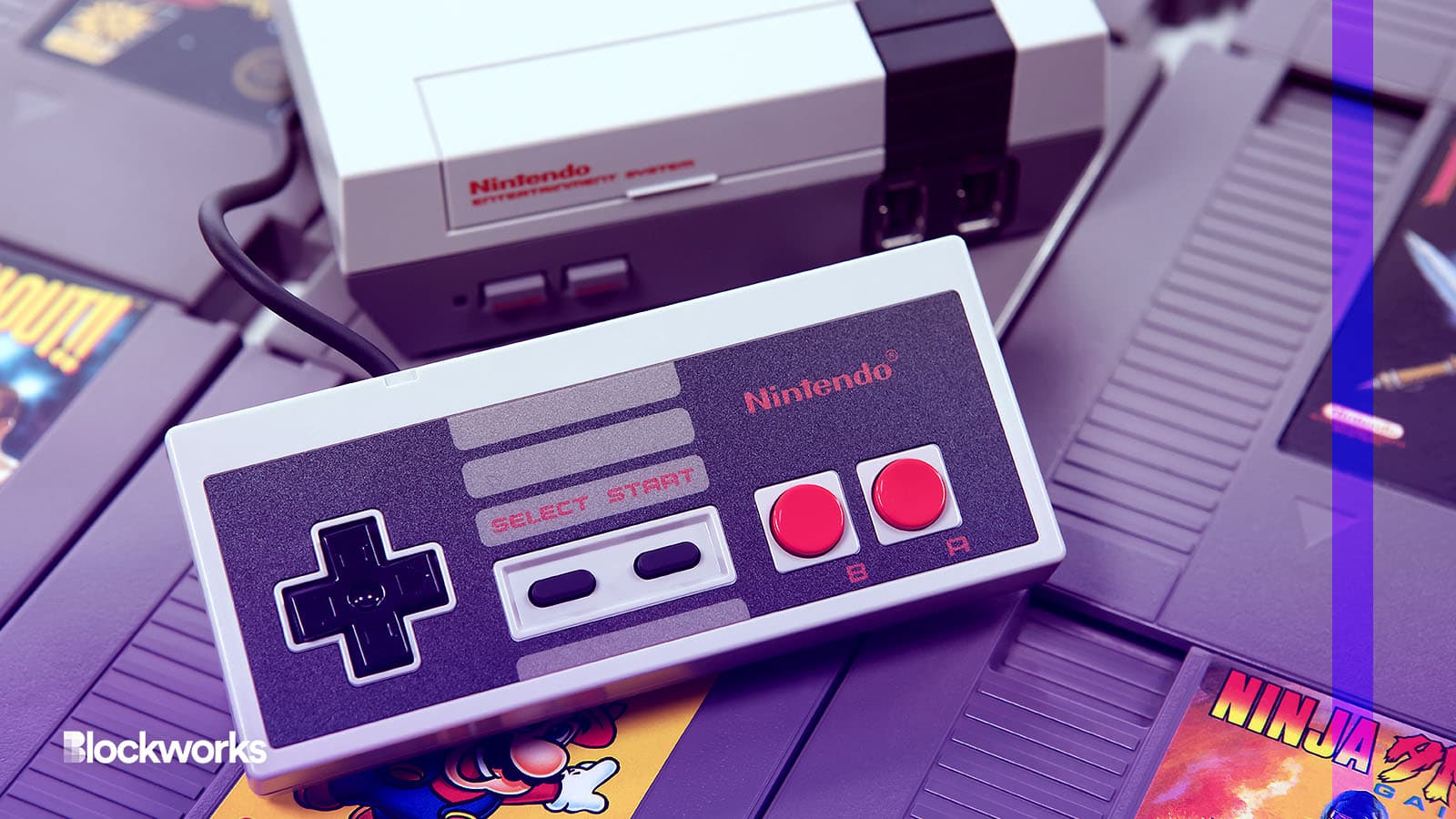
Using the Noir zero-knowledge programming language, Dappicom is described as a “verifiable” Nintendo Entertainment System (NES) emulator in the “pre-alpha” phase, according to the project’s GitHub repository.
Noir, funded by the privacy-centric Ethereum layer-2 solution Aztec, is lauded as a “fully open-source” domain-specific language engineered for “private, succinctly provable programs.”
The project’s GitHub page further elaborates on the implications of this technology, stating: “Using zero knowledge to prove off-chain compute effectively brings the result of that compute onto the blockchain when it is verified.”
Such advancements could dramatically alter NES gameplay by making it “composable, permissionless, and trustless.” At least according to the project’s lofty ambitions.
Dappicom functions as a Zero-Knowledge Virtual Machine (ZKVM) and is compatible with the MOS 6502 instruction set, a low-cost 8-bit microprocessor introduced in 1975 that became widely popular in numerous computing platforms, including NES. The ZKVM also incorporates elements of Rust programming.
As users engage in gameplay, segments of the NES machine state are sent to a server in real-time, effectively capturing various aspects of the player’s achievements.
A recent social media post from Aztec seeking to promote the emulator’s value proposition, speculated that validated achievements could potentially unlock rewards, badges, or new game levels.
“Gamers no longer have to screen cap their accomplishments — they can prove them mathematically,” the post read.
Project developer Tonk envisions Dappicom’s role as not just a disrupter in the emulation space but also as a key player in widening the appeal of on-chain games.
The ultimate goal, according to Tonk, is to move beyond a user base that is only motivated by quick profits. In turn, the hope is to provide the sector with a much-needed boost of credibility.
Get the news in your inbox. Explore Blockworks newsletters:
- The Breakdown: Decoding crypto and the markets. Daily.
- 0xResearch: Alpha in your inbox. Think like an analyst.
