Presidential hopefuls are getting louder on crypto issues, at least for now
Candidates are talking about crypto, but not too much
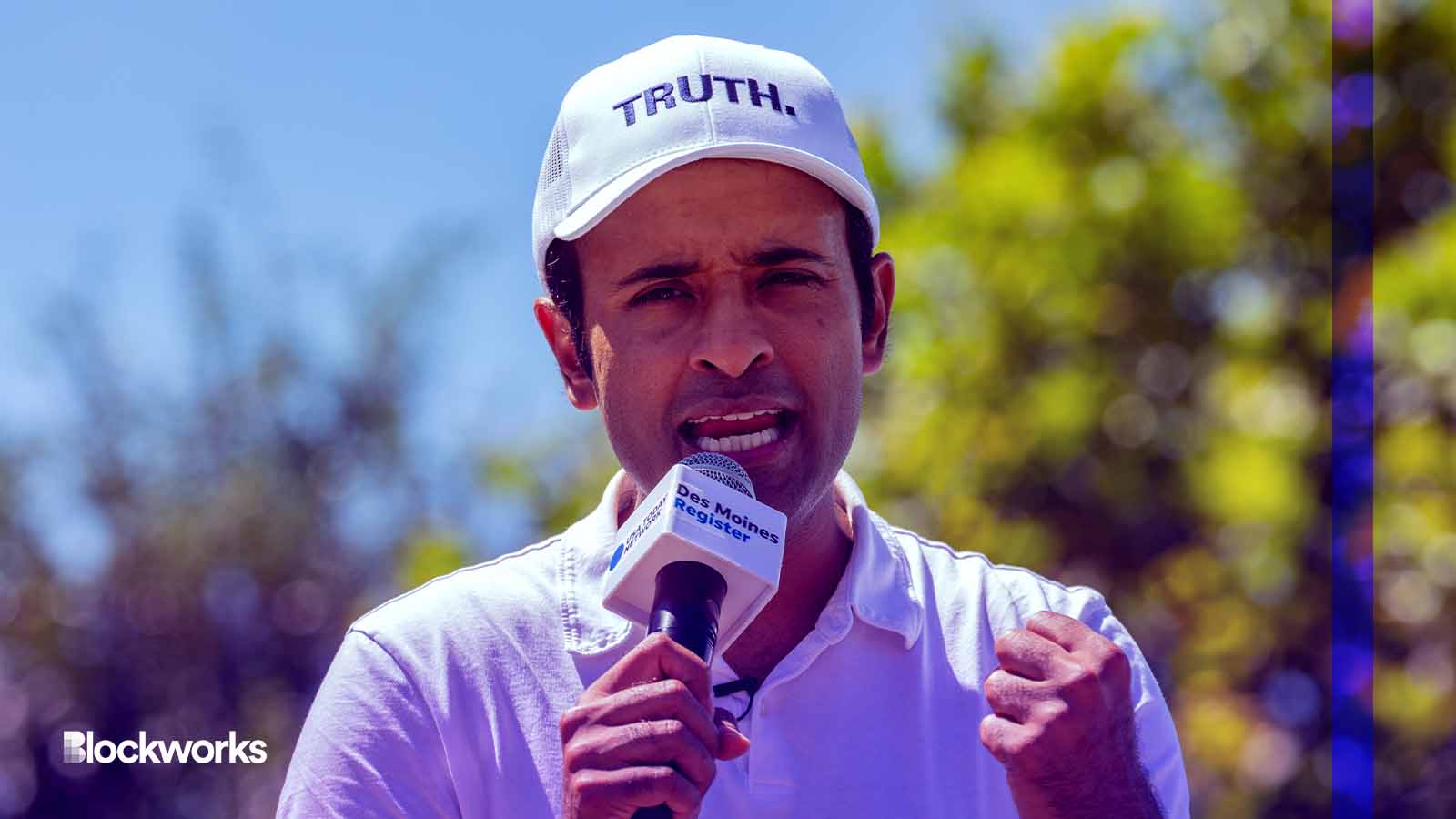
Rep. Presidential Candidate Vivek Ramaswamy | Juli Hansen/Shutterstock modified by Blockworks
Cryptocurrencies have emerged as one of the more popular topics in the early days of the 2024 US Presidential election, but the trend might not last through the primaries.
So far, several candidates vying for the Republican nomination, including Vivek Ramaswamy and Florida Governor Ron DeSantis, have commented quite favorably on the digital asset space.
Ramaswamy has appealed to crypto-friendly voters with a consistent distaste for non-elected officials, such as US Securities and Exchange Commission Chair Gary Gensler.
“The problem with agencies like the US Federal Reserve, or the SEC, is when you have a bunch of people showing up to work who should have never had that job in the first place,” Ramaswamy said this week at the Mainnet Conference in New York City. “One of my chief issues with agencies like the FDA, and the SEC, is this regulation via enforcement paradigm, where they refuse to pre-specify what the rules actually are, but demonstrate what the rules are by picking who the bad apples are after the fact.”
DeSantis also entered the crypto conversation by linking digital-asset issues to common Republican grievances, such as when he criticized a central bank digital currency at a July 2024 conference for its lack of privacy. The Florida Governor also promised to end “Biden’s war on Bitcoin and cryptocurrency.”
“More than 50 million Americans engage with or own digital assets. Presidential candidates — such as Vivek Ramaswamy — are rightfully engaging with the crypto voter,” Kristin Smith, CEO of the Blockchain Association, said.
Even so, Ramaswamy and DeSantis face an uphill battle getting on the ballot. Ramaswamy is currently polling at around 8% while DeSantis holds just over 14% of Republican voters, according to polling agency FiveThirtyEight.
Gensler, who was President Biden’s pick to lead the SEC, is currently serving a five-year term set to end in June 2026, but some speculate the anti-crypto agency head could be ousted sooner.
Coinbase CEO Brian Armstrong said in a recent interview that Gensler could be out in 2025 if a Republican wins the White House in 2024, and he’s keeping an eye on how current candidates engage with crypto.
“[Presidential candidates] see it as an opportunity to challenge — the policies of the current administration has had in downstream effects with the regulators, that they view as not in line with what the American people want,” Armstrong said at the Goldman Sachs Communacopia and Technology Conference earlier this month. “This could become a hot topic in the presidential race in 2024.”
Democratic candidate Robert F. Kennedy Jr. has also shared some pro-bitcoin views, moving to accept the cryptocurrency for campaign contributions and advocating to expect bitcoin from capital gains taxes.
“We welcome [candidates’] engagement and look forward to seeing thoughtful crypto platforms — hallmarked by the right to code and transact privately, and robust consumer protections — emerge from candidates across the political spectrum,” Smith said.
Whether or not crypto emerges as an essential issue as the campaign season progresses remains to be seen.
Get the news in your inbox. Explore Blockworks newsletters:
- The Breakdown: Decoding crypto and the markets. Daily.
- 0xResearch: Alpha in your inbox. Think like an analyst.
