Chainlink moves a step closer to creating a decentralized computing marketplace
These new tools mark the first steps towards Chainlink’s vision of creating a decentralized computing marketplace for developers
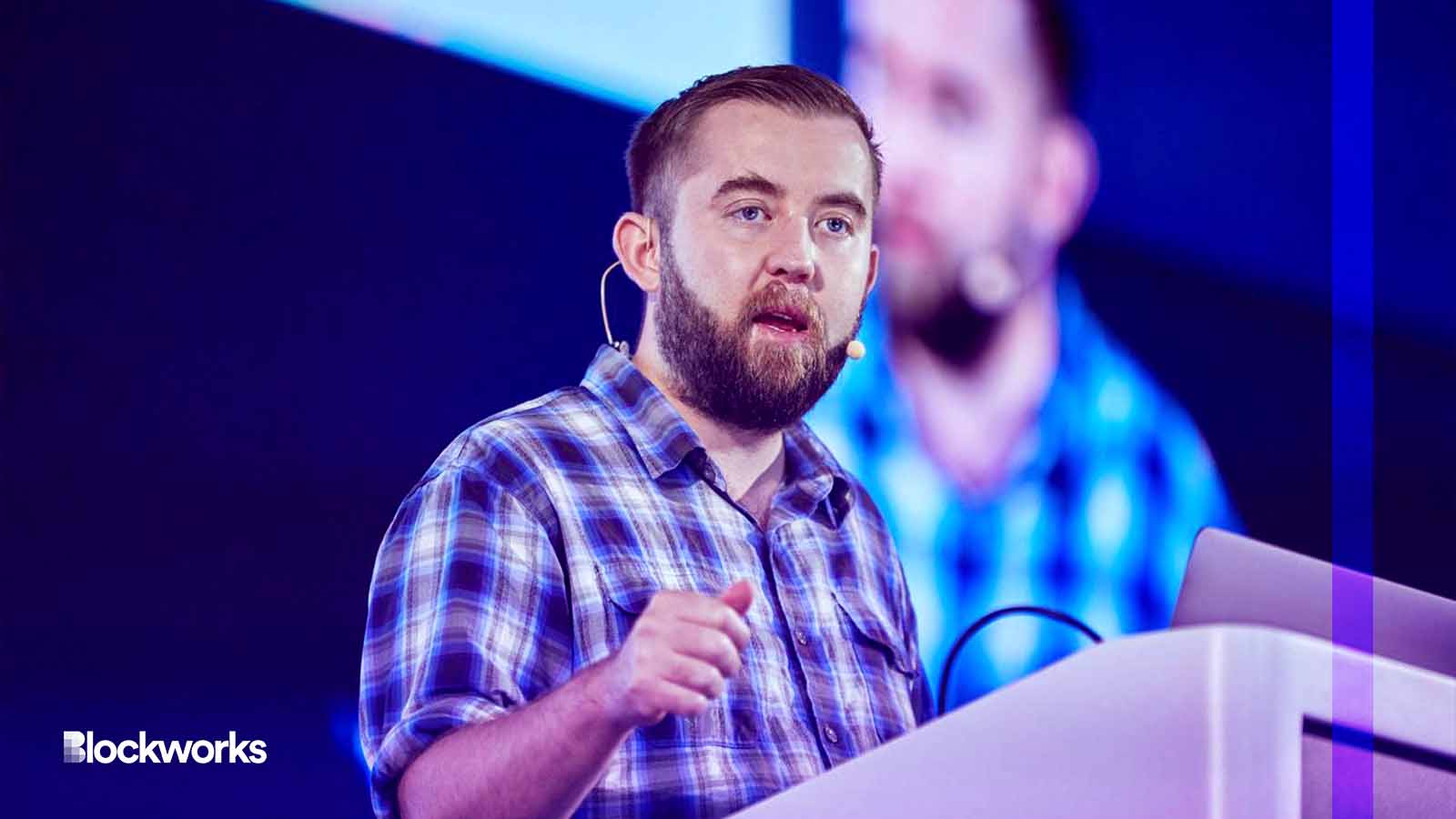
Chainlink co-founder Sergey Nazarov | Chainlink Labs
The beta introduction of Chainlink Functions enables developers to use a single oracle network for data configuration and computation.
This means that developers can use any data source of their choice, ingest it into Functions, and then define the code they wish to compute the data source with, Chainlink co-founder Sergey Nazarov told Blockworks in an interview.
Historically, on Chainlink, developers could create multiple networks that were focused on specific tasks.
“Developers have to define what a network does. It couldn’t do just data configuration or computation, it could just do one or the other,” Nazarov said. “With Functions, you no longer need to make these two networks. Both these things can now work together in a network and you can build it in an hour instead of days.”
Chainlink Functions is part of a broader plan to create a decentralized computing marketplace, where developers can combine various functionalities to create a verifiable application.
Other available tools include Chainlink Automation and its data streaming service.
Similar to how on Amazon Web Services, where there are low code environments and specialized tools, Chainlink Functions will be an easier-to-use environment, whereas Chainlink Automation and data streaming are specialized tools.
“Data streams is a very efficient specialized tool for derivatives,” Nazarov explains. “That’s basically low latency data. And that’s something that has now gone live on to production with the first big user of data streams, GMX.”
Chainlink Automation, on the other hand, is a tool primarily focused on triggering things on-chain. A developer could use Chainlink Automation to trigger a smart contract every two hours, for example.
This means that gas costs can be significantly reduced, Nazarov said, as developers now can customize logic.
“This is like a big unlock, in my opinion, for what people can build, that’s what we want to do,” Nazarov said. “We don’t make any end-user applications, we just make the infrastructure.”
Get the news in your inbox. Explore Blockworks newsletters:
- The Breakdown: Decoding crypto and the markets. Daily.
- 0xResearch: Alpha in your inbox. Think like an analyst.