Will Fees Alone Keep the Bitcoin Network Secure in the Long Term?
Right now, mining rewards are enough to keep Bitcoin safe, but what happens when they’re gone?
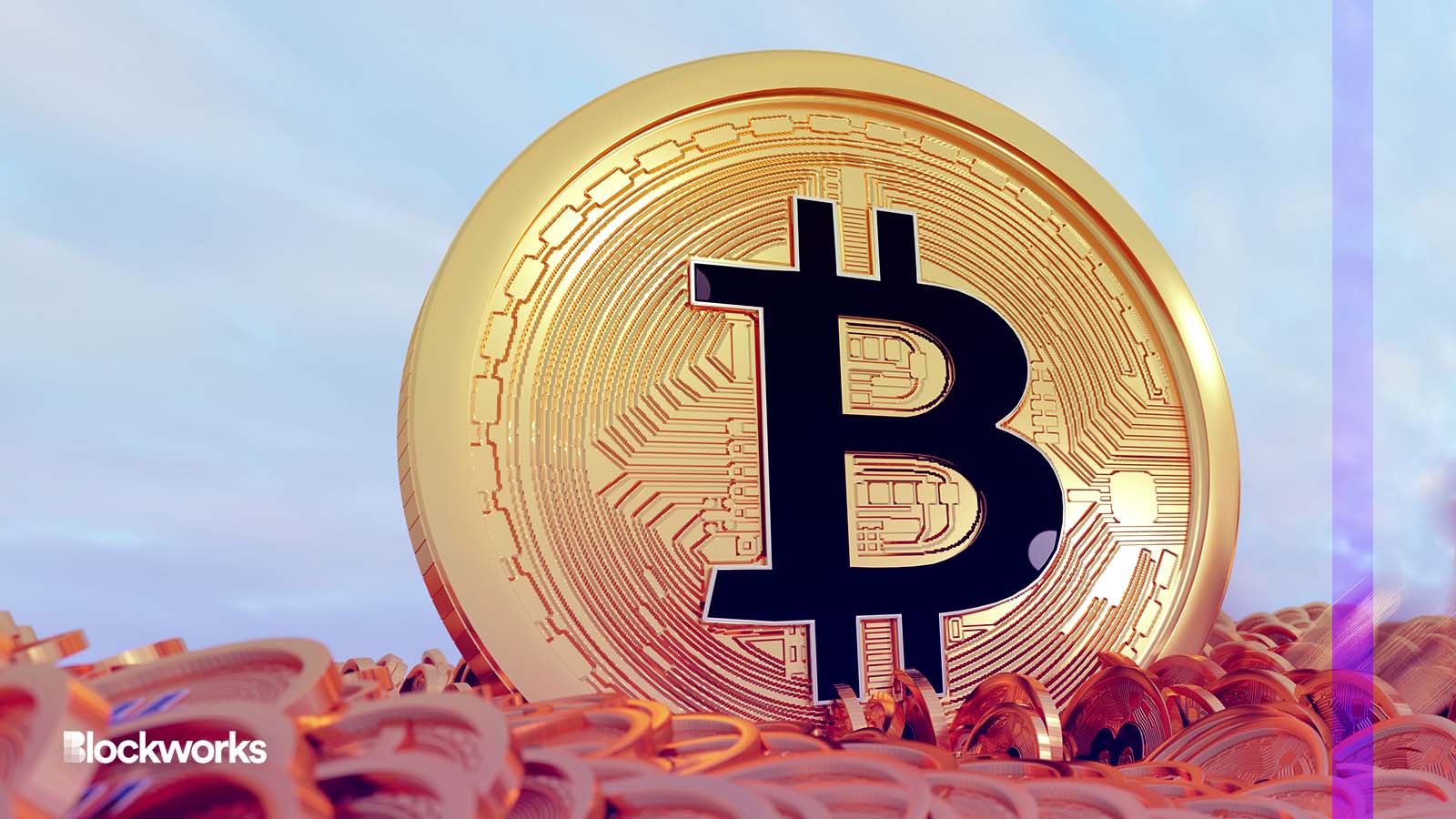
nuttapon averuttaman/Shutterstock modified by Blockworks
The Bitcoin network is secure. Like, really secure. For now, anyway.
The amount of computing power crunching numbers to keep the network operational makes it nearly impossible for any central entity to overrun it.
The most prominent of all decentralized networks achieves this degree of security by rewarding competing miners all over the world with bitcoin block rewards for guarding it from attacks.
This ‘block subsidy’ diminishes through halvings that take place every 210,000 blocks, or approximately four years. Eventually, miners won’t receive a subsidy at all, but will instead rely strictly on transaction fees for their revenues.
But what if the fees aren’t financially rewarding enough to attract miners? If they decide it’s not worth securing the network, couldn’t the whole system fall apart?
Founder of Lyn Alden Investment Strategy, Lyn Alden, and CIO of Selini Capital, Jordi Alexander, spoke to Blockworks about the conundrum on the Empire podcast.
Fees are trending down
“The long-term expectation from the beginning, even in Satoshi’s own words, was that fees eventually would be the primary and eventually only source of revenue for Bitcoin miners, which is important for the long-term immutability and censorship-resistance of the network,” Alden says.
The concern, according to Alden, is that Bitcoin block space might not be attractive enough long-term for people to pay “a significant amount on a per-transaction basis in order to settle value there or to do other things,” in which case the network becomes open to lower-cost attacks.
Alexander argues that, other than the recent blip in traffic, fee income is “aggressively” trending down. “You have to pay security guards to protect you when you have something valuable, and if you start paying them less and less, a lot of them don’t show up for work.”
“And if they don’t show up to protect the network,” he says, “you can have state actors or other actors coordinate, buy a bunch of ASICs or whatever is going to be the technology at the time to start spamming the network or blocking or censoring the network.”
Alden suggests the fee model already works as designed and that the network continues to see a gradual increase in adoption, albeit in a cyclical manner. Since early 2023, transaction fees have, in fact, increased. “The longer that Bitcoin keeps working and keeps doing what it does, and it keeps being functional and keeps being understood by more and more people, I expect that adoption to increase.”
Alexander suggests there’s a “free rider” problem on the network. “Somebody just buys a lot and then they just sit on it. They don’t do anything. They don’t even create fees.”
He argues that because many people have settled on the concept of bitcoin as digital gold — primarily, a store of value — the number of transactions could eventually trend to unsustainably low levels.
Alden counters, saying the network could thrive even with the relatively low number of transactions from people using the network strictly for settlement and savings. “If you just assume that five percent of the world in 20 years is going to want to occasionally directly interact with the Bitcoin base-layer, then there’s going to be at least some degree of sustained fee market.”
With only five percent of the world’s population using Bitcoin occasionally and a base-layer transaction costing the equivalent of $30 in the future, Alden says, “You’re talking billions and billions of dollars of annual fees for miners.”
“The actual ASIC value that you need to buy to even attempt an attack is in the billions or tens of billions at that point.”
Get the news in your inbox. Explore Blockworks newsletters:
- The Breakdown: Decoding crypto and the markets. Daily.
- 0xResearch: Alpha in your inbox. Think like an analyst.