Base profits are down 90% despite 80% surge in transactions
Base is definitely popping with onchain activity, but it’s not making anymore money than when things were quiet

Base modified by Blockworks
It’s still very much a bull market for Base. But that hasn’t exactly converted to major profits just yet.
The Ethereum layer-2 is setting new records for transaction counts and unique active addresses every other day — recording over four million transactions per day from more than one million unique addresses right now.
Both those metrics can be easily boosted by Sybil bots and whatnot, but in any case, volumes on Base DEXs Aerodrome and Uniswap are holding steady, while some others across other blockchains have fallen.
The blue line on the chart below shows the weekly transaction count for Base. The orange one plots the combined count for rival networks Arbitrum, Optimism and ZKSync.
Notice that Base really kicked into gear after Ethereum blobs were introduced with the Dencun hard fork in March.
Blobs gave layer-2s like Base their own specialized fee market, so that they would no longer compete with regular users for blockspace. This change has widely driven down median L2 fees to fractions of a cent and turned ETH into an inflationary asset all over again.
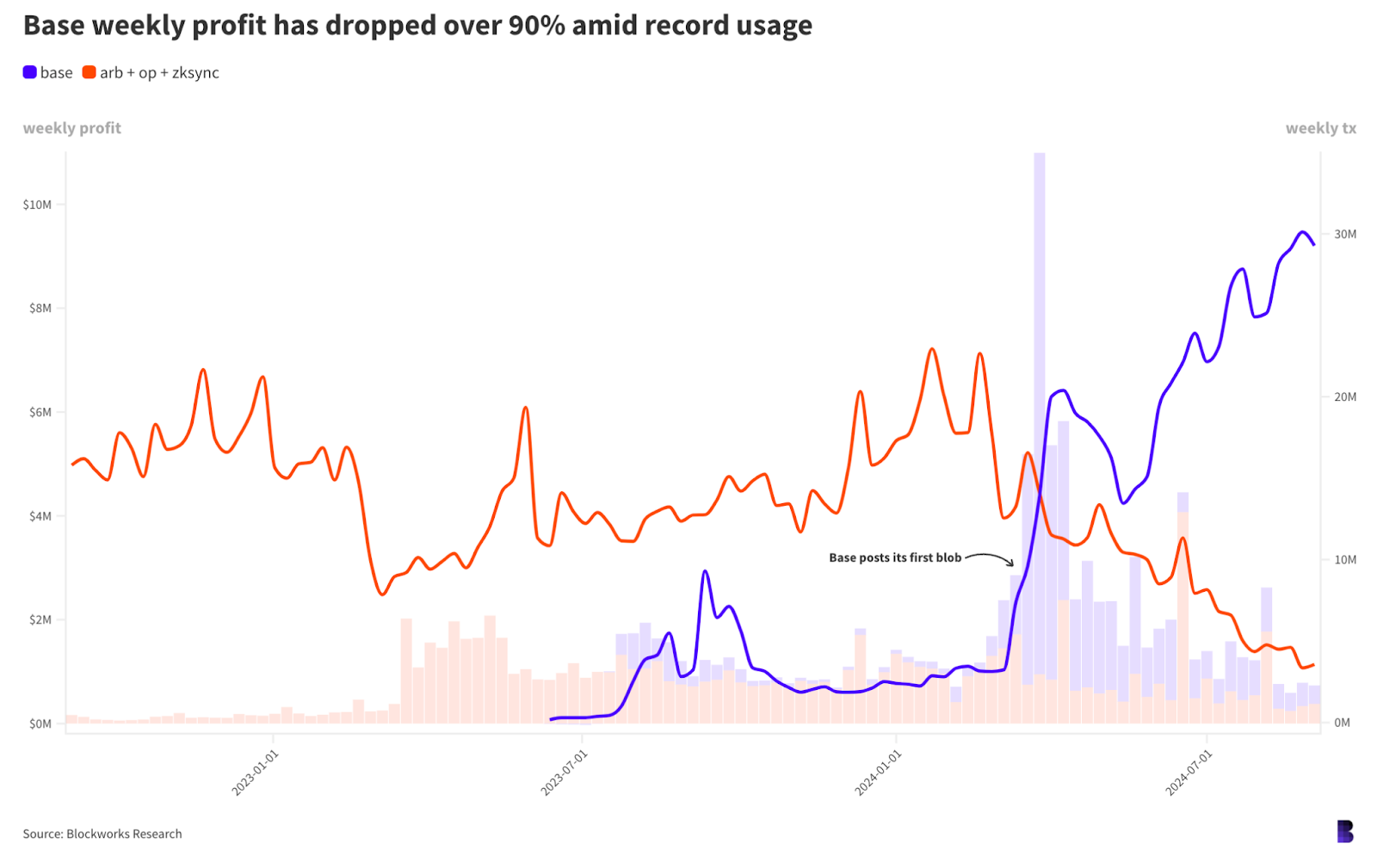 Blue line goes up, orange line goes down
All that hasn’t converted to anymore profit for Base’s operator, Coinbase, despite the record high usage.
According to Blockworks Research data, Base generated $5.6 million in average weekly profit in the four weeks after blobs were activated in March.
In the past four weeks, Base has made almost $407,000 in weekly profit on average — a reduction of over 90%.
(Profits for Base, alongside Arbitrum, Optimism and ZKSync are seen on the chart by the columns in the background.)
That calculation done on Base’s weekly transaction counts shows that onchain activity has jumped more than 80% across the same period.
Who knows if all those transactions would have occurred on Base (or anywhere else) had the fees not been slashed so much. It could also be that cheap fees have made running a layer-2 far less lucrative, particularly for companies solely focused on the network itself.
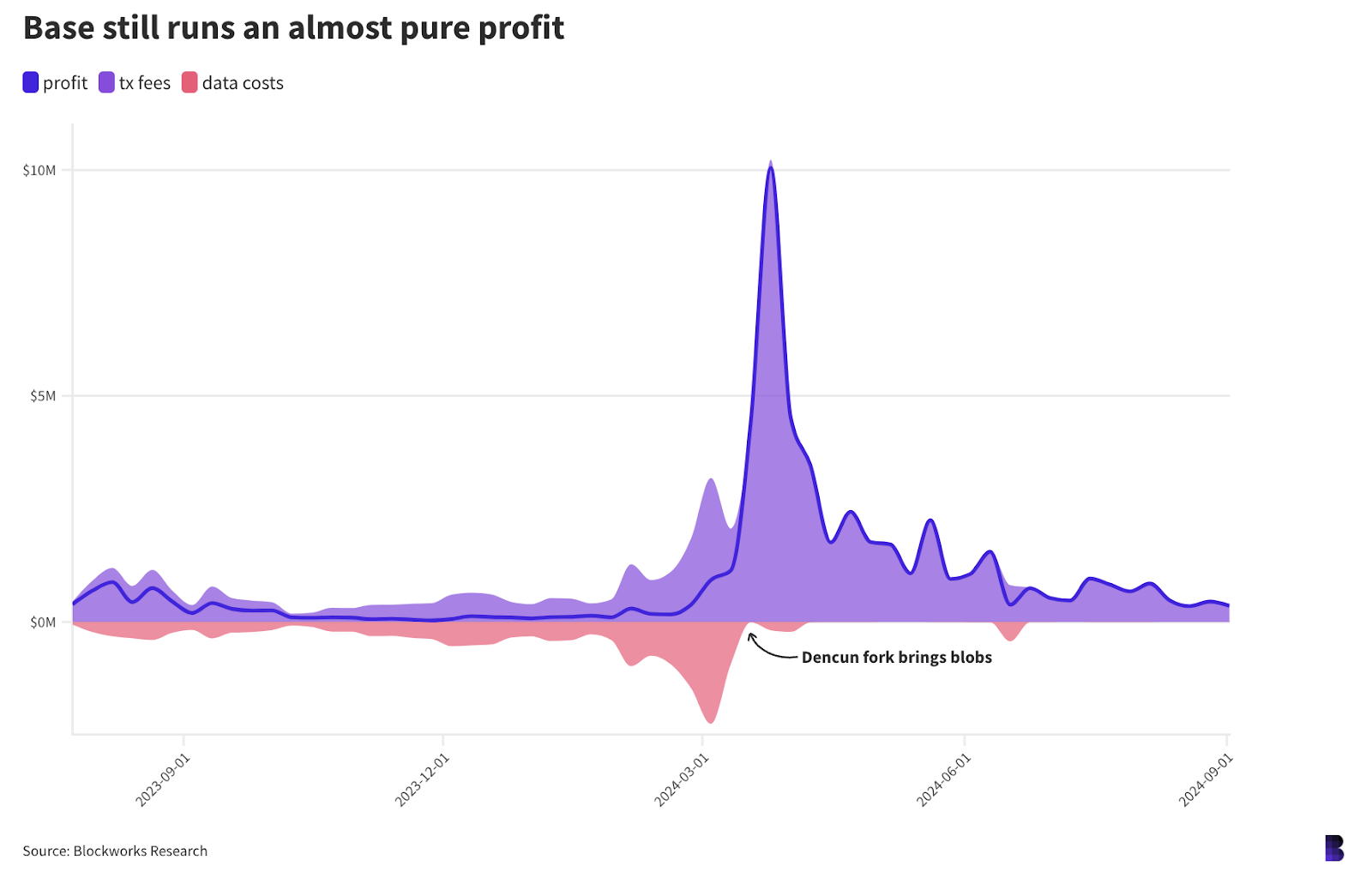
Still, any profit is, of course, a win. Blobs have made the operating expenses of Base practically insignificant — posting data to Ethereum mainnet cost Base under $11,000 last month, down from $3.8 million in February.
For scale, Coinbase the company made $36.15 million in profit overall in the second quarter of this year.
Base has otherwise raked in a $53.63 million profit since it came online last June, which works out to be $11.5 million per quarter on average.
Not too shabby at all, even with blobs, and Base’s profit-sharing agreement with the Optimism Collective.
A modified version of this article first appeared in the daily Empire newsletter. Subscribe here so you don’t miss tomorrow’s edition.
Updated Sept. 12, 2024 at 2:36 am ET: Added reference to profit-sharing agreement.
Get the news in your inbox. Explore Blockworks newsletters:
- The Breakdown: Decoding crypto and the markets. Daily.
- 0xResearch: Alpha in your inbox. Think like an analyst.
