Trader Joe’s grocery chain sues DEX of the same name
Trader Joe’s claimed that the crypto platform is benefiting commercially from the well-known supermarket brand and reputation due to similar branding
refrina/Shutterstock, modified by Blockworks
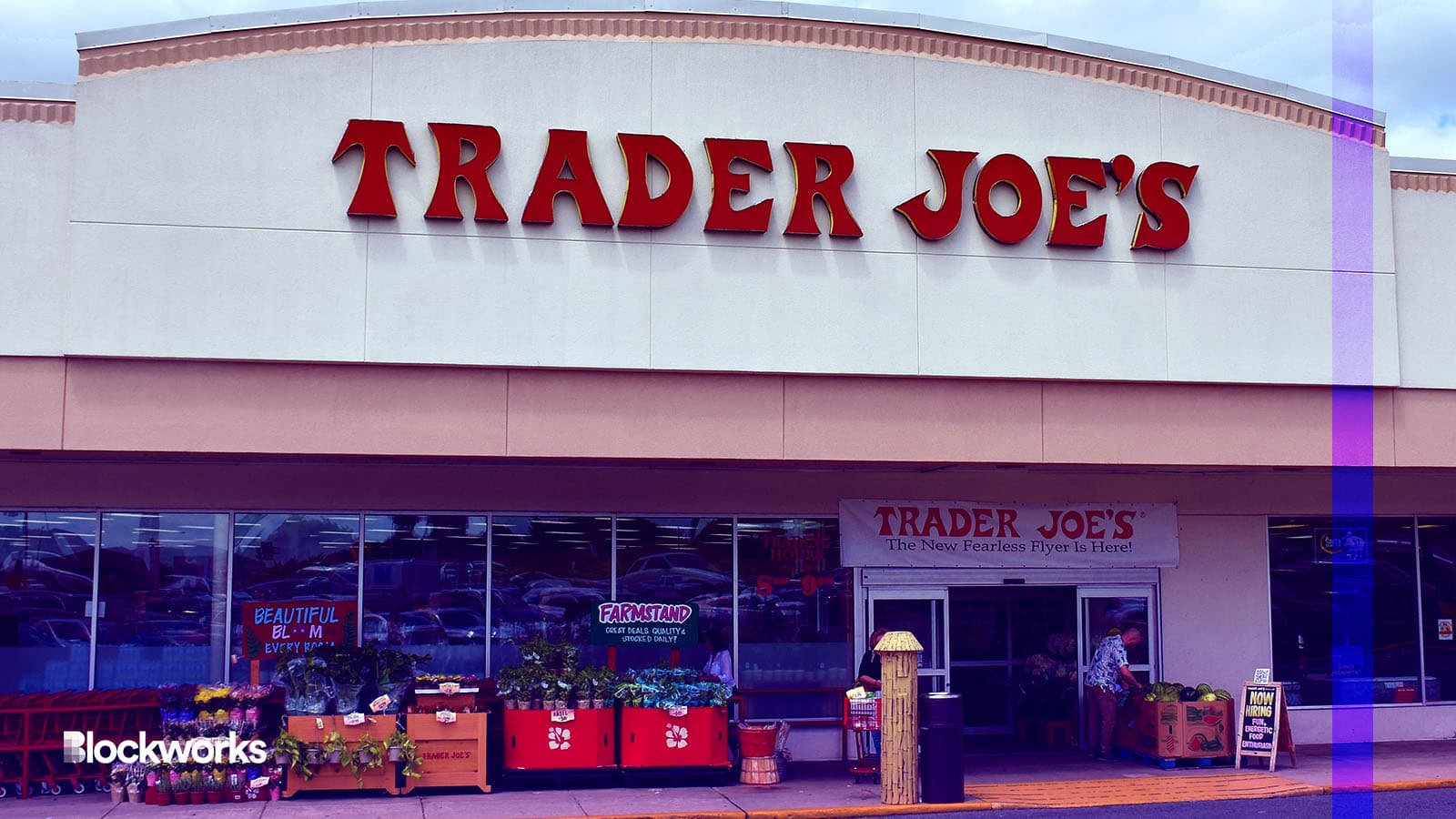
American supermarket chain Trader Joe’s is pursuing legal action in California to resolve a trademark dispute with a crypto platform that bears a strikingly similar name.
On Oct. 5, the chain filed a lawsuit against a crypto platform called “Trader Joe” and its co-founder Cheng Chieh Liu, alleging that they intentionally chose a name similar to the supermarket’s.
Lawyers for the chain stated that the decentralized exchange (DEX) created a narrative around a fictional “Trader Joe,” closely associating with the supermarket’s brand.
They further contested the crypto firm’s logo, which features an image of “Trader Joe” wearing a red cap, the primary color of the grocery’s chain brand.
Red is also the dominant color of the Avalanche layer-1 blockchain where the DEX was first launched.
As per the lawsuit, co-founder Liu is a Chinese citizen residing in Singapore who registered the disputed domain name, traderjoexyz.com.
In the lawsuit, Trader Joe’s contests the crypto company’s use of a name deemed “confusingly similar.”
This name was found on the platform’s primary website, an app accessible through the Apple App Store, as well as on platforms like X, YouTube, Reddit, Github, LinkedIn, Substack, CoinMarketCap, Telegram and Discord.
When confronted, the defendants attempted to conceal their origin story in an attempt to gain an upper hand in legal proceedings regarding the traderjoexyz.com domain, according to the lawsuit.
The plaintiff asserts that exposing the actual story would undermine the crypto firm’s case and any legitimate claim to the domain.
“Defendants neither sought nor received Trader Joe’s permission to name their platform after Trader Joe’s,” the lawsuit said, adding that they instead sent them cease-and-desist letters and received no response.
Trader Joe, launched in 2021 by an anonymous team, operates as a non-custodial exchange protocol on the Avalanche blockchain (initially a SushiSwap fork), according to Token Terminal.
Liquidity providers deposit funds into Trader Joe and, in exchange, earn trading fees from traders, referred to as supply-side fees.
Trader Joe’s claimed that the crypto firm’s employees use aliases not only externally but also within the company.
The plaintiff additionally alleged that the crypto platform’s use of the “Trader Joe” branding is enabling them to derive commercial benefits from the well-known trademark and broader reputation of the grocery chain.
“Obscuring their identities both from outsiders and each other in day-to-day business dealings evidences an intent to avoid detection, subvert legal process, and operate free of legal consequence,” they said.
Blockworks reached out to members of Trader Joe XYZ’s development team, who declined to comment.
Trader Joe’s supermarket chain requested the court to issue an order compelling the crypto firm to cease using variations of its name in their business operations.
It also seeks ownership of the pertinent domain names and any additional damages to be determined through legal proceedings.
Updated October 10, 2023 at 9:30 am ET: Added response from Trader Joe XYZ.
Get the news in your inbox. Explore Blockworks newsletters:
- The Breakdown: Decoding crypto and the markets. Daily.
- 0xResearch: Alpha in your inbox. Think like an analyst.
