Real Estate Investors Buy Solana NFT Home for $246,800
Blockworks exclusive: The tokenization, which supported USDC and ran on the Solana blockchain, was undertaken by crypto startup Homebase
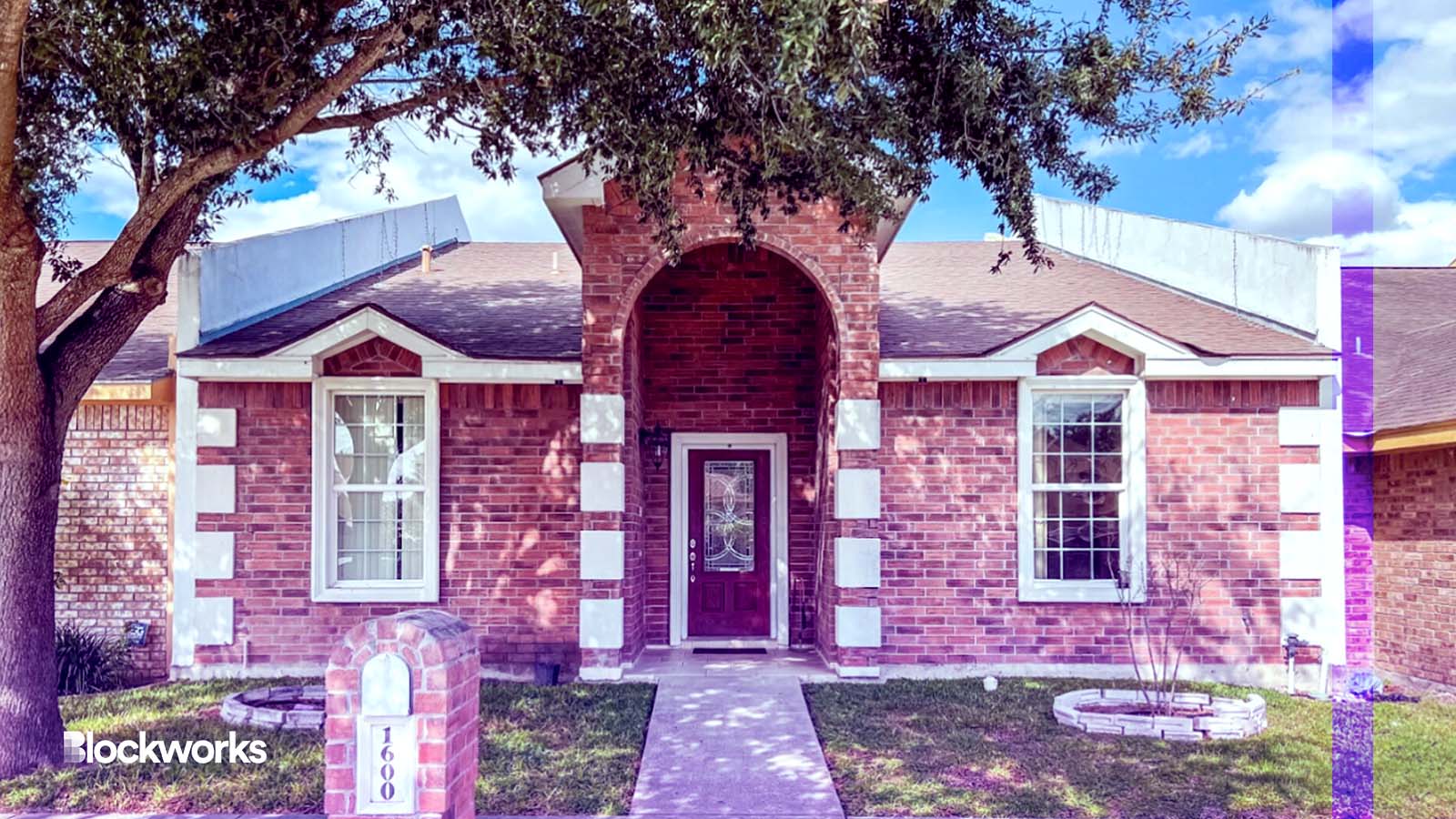
The tokenized South Texas single-family rental | Homebase modified by Blockworks
Interest in tokenized real estate is spreading. All the way to south Texas.
In the latest indicator of the once-niche sector’s spread, startup Homebase has closed out the tokenization of its first single-family rental property, the company told Blockworks exclusively.
The McAllen, TX, single-family home was valued at $235,000. Homebase drummed up $246,800 in about two weeks by tokenizing the residence on Solana (SOL) via a smart contract tied to an NFT created for the purpose: “Homebase 1 [The Cardinal].”
The total amount raised includes $11,800 set aside to “to account for maintenance and other issues,” a spokesperson said in a statement.
Homebase, according to Domingo Valadez, the company’s chief executive and one of three co-founders, spent seven months getting just the legal and compliance details of its real estate offering ready for market.
The overall effort took a year and involved the regulatory and fiat side of things: filing the SEC paperwork to market security tokens to both retail and accredited investors.
Of the 38 participating investors, 30 were non-accredited, according to the filing. The minimum investment for the sale reported to the SEC was $500.
Homebase spent some time weighing the benefits and drawbacks of various blockchains to host the NFTs and smart contracts. Homebase eventually settled on Solana. The startup supports USDC to allow users to buy tokenized property slices “in one click,” the statement said.
Homebase considered the Ethereum ecosystem, he said, but was put off in part by concerns over ether (ETH) gas fees that were rising.
Polygon (MATIC) was also in contention, according to Valadez, but blockchain bridges that Homebase would have had to employ resulted in funds disappearing for like “15 minutes,” which would have been “especially scary” for investors new to the sector.
Fractionalizing real estate mints potential
Valadez, originally from south Texas himself, spent about five years working for Google before leaving to start up Homebase with two additional co-founders in early 2022.
Living in the pricey Bay Area, Valadez realized something: He “still couldn’t afford anything in the Bay Area after working at Google for five years.”
In spite of working tech hours and earning a tech salary, Valadez said buying a property at the time was out of the question. The US housing market has slowed in recent months, with some analysts eyeing an even more dramatic drop in residential and commercial property prices on the horizon.
A number of tokenized real estate initiatives have started to take shape, including Homebase’s first foray into the competitive market. Those maneuvers come as the Federal Reserve has flashed some indicators that it plans to raise interest rates in a more gradual fashion moving forward.
The Fed’s March rate hike clocked in at a 0.25% increase, which appeared to have been largely already priced in by both traditional and digital assets markets.
But the Bay Area and other municipal US hotspots remain stubbornly out of reach in terms of price for most, according to Valadez.
The median February Bay Area home went for a whopping $1,050,000, according to real estate data provider Norada.
Read more: The Crypto Native’s Guide to Real Estate Investing
Homebase thinks it can provide a viable alternative — even with real estate prices where they are, by tapping Solana and ensuring compliance with related SEC regulations.
The end goal is to create a product that makes money and helps homeowners, as well as investors, in the process, Valadez said.
The mechanics of NFT real estate
Homebase essentially captures a spread on the transaction. The startup put in a small amount of its own capital, which Valadez said was designed to ensure an alignment of financial interest.
“Tokenization in real estate is a means of crowdfunding,” he said. “We see the value in a decentralized future. We see some of the issues in the current financial structures…How do we give more power to individuals when they truly have ownership around their assets?”
Here’s how, in Valadez’s estimation:
- The Solana tokenization of the McAllen single-family property went live in early March, generating enough demand that a mix of retail and accredited investors filled the Solana order book at the $1,200 average check size in under two weeks.
- There was no lien or mortgage on the property, meaning Homebase didn’t have to work around outstanding debt on the transaction. The owner, as a result, held onto 80% of their equity in the property. Homebase took on a 1% interest, and the remaining 19% now belongs to investors in the tokenized offering.
- Of that approximately 19%, half was raised in fiat and the remainder was processed by USDC. A total of 38 investors participated, and a spokesperson said the “majority were first-time real estate investors and new to Web3.”
- The process resulted in 15 of the 28 backers creating their first Solana wallet, per the company.
Homebase started the process by agreeing to exclusive terms with the rental property’s owner. The startup then spun up an SPV (special purpose vehicle) to market the tokenized equity sale.
Investors are required to hold on to their NFTs representing their equity interests for at least one year. The process is verified on-chain.
Backers can then freely buy and sell their Solana NFTs on the open market, and underlying smart contracts tie those transactions to their corresponding equity stakes in the home.
Homebase’s “operating agreements say that non-fungible tokens represent ownership of that SPV,” Valadez said, adding that that way “you don’t have to get a lawyer involved.”
“The way we’re marketing this on the demand side is keep all of your assets on-chain and get to invest in rental properties that are truly able to accrue in value,” he said. “On the homeowner’s side, it’s an additional option you have when it comes to liquidity — especially in today’s environment, when interest rates are like 6%…[You now have] an additional potential stake to get equity out.”
Homebase’s second tokenized offering is already in the works.
Get the news in your inbox. Explore Blockworks newsletters:
- The Breakdown: Decoding crypto and the markets. Daily.
- 0xResearch: Alpha in your inbox. Think like an analyst.
