Transforming Dust Into Prizes: LooksRare’s NFT Raffle Hits the Market
The company developed the raffle using a custom smart contract, and said it plans to release the repository as open source in the near future
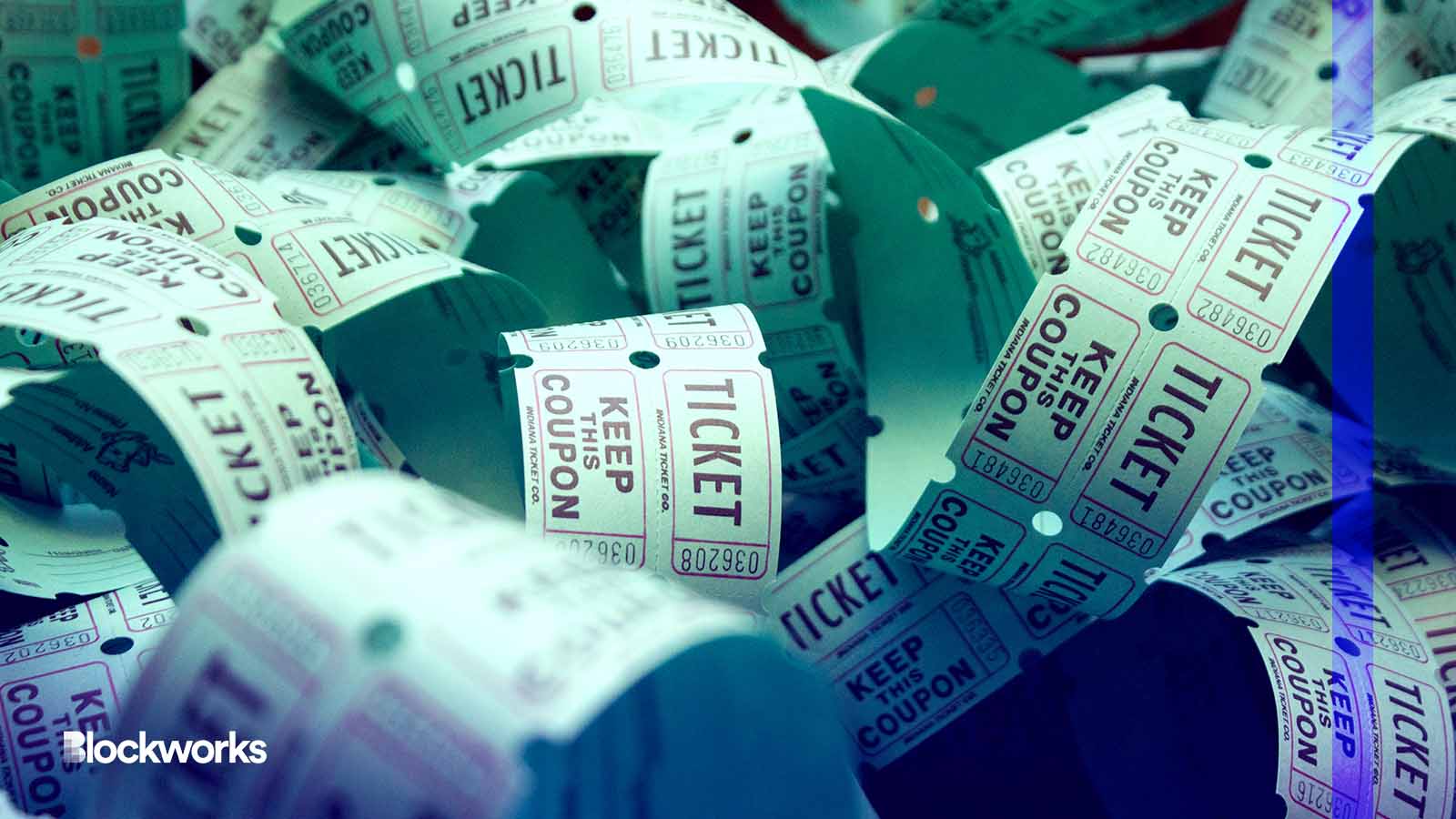
GG Photos/Shutterstock modified by Blockworks
LooksRare is starting an NFT raffle where users can buy entries for 0.01 ether (ETH) or less. All they need to participate is a crypto wallet and enough ether to cover the entry cost and gas fees, according to the NFT marketplace.
Zodd, the pseudonymous co-founder of LooksRare, announced ‘LooksRare Raffles’ in a Tuesday blog post. They said that the top prize every day for this week would be a Bored Ape Yacht Club NFT (BAYC).
Though only one BAYC NFT is up for grabs each day, the platform said the prize pool also includes other “blue chip” NFTs. Other prizes include Azukis and allocations of the platform’s native coin, LOOKS.
LooksRare said it will run this raffle program for seven days, with one raffle round each day, collecting a “small fee” on each round. If the reception is good, it could become a permanent fixture on the NFT marketplace’s site, LooksRare told Blockworks.
During the first round on Wednesday, there will be one BAYC NFT, five Azuki NFTs, and 100 bundles containing 1,000 LOOKS tokens, each available for participants to acquire.
The raffle program is built on a foundation of smart contracts, which LooksRare said are “100% transparent” and “provably fair.”
“We use Chainlink VRF (Verifiable Random Function), which is a provably fair and verifiable random number generator…For each request, Chainlink VRF generates one or more random values and cryptographic proof of how those values were determined. The proof is published and verified on-chain before any consuming applications can use it,” LooksRare said in a statement exclusively provided to Blockworks.
The statement continued, “This process ensures that results cannot be tampered with or manipulated by any single entity including oracle operators, miners, users, or smart contract developers.”
The prize pool has a fixed number of entries users can buy per sale, which LooksRare says keeps the raffle balanced. But there’s also a minimum number of entries that need to be snapped up for the raffle to proceed.
“If there’s too little interest in a particular round, it won’t go ahead. So, if the amount of entries bought is too low, the contract will enable users to have them refunded,” Zodd wrote in the blog post.
The LooksRare blog post also suggested that buying these cheap raffle entries are a good way to spend the crypto dust in your wallet. Dust refers to small amounts of cryptocurrency left over from transactions processed on the blockchain. Similar to receiving pennies as change in a cash transaction, dust usually has minimal monetary value.
Get the news in your inbox. Explore Blockworks newsletters:
- The Breakdown: Decoding crypto and the markets. Daily.
- 0xResearch: Alpha in your inbox. Think like an analyst.
