Solana offers solutions to banking’s ‘bizarre inefficiencies,’ says Mumtaz
Mumtaz insists Visa’s recent expansion of stablecoin settlements to Solana is good for all of crypto
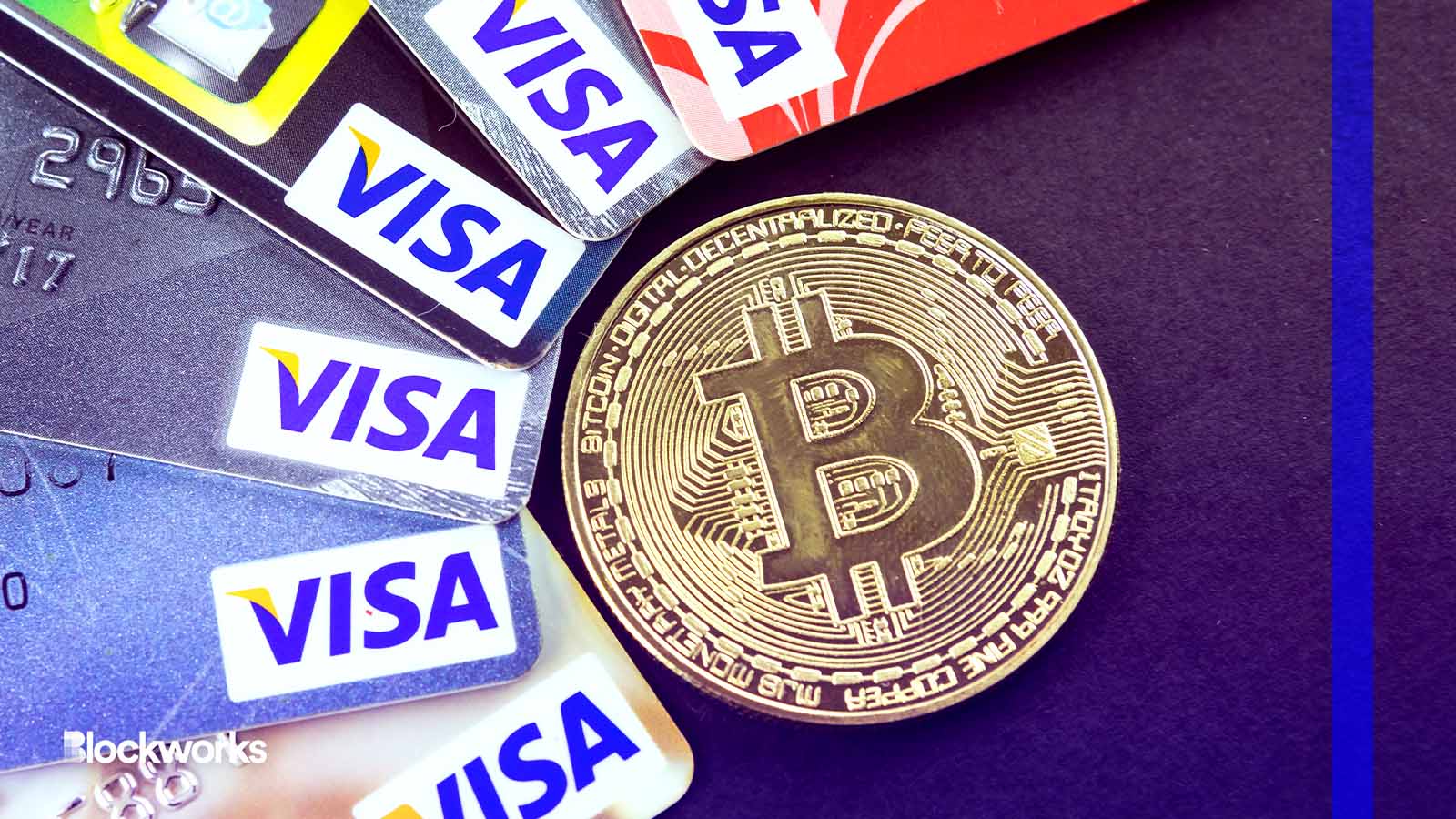
Pimen/Shutterstock modified by Blockworks
Talking to the average person on the street about “still” being in crypto, Garrett Harper says he mostly hears expressions of sympathy for his predicament.
“I feel sorry you’re still there.”
But Harper insists plenty of positives are still to be found in the space, including the recent news that Visa — the largest payments processing network in the world — is expanding their stablecoin settlement tech to the Solana network.
“It’s not just good for Solana,” Mert Mumtaz, co-founder of RCP company Helius, says. “It’s good for crypto.”
On the Lightspeed podcast (Spotify/Apple), the co-hosts talk about how Visa’s expansion of stablecoin settlement capabilities to Solana is a “no-brainer.”
A few months ago, Mumtaz says he learned of Visa piloting a number of use cases for the Ethereum blockchain. On X, formerly Twitter, Mumtaz posed the question, “Why aren’t they using Solana for this?”
“I’ve worked in all kinds of different stacks of the payments infrastructure and engineering,” he says, and Solana seemed like an obvious choice to him.
Replies promptly followed, one in particular suggesting Mumtaz was delusional to imagine Solana was even a viable option for Visa to consider. As soon as Mumtaz saw Visa’s announcement post on X, he says, “I went back to that tweet and then I replied with it. So that was fun.”
Bizarre inefficiencies in the banking system
In the legacy banking system, sending money internationally requires multiple “hops,” Mumtaz says, with each step encountering fees and varying regulatory barriers. “There are pretty bizarre inefficiencies with that system,” he says. “If you use Solana for something like this, you basically pay no fee.”
“Solana’s average fee is 0.00025 dollars,” Mumtaz says, “and the blocks finalize in 400 milliseconds. It’s open 24/7 (‘hopefully,’ he adds).”
“Not only is it better for the merchants who can now get paid instantly instead of having the money wait in their acquirer account,” he says, “but it’s actually good for Visa because now they can save money.”
Mumtaz’s favorite part of the story, however, is seeing Solana receive validation from the leading payments provider in the world after being “through the ringer” following the FTX fiasco.
“We always knew [the technology] would work with things like this and would enable those cases,” Mumtaz says. But Solana needed “pioneers in the field to get the stamp of approval.”
“And that’s essentially what Visa has done here.”
The move acts as a “social signal,” Harper says, giving other companies the “thumbs-up” to go ahead with their potential projects. He notes that most applications will likely be at the business-to-business (B2B) level, at least initially, before reaching the retail level.
“At some point,” he says, “you want to get where normal people like me and you are holding onto USDC and having a reason to spend actually at the point of sale level. That would be like if I go buy, I don’t know, a t-shirt, I’m actually using USDC.”
This sort of transaction would happen “behind the scenes,” Harper says, where Visa facilitates stablecoin payments to merchants if they decide to opt in for advantages such as lower fees and faster settlement speeds.
“This is [the] backend that’s setting everything up.”
Get the news in your inbox. Explore Blockworks newsletters:
- The Breakdown: Decoding crypto and the markets. Daily.
- 0xResearch: Alpha in your inbox. Think like an analyst.
