Lame Duck Senator Leaves Stablecoin Bill Legacy
Sen. Pat Toomey formally introduced his stablecoin bill to the Senate floor as the 117th Congress wraps up work
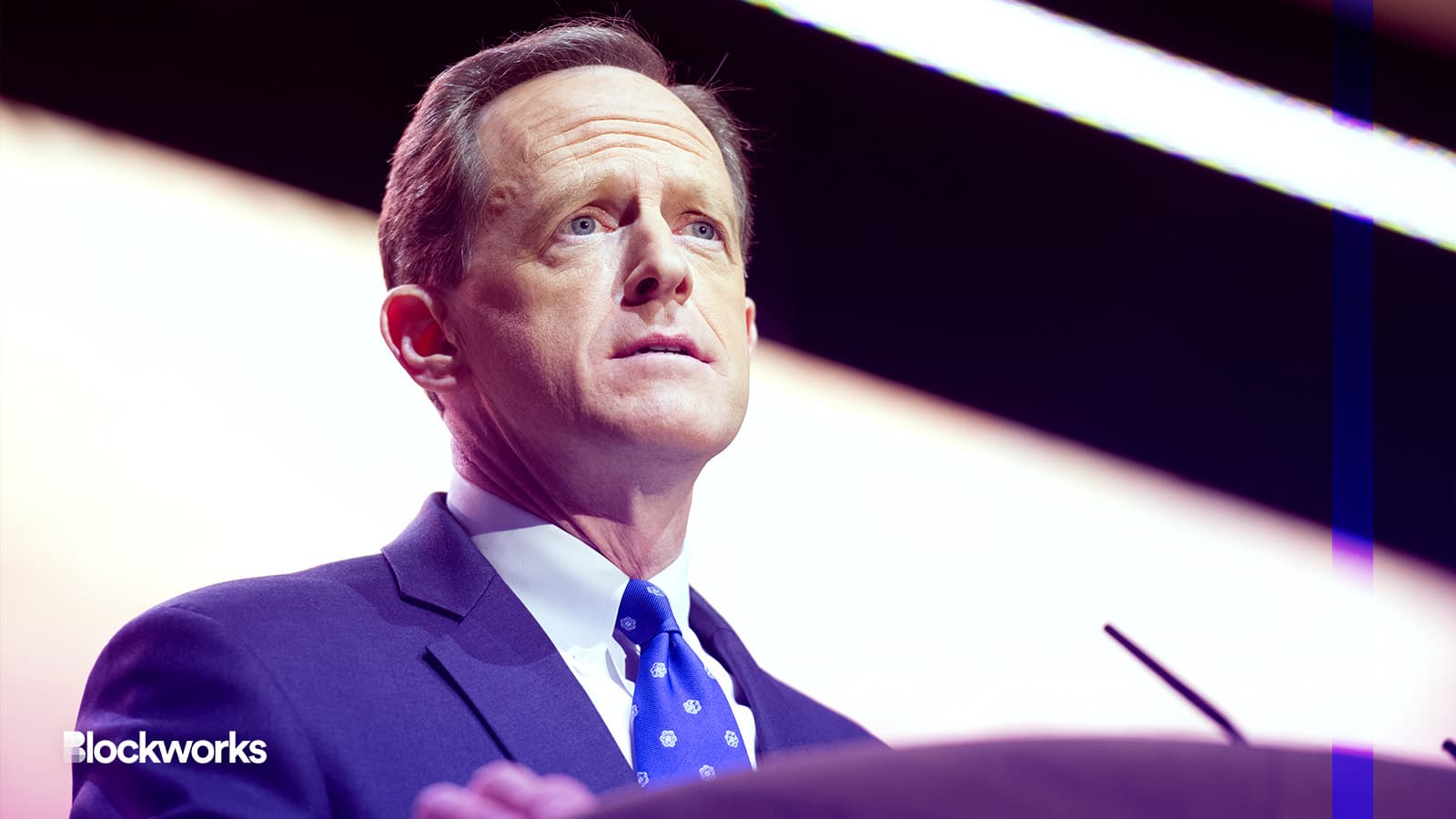
Christopher Halloran/Shutterstock.com modified by Blockworks
Retiring Sen. Pat Toomey’s stablecoin bill, which seeks to establish significant regulatory guardrails for the crypto industry, hit the Senate floor Wednesday — eight months after the draft proposal was first crafted.
However, with the congressional session ending on Jan. 3 2023, the bill would have to be reintroduced by another senator next session to have any chance of becoming law. The two-term senator announced his retirement in 2020.
The Stablecoin Transparency of Reserves and Uniform Safe Transactions Act of 2022 (TRUST) would establish a new federal license aimed at issuers of payment stablecoins.
TRUST defines a payment stablecoin as being a digital asset that is directly convertible to fiat, widely used, recorded on a public ledger and issued by a centralized entity.
The April draft version of TRUST preceded the collapse of stablecoin issuer Terra’s ecosystem, which caused billions of dollars in losses of investor funds based on a failed algorithmic design. But even then the bill limited stablecoin issuance to money-transmitting businesses, or holders of a state or federal license, including banks.
Nationally licensed payment stablecoins must be backed by “cash and cash equivalents or level 1 high-quality liquid assets denominated in United States dollars,” but they also become eligible Federal Reserve accounts and services, according to the newly introduced draft law.
The bill also aims while clarifying their status; they would not be considered securities if no interest is involved.
“I’ve put forward a regulatory model that won’t undermine competition by favoring entrenched incumbents,” Toomey said in a statement. “This bill will also ensure the Federal Reserve, which has displayed significant skepticism about stablecoins, won’t be in a position to stop this activity.”
The bill may serve as a model for similar legislation in the future, but will not be considered before the end of the congressional session on Jan. 3, 2023.
Should a similar bill pass, stablecoin issuers will be subjected to standardized disclosure requirements and attestation by registered accounting firms — historically obtained via lawsuits and legal settlements.
It would also attempt to bolster privacy protections to financial transactions involving stablecoins by mandating the US Treasury not be allowed to collect nonpublic information unless a warrant is issued by a judge.
TRUST follows more than 16 months of deliberation, discussion and the solicitation of legislative proposals in what Toomey has described as an attempt to shield investors from financial risk while laying the groundwork for stablecoin innovation.
Get the news in your inbox. Explore Blockworks newsletters:
- The Breakdown: Decoding crypto and the markets. Daily.
- 0xResearch: Alpha in your inbox. Think like an analyst.
