Gitcoin is restructuring to focus on grants for the Ethereum ecosystem
Gitcoin is restructuring so technology teams will have a clearer direction to build towards
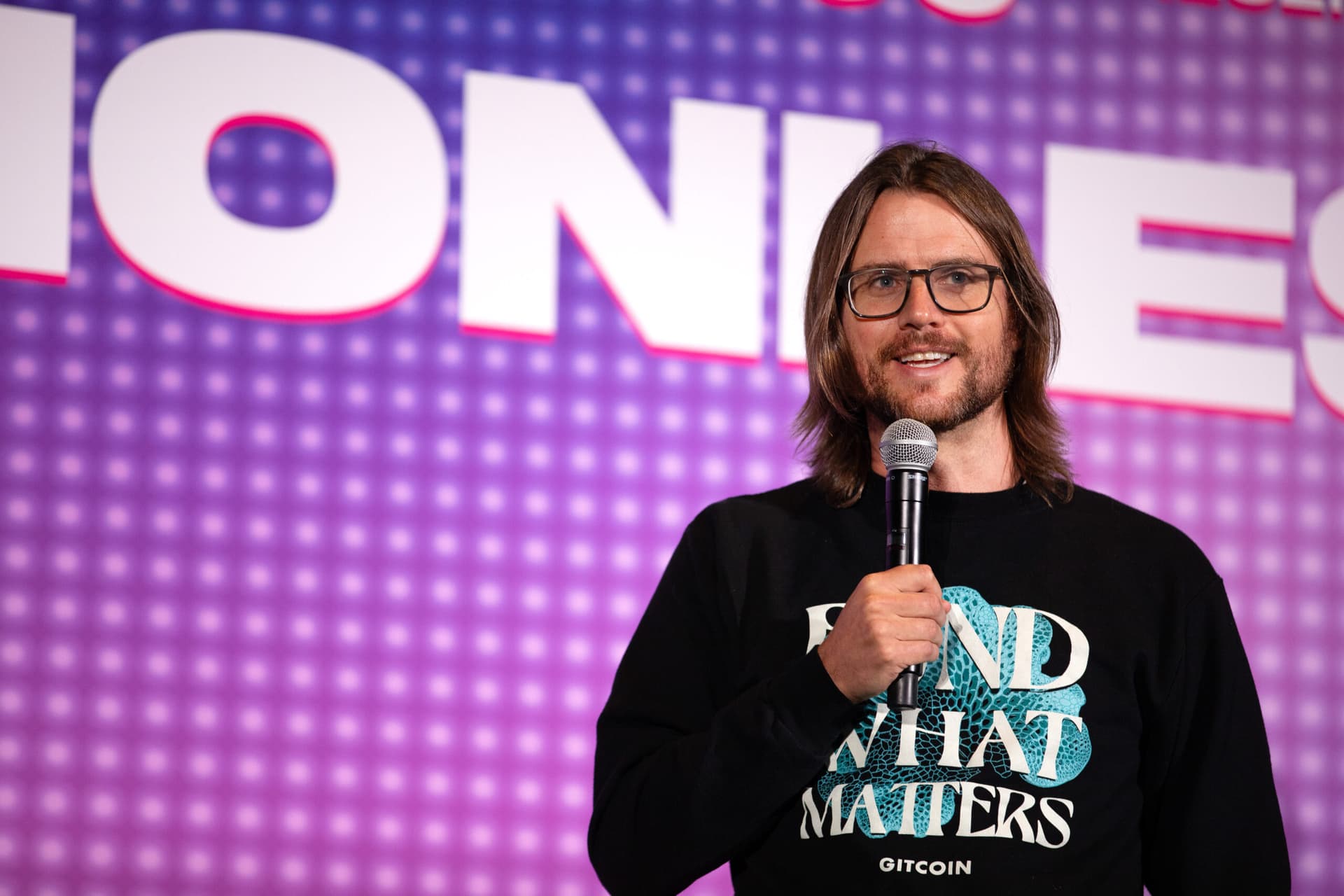
Gitcoin co-founder Kevin Owocki at Permissionless II
Gitcoin, an open-source software funding platform, has announced it will shift focus away from public goods funding and towards enhancing grants infrastructure designed for the Ethereum ecosystem.
Since its launch in May 2021, Gitcoin’s organizational hierarchy has been relatively flat, with no CEO calling the shots. Workstreams, or focused groups dedicated to specific tasks or projects within the organization, have always required budgets to be approved through community voting — an often time consuming process.
As the DAO has evolved, however, it morphed from an impact-focused organization to something more technology-centric. Gitcoin executive director Kyle Weiss told Blockworks in an interview that this did not align well with the existing DAO structure.
“It was too disjointed,” said Weiss. “In a DAO environment where everyone is fully remote, we have folks contributing from nearly every continent — stability, operations, and software development is really important, you need a core group of individuals who have context.”
Read more: Gitcoin’s co-founder wants to return from the sidelines
As part of the new restructuring plan, two business units have formed within Gitcoin. One unit will focus on coordinating product-specific work, while a subDAO will manage matters of community and governance.
Weiss noted that over the years, the company has experimented with various products. He said that some of these have been distractions, while others have been valuable to its growth.
“A lot of 2024 is focusing on grants. We want Gitcoin to be much more associated with grants, whereas right now, our narrative has been around public goods funding, and that shift is because we’ve moved from being an impact organization to a technology organization,” Weiss said.
For this reason, Weiss explained the DAO will transition from independent workstreams towards a structure more akin to a “Labs” structure. This is something that is common among existing protocol development teams, similar to how Uniswap has Uniswap Labs or how Optimism operates with OP Labs.
“We want to make sure there is stability in the software development side and then give the DAO material scopes of work to own,” he said.
Weiss says that by granting software development teams greater leadership and more defined decision-making powers, the community can remain concentrated on achieving results through the grants programs via token voting.
“I don’t know if the token holders are the right people to decide on multi-year roadmap decisions on the technology side,” Weiss said.
Gitcoin co-founder Kevin Owocki shared this sentiment.
“It’s not proven that DAOs can develop software, so the Labs team is designed to recognize that in our organizational structure, and make sure that we’re building world-class software.”
Get the news in your inbox. Explore Blockworks newsletters:
- The Breakdown: Decoding crypto and the markets. Daily.
- 0xResearch: Alpha in your inbox. Think like an analyst.
