Families like mine need safe, secure digital identities
As I’ve struggled to replace basic documents like my Nigerian birth certificate, it’s only become clearer that identity should not rely on something as fragile as physical documents
Jason Raff/Shutterstock modified by Blockworks
It was just a few months after the Twin Towers fell on 9/11, and everyone in my family was headed to visit our relatives in Nigeria for a month. Everyone — except for me.
My mother, holding three American degrees, had been in the United States for years via student and work visas, and my four siblings were all born in New Jersey. I wasn’t an American citizen yet, because I was born in Nigeria. And if I left the United States, I would be placed on a blacklist that would prevent me from returning.
I cried as my mother told me that I would be staying with my cousins in New York City instead — not because I was being left behind, but because neither of us knew what the future held, given the shaky political and religious climate that makes visiting Nigeria risky, even in the best of times.
“If anything happens to us, I need you to know where all your documents are,” my mother said, handing me a box. “This is your identity.”
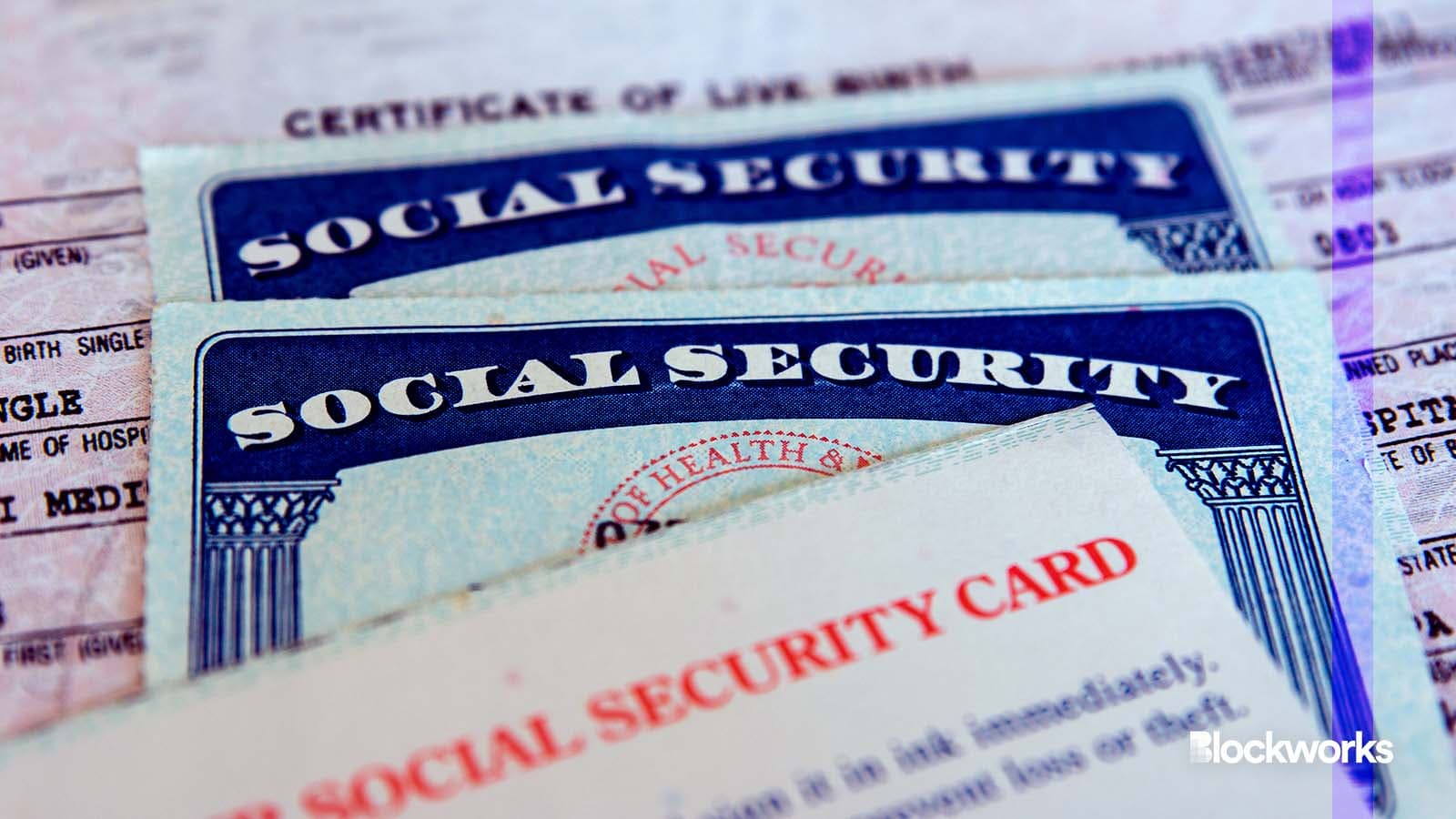
I was just 13 years old, holding my identity in my hands, entirely made of paper.
I was brought to America before my first birthday, and proving my identity has been a lifelong struggle. It has manifested itself in bureaucratic battles that have been costly — in both time and money — throughout my childhood, like when my parents lost $20,000 to a fraudster who promised he could process my citizenship. We could have avoided this expensive error if we had a way to verify that the man processing my documents was truly who he said he was, that he would not misuse my documents, and that he would give them back as promised. Even as an adult, I have spent countless hours trying to work within established systems to claim land and property that is rightfully mine after my father passed.
My experiences, shared by countless immigrants and displaced peoples around the world, have underscored the vulnerability of physical documents. In times of conflict, particularly in developing countries, possessing your birth certificate, property deeds or proof of citizenship can mean the difference between safety and chaos, existence and erasure. And yet, in a moment, they can be lost — to something as dramatic as a civil war or even something as simple as a broken-in car or a flooded basement.
As I’ve struggled to replace basic documents like my Nigerian birth certificate, it’s only become clearer that identity should not rely on something as fragile as physical documents that can be easily lost, stolen or destroyed. This contributes to my passion for my work in using blockchain to empower people to control their digital identities.
Blockchains are public digital ledgers where every transaction is transparently recorded. Once these transactions are added to the ledger, they cannot be altered or tampered with, which makes them trustworthy and easy to verify. If my or my family’s records had been stored on an immutable blockchain, the loss of a paper certificate wouldn’t have resulted in the loss of our assets or a major part of my history.
In traditional systems, a single government or corporate entity holds all the power concerning your identity. Police can suspend your driver’s license even if you haven’t been proven guilty in court, a company can refuse to provide proof of employment if they don’t want you to leave them, and a university could refuse to pass your academic transcript on to employers if you are late on paying student fees.
Bad actors, like the man who made off with my parents’ savings, can’t run away with your data. Blockchains are different because they are decentralized, and every entry is verified independently by a global network of computers, ensuring authenticity and that only the holder of the private key can access or change their data. Storing identity on the blockchain is a particularly durable option for people in countries where natural disasters, political instability or corruption can compromise physical infrastructure.
Read more from our opinion section: Self-sovereign identity is not enough
Of course, while the blockchain can provide a secure and permanent place to store identity-related data, there are reasonable privacy concerns because of the technology’s inherent transparency. That’s where zero-knowledge technology (or ZK) comes in; it shields your data and allows you to choose who has access to what information at a granular level.
ZK technology allows people to protect and use their history of information with confidence that nothing, and nobody, can take it away. That is critical for immigrants and refugees all over the world, who will be able to verify their identity to claim asylum or access services without risking exposure that could put them in harm’s way. The journey from paper-based vulnerabilities to the secure digital realm of blockchain and zero-knowledge proofs is a paradigm shift in protecting and verifying our personal information.
The importance of these technologies cannot be overstated, particularly for vulnerable groups like immigrants and refugees. The need for blockchain and related technologies highlights an urgent call to action for product developers and innovators to dedicate their skills and resources to developing practical, accessible solutions. These solutions should aim to tackle pressing societal challenges faced by billions of people, but often overlooked in the more developed regions of the world. By directing our efforts toward developing products that solve real-world problems, we can transform the theoretical promise of blockchain into concrete tools that safeguard identities, preserve histories and empower individuals globally.
For most of the world, the physical documentation we carry is more than just a piece of paper — it’s a lifeline. With blockchain and ZK technology, we can mitigate the risks and vulnerabilities associated with the fragile nature of these artifacts. We no longer have to be at risk of losing our identity because of natural or national unrest, trusting that our information is stored safely and securely online. We no longer have to confine our identities to a box.
Get the news in your inbox. Explore Blockworks newsletters:
- The Breakdown: Decoding crypto and the markets. Daily.
- 0xResearch: Alpha in your inbox. Think like an analyst.
