EU Members Reach Agreement on MiCA
The crypto bill consensus follows two years of debates among the EU’s 27 member states
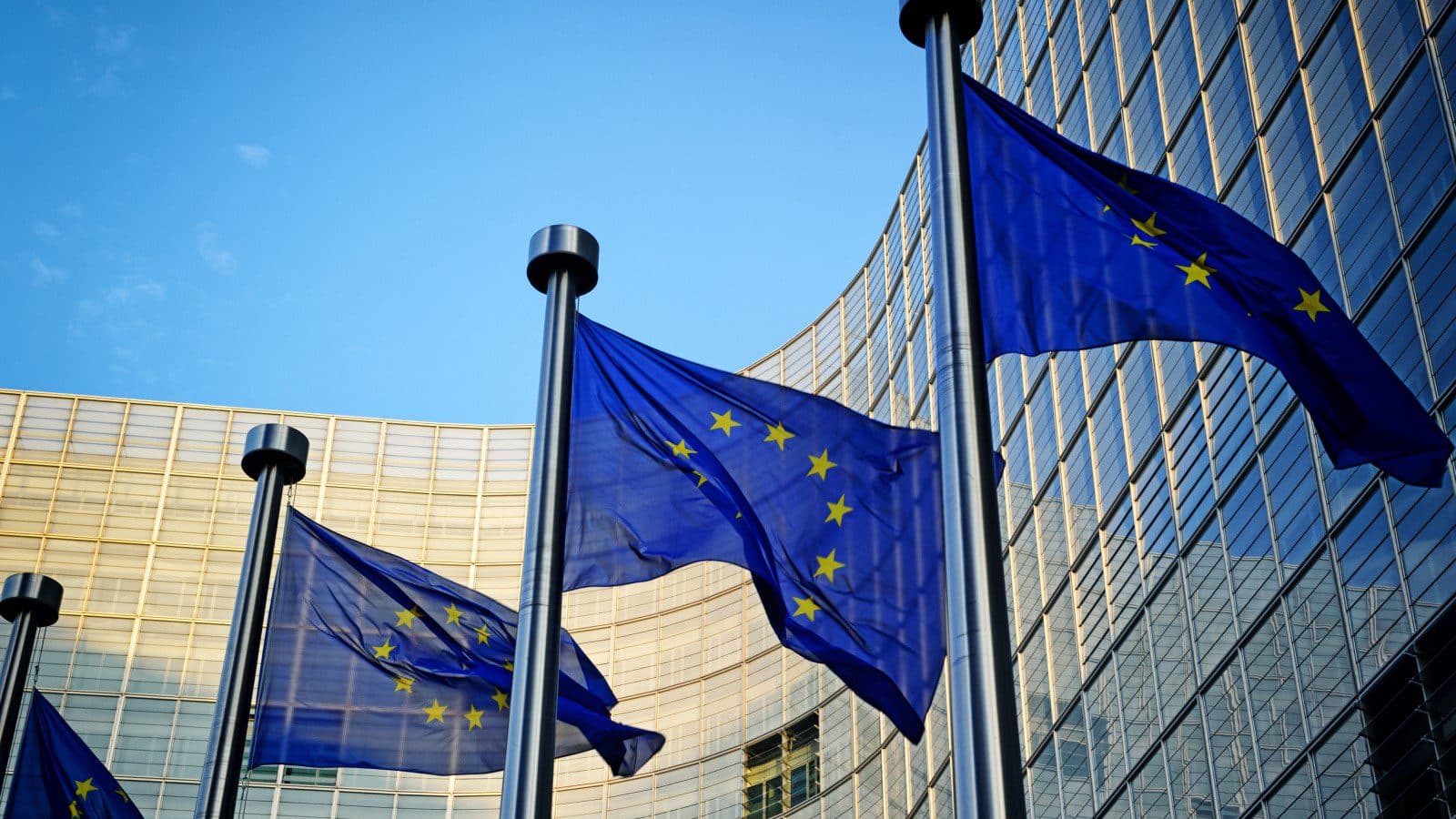
EU flags in front of European Commission in Brussels | Source: Shutterstock
- Transparency, disclosure and supervision of transactions were some of the issues agreed upon by EU policymakers on Thursday
- The bill at one time suggested banning proof-of-work-based cryptos, including bitcoin, though that provision was eventually removed
Following years of debate, negotiators from the EU’s Economic and Monetary Affairs Committee finally reached a deal on how crypto should be regulated in the bloc.
The latest update to the Markets in Crypto Assets (MiCA) bill will seek the implementation of supervisory provisions, consumer protections and environmental safeguards.
An earlier version of the bill sought to ban proof-of-work-based digital assets, including bitcoin, though the implementation was eventually scrapped.
MiCA, hotly debated since its inception in 2020, sets out the rules for how crypto and digital assets should be treated by identifying where existing financial services legislation in the EU falls short.
The consistent treatment of digital assets across all 27 member states is the goal.
Transparency, disclosure, authorization and supervision of transactions by service providers are some of the measures covered in the new bill, with additional attention paid to protecting consumers, the European Parliament said in a statement Thursday.
The new legal framework seeks to support market integrity and financial stability by regulating public offers of cryptocurrencies and digital assets, according to the statement.
The rules around stablecoins were a key aspect of the negotiations. Ernest Urtasun of the Greens/EFA parliamentary group highlighted in a post-agreement Twitter thread that “large stablecoins will be subject to strict operational and prudential rules, with restrictions if they are used widely as a means of payment, and a cap of €200 million in transactions per day.”
Among those rules is one that requires issuers “to maintain reserves to cover all claims and provide redemption rights of the holders,” Urtasun wrote, adding, “the reserves will have to be legally and operationally segregated and insulated in the interest of the holder, and will be fully protected in case of insolvency.”
That would seem to rule out algorithmic stablecoins, such as TerraUSD (UST), and place strict rules on the composition of assets backing tether (USDT).
Non-fungible tokens (NFTs) offered to the public at a fixed price in the form of cinema tickets, digital collectibles from clothing brands or in-game items in computer games will be exempt from the scope of MiCA, though that could change later down the track, the parliament said.
Measures against market manipulation and the prevention of money laundering, terrorism financing and other criminal activities will also be front and center in the EU’s new law.
The European Securities and Markets Authority (ESMA) has been tapped to establish guidelines and oversee the crypto industry.
The EU’s latest ruling on MiCA bolsters proposed measures agreed upon by policymakers on Wednesday which seek to track crypto transfers, with no exemptions for low-value transfers, on exchanges and similar platforms.
Both pieces of legislation are being touted as a means to protect consumers and fight against fraud, money laundering and terrorism financing.
“Today, we put order in the Wild West of crypto assets and set clear rules for a harmonized market that will provide legal certainty for crypto-asset issuers, guarantee equal rights for service providers and ensure high standards for consumers and investors,” the bill’s rapporteur Stefan Berger said in a statement on Thursday.
“So far, crypto assets, such as cryptocurrencies, have been out of the scope of European legislation and too often, divergent laws exist in member States.”
Macauley Peterson contributed reporting for this story.
Get the news in your inbox. Explore Blockworks newsletters:
- The Breakdown: Decoding crypto and the markets. Daily.
- 0xResearch: Alpha in your inbox. Think like an analyst.
