This Ethereum Proposal Wants to Bring Revenue Back to Developers
Developers will be able to earn a portion of the gas fees from the smart contracts they helped create
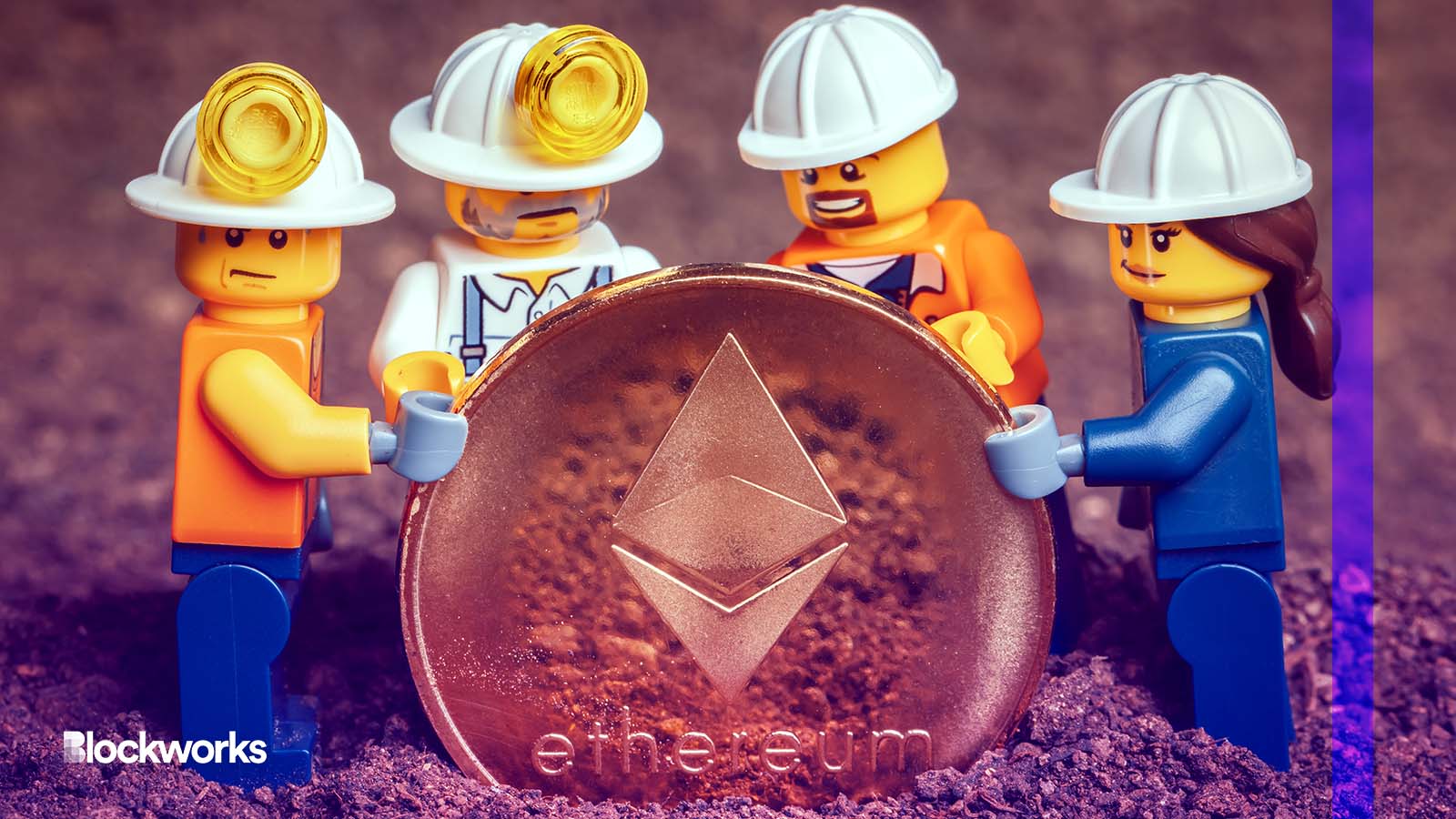
Morrowind/Shutterstock, modified by Blockworks
An Ethereum Improvement Proposal, dubbed EIP-6969, is looking to implement Contract-Secured Revenue (CSR) on Ethereum L2s.
CSR refers to a series of smart contracts that enable developers to earn revenue whenever others interact with the code they have deployed on-chain.
Kevin Owocki, one of the co-authors of EIP-6969, told Blockworks that his firsthand experience as a builder in the Web3 space made him aware of the difficulties involved in monetizing the products he had actively helped create.
“There are really not that many opportunities to monetize in a way that’s sustainable and not very speculative,” Owocki said.
After learning about CSRs from the Canto Layer 1 network, a permissionless general-purpose blockchain, Owocki saw an opportunity to reward developers for their efforts sustainably and wanted to bring this idea into the EVM ecosystem.
Bringing activity to L2s and revenue to developers
On Ethereum Layer 2 solutions today, every transaction that calls a contract on the network sends a portion of the gas consumed to the sequencer as a fee.
EIP-6969 modifies this slightly by sending a portion of those gas fees to the developer of that smart contract as well.
“When you deploy a contract onto the Ethereum network, the address you deployed that contract with would be attached to the contract,” Owocki said. “However much execution time EVM spends inside of your smart contract, that’ll be mapped proportionally and a percentage of the fee revenue will return to that address.”
Owocki notes that this new approach offers an opportunity to bridge the gap between Layer 2 solutions in need of more developers, and developers who are seeking avenues for generating revenue.
The modular architecture of smart contracts on Ethereum
As Ethereum smart contracts are designed with composability in mind, Owocki believes that EIP-6969 could set up a strong foundation for the evolving open-source infrastructure that can expand the Ethereum ecosystem.
“We have all these open-source lego bricks that exist in the Ethereum ecosystem, I as a hacker could walk into a hackathon and build something in a weekend that would have taken a bank 15 years ago $100 million to build because I can get so much software off the shelf,” he said. “So with EIP-6969, we really wanted to respect that modular architecture of the EVM.”
This means that revenue will not just be given to a smart contract at the top execution level, but as you go down the stack, each contractor that has contributed to modifying the code will be given a portion of the revenue.
“What this does is it incentivizes the creation of infrastructure, because people who might not have a business model right now are all of a sudden going to get more and more revenue as more people use their deployed version of [the smart contract],” he said.
Every time an infrastructure is used, the gas fee trickles down to everyone who had participated in building the infrastructure, creating a reward loop that incentivizes more people to maintain open-source infrastructure.
Timelines and execution
CSR currently exists in the Canto ecosystem, Owocki notes. In the EVM ecosystem, the next step will be to wait for the EIP to be accepted by the community so that the development team can create a canonical spec for how it would operate in the Ethereum ecosystem.
Once that is complete, Owocki said that the next step would be to work with L2s to implement it into their ecosystems. This is expected to happen within the next six months.
“The reason why we can move faster on this is because we’re deploying it to layer twos,” he notes. “This is not a specification that is meant for the Ethereum mainnet. Ethereum mainnet needs to be credibly neutral, and it needs to be capture resistant. I think it’s very important to prototype this on layer twos where the stakes are lower.”
Get the news in your inbox. Explore Blockworks newsletters:
- The Breakdown: Decoding crypto and the markets. Daily.
- 0xResearch: Alpha in your inbox. Think like an analyst.
