Blur Blends DeFi and NFT Market With New Lending Platform
Blend became the largest NFT lending protocol by volume and user share within 24 hours of launching
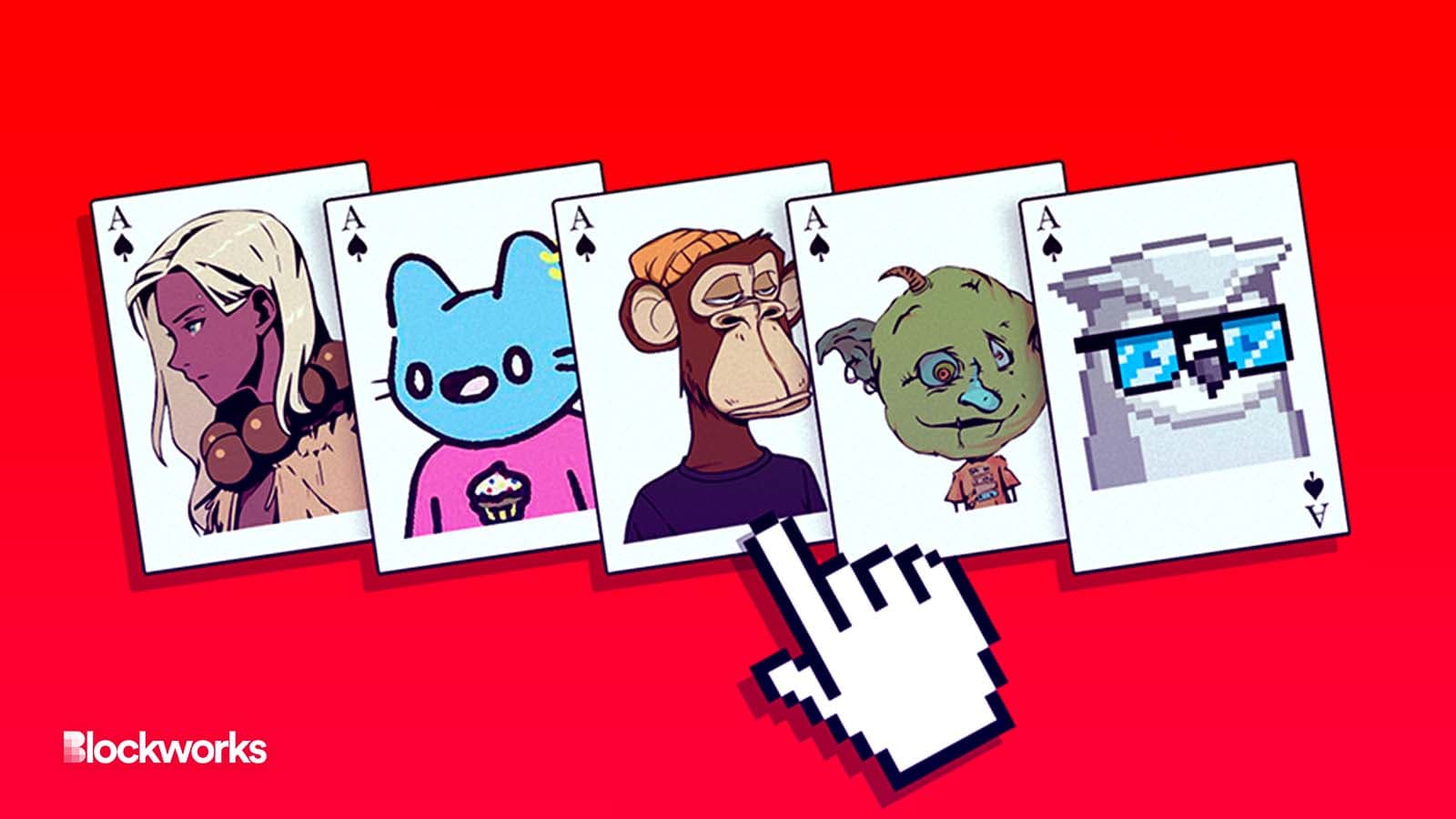
Artwork by Axel Rangel
NFT markets are much quieter these days, but “blue chip” NFTs are still pretty pricey. Granted, prices have crashed massively — more than 90% — from the peak insanity days of Justin Bieber million dollar Bored Ape buys, but they’ve held pretty steady since the plunge to reality.
Even through the tumult of terrible market conditions, blue chips have naturally held their value far better than the average digital asset. The floor price of a CryptoPunk, for example, is still hanging around 50 ETH, despite subdued sentiment.
But other than bragging rights and speculative flipping, many of the most expensive digital images haven’t exhibited a great deal of utility in the past. A vast amount of value just sits there tied to a JPEG, waiting for someone to somehow unlock it.
Just next door, over in the DeFi space, a massive market has blown up over the last couple years with participants profiting from lending, accruing interest in peer-to-peer and peer-to-pool environments with stablecoins as the primary medium.
Read more: How Does NFT Lending Really Work? A Beginner’s Guide
Both spaces attract risk-tolerant traders, yet DeFi and NFTs have existed in mostly separate neighborhoods of the Web3 environment. A few NFT-DeFi hybrids have sprung up in recent months, but many suffer with liquidity and volatility challenges, reducing the willingness of lenders to put up funds for borrowers.
So it only seems logical that the largest NFT trading platform by volume, Blur, would jump into the fray, attempting to merge the two elements of the market with their new solution, Blend.
Soon after the platform’s launch, Blur founder Pacman spoke to Blockworks about the peer-to-peer lending platform, which uses NFTs as collateral. On a recent Empire podcast, he says things are off to a strong start, with Blend already dominating the competition, becoming the largest NFT lending protocol by volume and user share within 24 hours of launching.
Hunting for higher yields
The founder explains how borrowing against an NFT works on Blend with CryptoPunks as an example. Being that it’s an “OG blue chip collection,” he says, “it’s probably one of the safest collections to lend against” in the eyes of the market.
A lender might make a 50 ETH loan offer, Pacman says, at which point a Punk owner could borrow 50 ETH against their asset. “Let’s say it was a 50 ETH loan offer at 20% APY. That means that once you start borrowing that 50 ETH, your interest will accrue at a rate of 20% per year.”
“If you held that position for a year, your total debt that you would owe would increase from 50 ETH to 60 ETH.”
Normally in DeFi protocols, Pacman explains, the medium yield is closer to four to six percent — a far cry from what’s possible with NFT lending on Blend at the moment.
“So the yield is much higher,” which is not necessarily due to the nature of NFTs as assets, Pacman says, but more so the types of borrowers in the space who exhibit higher risk tolerances.
“Lenders would provide these loans because, based on their risk tolerances, they can earn a nice yield on their ETH that’s much higher than they can get in traditional DeFi.”
Read more: NFT Investing Explained for Today’s Market
Buy now, pay later
Another interesting mechanism Pacman explains about the Blend platform is the ability to “buy now, pay later.”
Blend provides liquidity with a small amount of capital upfront, allowing purchasers to pay the rest of the costs later, Pacman explains. “So for example, let’s say there’s an NFT that costs 10 ETH, you could provide one ETH of your own collateral and then borrow nine ETH to make the purchase.”
It’s “a huge unlock,” he says, “because now people can buy very expensive NFTs with much less capital upfront.”
He compares it to the Web2 environment, where ‘buy now, pay later’ deals are commonplace. If a consumer buys an iPhone, he says as an example, they can use a payment plan over a period of 24 months with a 0% interest rate.
“The reason why that’s possible is because the ‘buy now, pay later’ functionality is so useful,” Pacman says, “that the merchants will actually subsidize that 0% interest rate.”
“The Blur protocol incentives are subsidizing that 0% interest rate phenomenon, just like it happens in Web2, where the merchant is subsidizing it.”
It’s a complex new tool in a field that is full of possibilities — and plenty of risk versus reward dilemmas. Pacman explains who he thinks will perform best with the new lending tools. “Ultimately, it’s the same with any market. The liquidity providers who will do the best are gonna be the ones who take the time to understand the market.”
Get the news in your inbox. Explore Blockworks newsletters:
- The Breakdown: Decoding crypto and the markets. Daily.
- 0xResearch: Alpha in your inbox. Think like an analyst.
