Bitcoiners who value sovereignty should also defend reproductive rights
True sovereignty isn’t just about financial freedom
Bob Korn/Shutterstock modified by Blockworks
I am a single-issue voter, and surprise — it’s not Bitcoin. It’s sovereignty.
For Bitcoiners, sovereignty is sacred. It is the highest unspoken commandment, “to thine ownself be sovereign.” Bitcoin, born out of frustration with centralized financial systems, has evolved into a global movement for people reclaiming individual freedom and control.
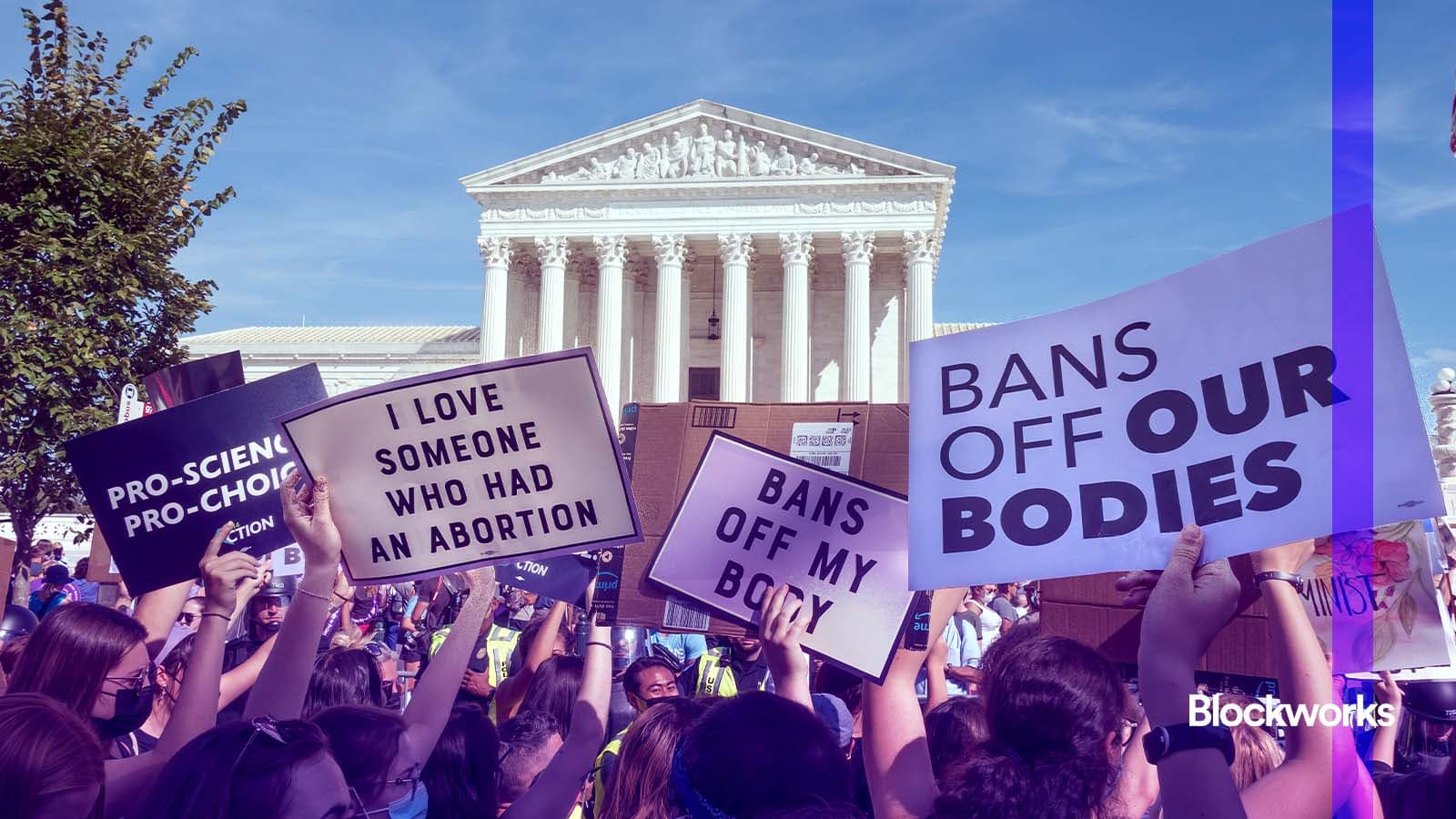
But true sovereignty goes beyond financial freedom. It means having control in every aspect of our lives — especially over our bodies. At its core, sovereignty is the power to consent, and nowhere is that principle more urgent than in the fight for reproductive rights in the US.
The reversal of Roe v. Wade is not just a political setback; it’s a direct attack on the most essential form of sovereignty: control over your own body. As part of a community that champions freedom through technology, I ask myself why there hasn’t been more discussion about the erosion of freedoms that exist beyond the blockchain.
Read more from our opinion section: Crypto and blockchain are not synonymous
Bitcoin operates on consent: Independent actors are economically incentivized to maintain the network, with each participant free to join or leave at any time. No one can censor your transactions or interfere with your financial choices. No one tells you what you can and cannot do with your magic internet money. Now imagine applying the same principle to reproductive rights.
The right to decide what happens to your own body is just as essential as the right to decide what you do with your money. True freedom means agency and autonomy over what happens to the stuff that is yours — not just your digital assets, but your own body too. Without both, you’re only halfway free…which isn’t very free at all.
Bitcoin’s magic appeals to people across the political spectrum — from libertarians to progressives to your cousin who lives in a van. It’s always been about one thing: individual freedom. Freedom from centralized banks, from nosy governments, from unjust and oppressive systems. If we’re going to talk about sovereignty in Bitcoin, we should extend that conversation to all forms of autonomy, including reproductive rights.
Just as we fight government interference in our transactions, we should also be fighting government interference in our personal medical decisions, including those between a woman and her healthcare provider.
Donad Trump’s policies, including the reversal of Roe v. Wade, directly impact my personal sovereignty as a woman living in Texas. For a movement built on individual liberty, it’s worth examining how political support can coexist with policies that restrict bodily autonomy.
Read more from our opinion section: Self-sovereign identity is not enough
Financial freedom and reproductive rights are just two points on a broader spectrum of individual sovereignty. While we may never be completely sovereign individuals, we can acknowledge how deeply interconnected these freedoms are. For me, Bitcoin has always represented freedom in all its forms — financial and personal. True sovereignty means having control over our futures, our finances and our bodies.
After all, what’s the point of living in a country where my bitcoin is protected, but my uterus is not?
Get the news in your inbox. Explore Blockworks newsletters:
- The Breakdown: Decoding crypto and the markets. Daily.
- 0xResearch: Alpha in your inbox. Think like an analyst.
