Brooklyn teen deploys Solana node for his high school
How a political refugee turned NFT trader is giving back to his alma mater
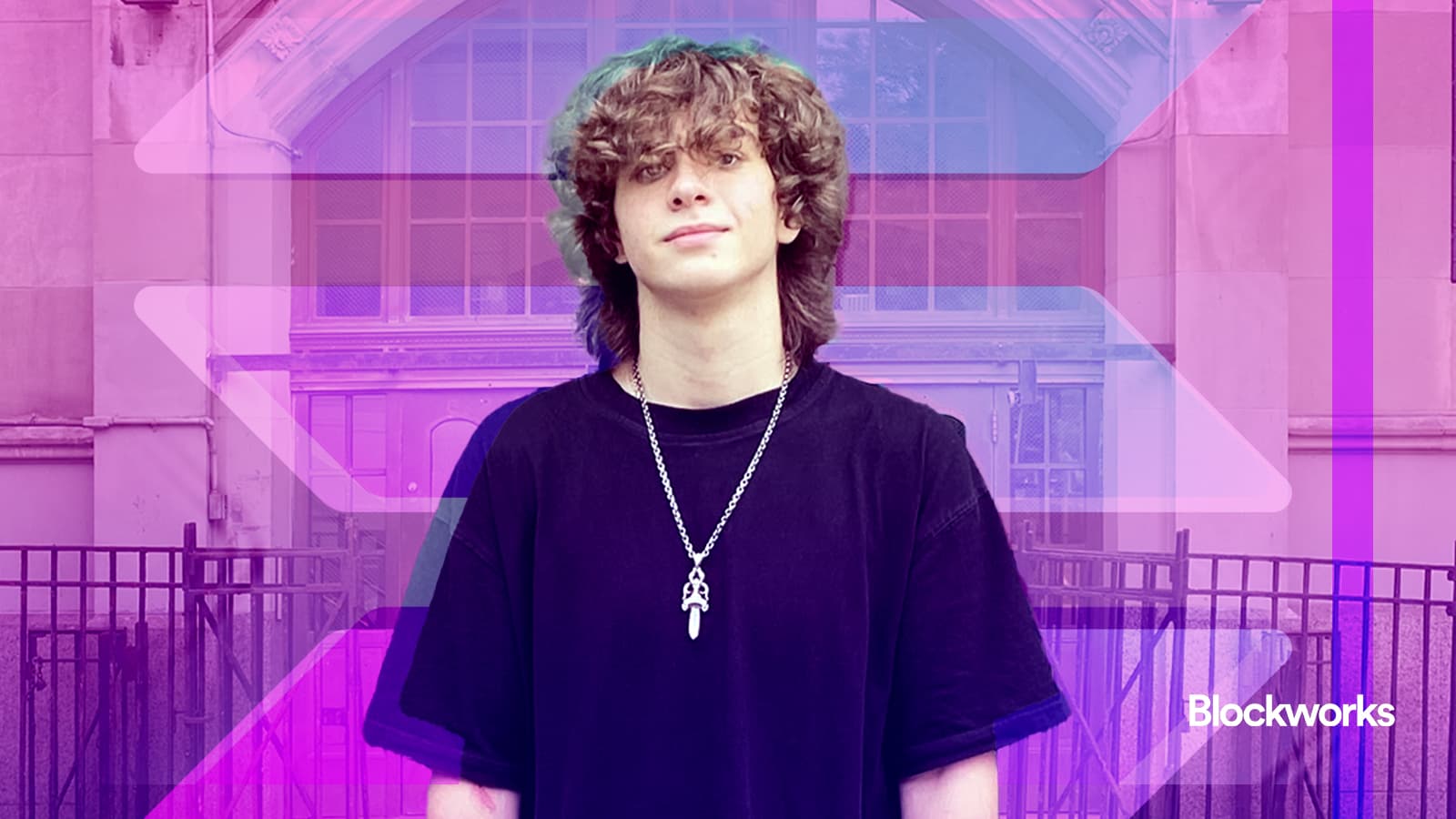
Nick Manannikov | Jack Kubinec modified by Blockworks
This is a segment from the Lightspeed newsletter. To read full editions, subscribe.
Nick Manannikov just graduated from Brooklyn Technical High School. Sitting in a restaurant a stone’s throw from his new alma mater, Manannikov is somewhat surprised by this fact.
“Somehow” he graduated, Manannikov told me, but for most of the past year, the long-haired teen has been building a business running Solana RPCs and validators. It involved lots of work calls and business during the school week and, this being crypto, a number of flights to conferences, including two month-long stints at Salt Lake City’s mtnDAO.
But while Manannikov may not be remembered much for his presence in the classroom, he is leaving his high school something it didn’t have before — a dedicated Solana validator.
Manannikov’s crypto company Shark Labs helped BTHS’ crypto club launch the validator, which is meant to give students “hands-on experience with running the nodes.” The high school node oversees roughly 15,000 staked SOL.
Manannikov came to the US as a political refugee right before high school. His family was forced to flee Russia on two days’ notice after his father refused business demands made by figures with government connections, Manannikov told me.
After moving to the US, Manannikov combined an interest in coding with a flair for making money. He and a couple friends ran bots on the Kick streaming platform to claim giveaways the app was running to boost usage. He also got into crypto, first through NFTs and later through memecoins.
After turning a hefty profit sniping a Solana NFT collection called “Deez Nuts,” Manannikov decided to parlay his earnings into launching an RPC business, which became known as Shark Node. The startup has been successful enough that Manannikov decided to pursue it full time in lieu of college. He shares an office space on Broadway, and the business is profitable, Manannikov told me.
In the fall, Shark Labs decided to start running Solana validators. To get the new business line off the ground, the company would need to get into the Solana Foundation Delegation Program, a grant-like program for smaller validators. They narrowly missed meeting with a Solana Foundation connection at Breakpoint, but Manannikov saw Solana Foundation executive director Dan Albert would be attending Solana Boston.
“I was like, shit, I guess I got a hop in a bus, go there tomorrow, try to confront him in real life and be like…‘Answer our Telegram messages, please,’” Manannikov said.
Shark Labs got into the delegation program, and it has now gotten BTHS’ validator a delegation as well. Its validator-as-a-service model won’t stop in Brooklyn, either: Manannikov just announced his company is partnering with 20 universities to launch dedicated Solana validators. These validators will charge no commission fees.
There are “no limits” in crypto, Manannikov told me. “If you’re good at what you do and you can actually execute on things, no one cares what your background is.”
Get the news in your inbox. Explore Blockworks newsletters:
- The Breakdown: Decoding crypto and the markets. Daily.
- 0xResearch: Alpha in your inbox. Think like an analyst.