Blog / Blockworks Update
Our Comment Letter on SEC's Proposed Regulation Crypto Assets
In light of the SEC’s request for comment on crypto rulemaking, we sent a letter in partnership with the Transparency Alliance on our perspective.
By Robert Burkhart ·
Today Blockworks published our comment letter on Regulation Crypto Assets, the SEC’s proposed startup exemption for offering and selling tokens. This effort advances the Token Transparency Framework’s core mission: protecting token investors by promoting standardized disclosures, reducing compliance burdens, and building greater trust in onchain markets.
The future of onchain markets has two major adoption hurdles:
- Compliance costs that erode onchain efficiency: without automated onchain compliance tooling we risk giving away the advantage of onchain capital markets, namely low cost token launches and low costs to ongoing token operations.
- Fragmented and inconsistent disclosures: without a unified system for disclosures and without a unified stance on what should be disclosed, underwriters and secondary-markets are likely to learn about new risks after it actually matters.
Blockworks’ goal is to ensure that doesn't happen. Innovation and trust in onchain capital markets should not sit behind bespoke costs that overburden issuers and thereby reduce investor protections, but instead, should be empowered with automated onchain compliance tooling to keep U.S. markets the pinnacle of financial innovation and the center point of global capital well into the future.
Our industry reinvented financial infrastructure and now it’s time to reinvent financial compliance infrastructure to be cheaper, faster, and natively onchain.
Read the letter in full here:
View PDFThe Token Transparency Framework (TTF), a collection of digital asset disclosure standards bringing trust to onchain markets, was built by the industry for the industry. It has received massive support from the market with over 200+ filings backed by a Transparency Alliance of 70+ participants including Coinbase, Binance.US, Ark Invest, and others. The TTF was built with the people who launch, list, and hold tokens, because they know what information protects investors and what tends to go unmentioned.
In June 2025, we launched the Token Transparency Framework. Since then we’ve seen strong growth with 213 TTF filings as of mid October.
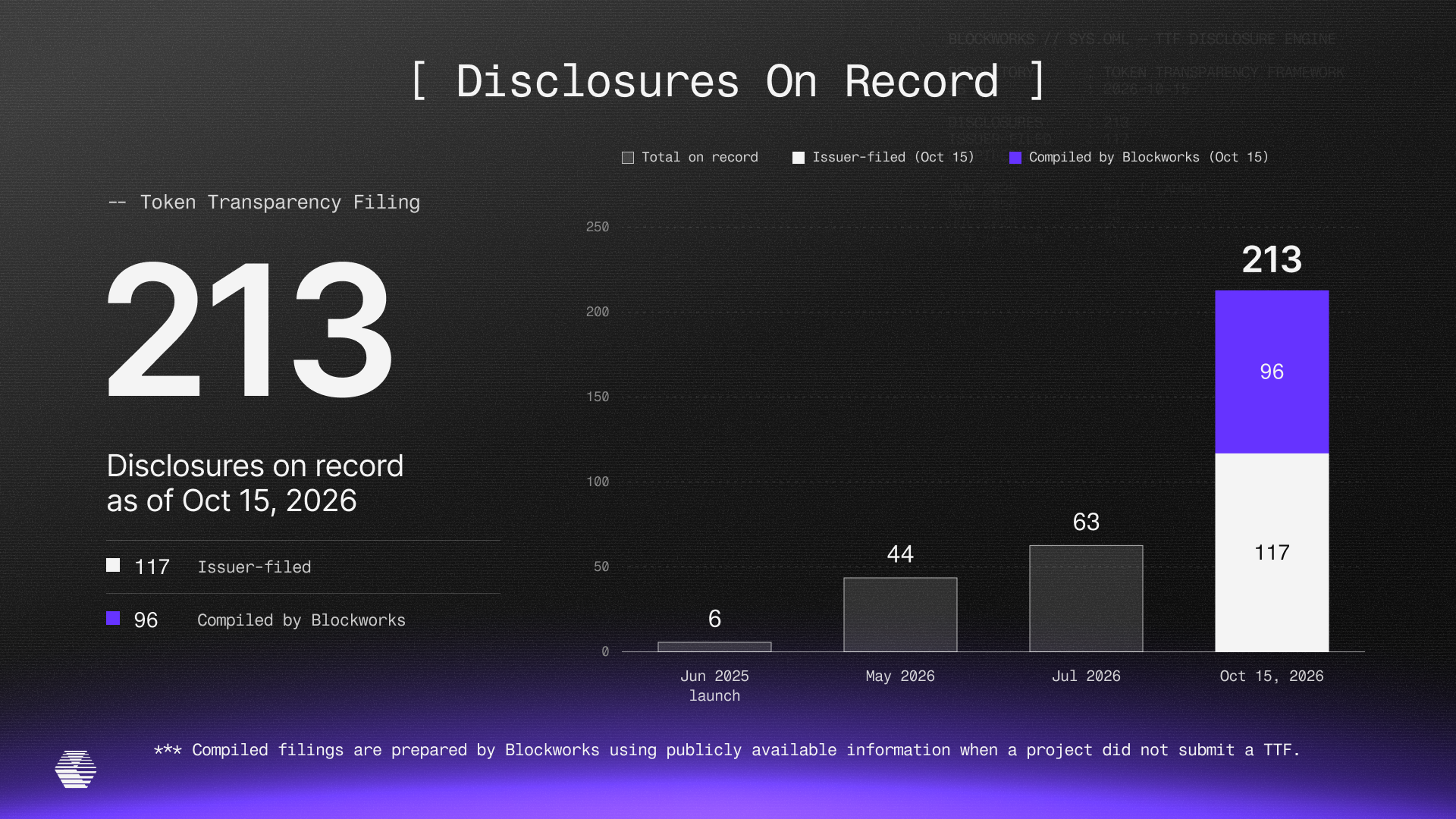
Over the last sixteen months the market has overwhelmingly adopted the TTF as the only disclosure standard for the digital asset industry. That is why, on the industries behalf, we are requesting the SEC to:
- Incorporate Token Transparency Framework line items
- Recognize a new function: Qualified Onchain Disclosure Agent (QODA)
- Allow third-party disclosure preparation and contracting
—-
What we are proposing:
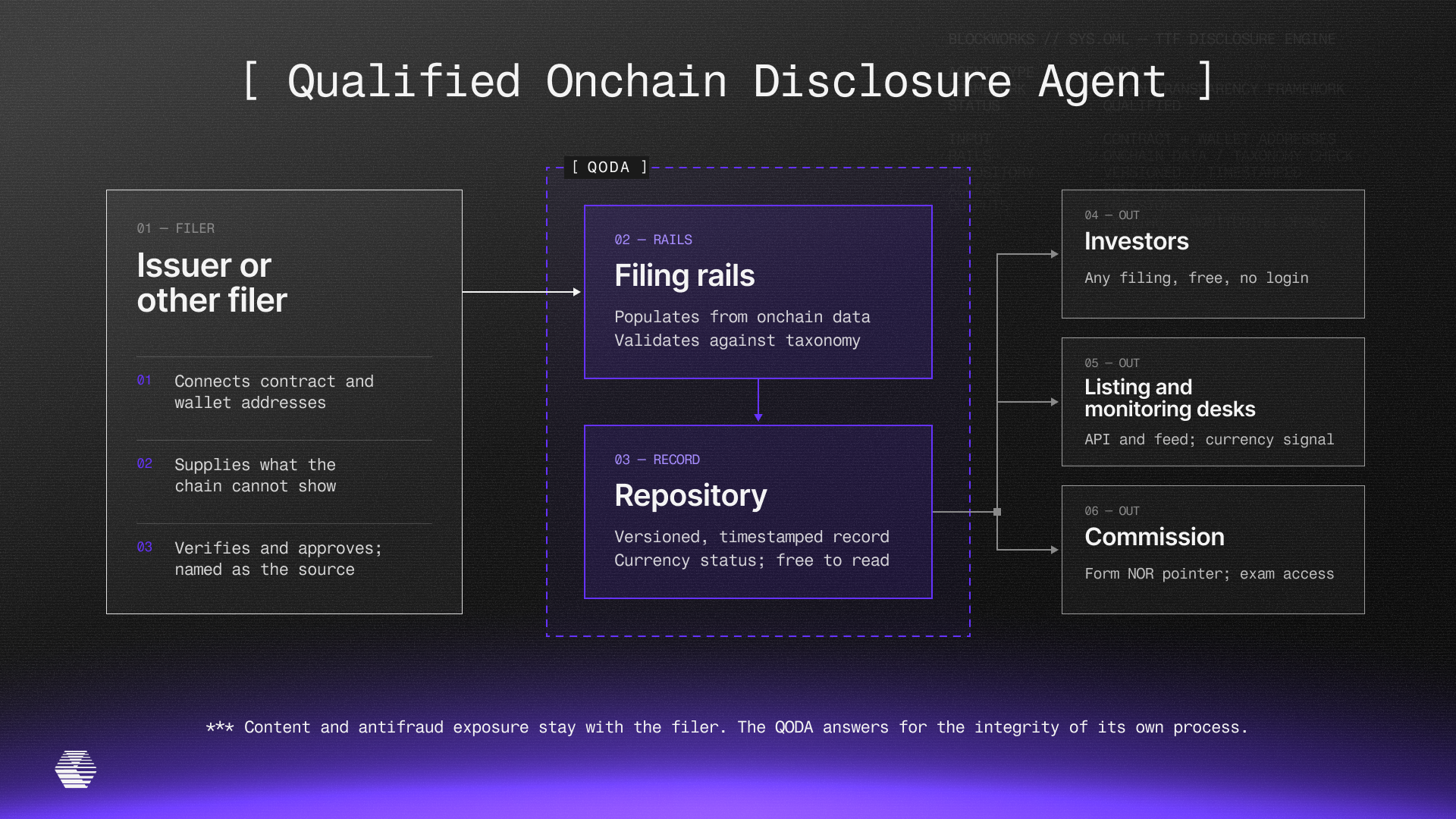
Recognize a Qualified Onchain Disclosure Agent.
A Qualified Onchain Disclosure Agent, or QODA, is an independent disclosure infrastructure provider that meets standards the SEC would set; it does two jobs.
- First, it helps token projects prepare disclosures. A project connects its wallet and contract addresses, the software fills in what the blockchain can show, and the project supplies the rest, checks the answers, and approves publication.
- Second, it keeps those disclosures in one public, searchable record that people and software can use. Each filing has a lasting link, dated versions showing what changed, a clear indication of whether it is current, and monitoring for changes.
For investors and secondary markets, this means having one reliable place to find the latest information about a token, understand what has changed since its last disclosure, and identify emerging risks before they become costly surprises. By making disclosures consistent, accessible, and continuously monitored, QODAs can help investors make better-informed decisions while giving exchanges and other market participants the information they need to protect the people who rely on them.
Bring key TTF disclosures into the rules.
The TTF asks projects to explain token loans, liquidity arrangements, deals with exchanges and market makers, and payments to advisers and influencers in tokens. It also identifies relevant wallet and contract addresses and explains how supply figures are calculated. Including these details gives Tokenholders a clearer picture of who can influence trading, who is being paid to promote a token, and what the supply numbers actually include. Including these line items makes risks easier to spot and tokens easier to compare.
Make disclosures available for third-party filers.
An exchange or another company could hire a QODA to prepare and publish a token disclosure or could prepare or publish a token disclosure themselves. Investors would get a public record showing where the information came from, who stands behind its statements, and what remains unknown or unverified. This gives Tokenholders information about projects that have not filed themselves. It also reduces the need for every exchange or fund to reconstruct the same information separately, making disclosure less expensive and important risks easier to find.
Keep investors informed after the originator ceases reporting.
Tokenholders still need information when a project shuts down or leaves mandatory reporting. A third party could preserve and update a clearly labeled record using public and onchain sources, so investors can see both the history and later developments. Projects that exit reporting could then keep publishing disclosures without that act alone being treated as a new promise to develop or manage the project. That removes an incentive to go silent and helps investors follow risks for as long as they hold the token.
Conclusion:
Blockworks is requesting the SEC recognizes a Qualified Onchain Disclosure Agent (QODA), brings key TTF disclosures into the rules, makes disclosures available for third-party filers, and keeps investors informed after the originator ceases reporting.
As the organization that started, built, and validated the only self-reporting standards for onchain markets and created a strong alliance to support it, we believe that onchain markets can grow with a few added functions.
A unified system for disclosures, a unified stance on what should be disclosed, and automated onchain compliance tooling will ensure that low cost token launches and low costs to ongoing token operations keep U.S. markets the pinnacle of financial innovation and the center point of global capital into the future.
Back to Blog
Markets, protocols, and policy, read by 200K+ professionals.