
Early to crypto
etoro has been a pioneer in crypto. It was one of the first European brokers to add crypto and one of the first companies to buy it for its treasury, and its co-founder and CEO, Yoni Assia, wrote the Colored Coins whitepaper. Today etoro is a Nasdaq-listed global business with millions of customers from 75 countries.
Scaling with the market
When Nir Ben-Lulu joined etoro, etoro offered about 20 crypto assets, a deliberate choice to keep its offering focused. Then the 2021 bull market arrived. Bitcoin went to $69,000 and demand spread quickly. etoro expanded its listings when the timing was right for the business and its users.
Scaling took a cross-functional effort, with support from etoro’s management and teams across the company. etoro enhanced its formal listing policy and approvals process and expanded its infrastructure for asset monitoring, staking and DeFi.
One view across every asset
Messari, now Blockworks, became core to that infrastructure. It gave the team one place to follow intel and news on every asset etoro lists. “Information could come to us,” Nir says, “rather than us actively looking for it. Everything became more transparent and easier to manage.”
Every day, etoro’s team tracks migrations, protocol governance updates, token swaps and rebrands across its listed assets. “We took ownership of the information ourselves,” Nir says.
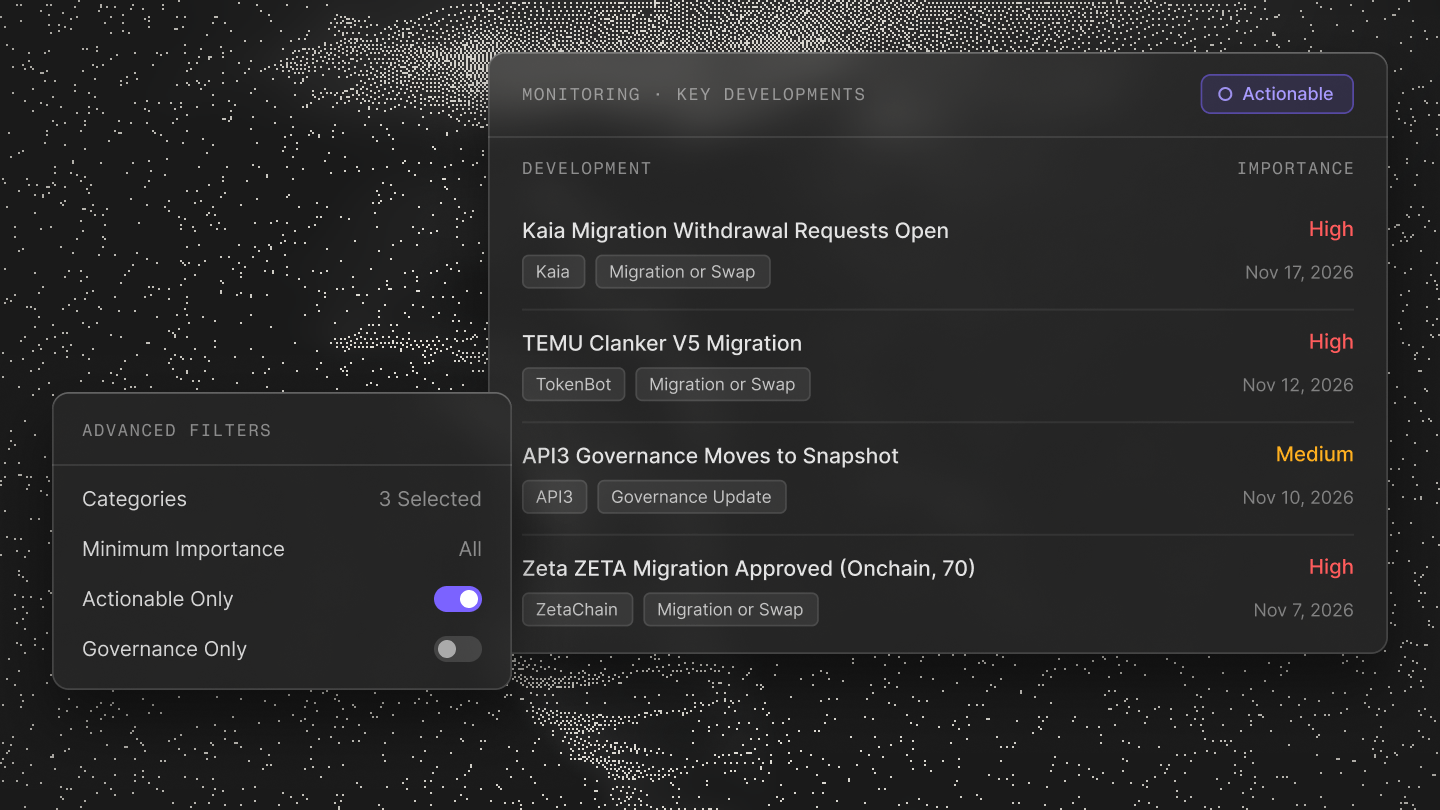
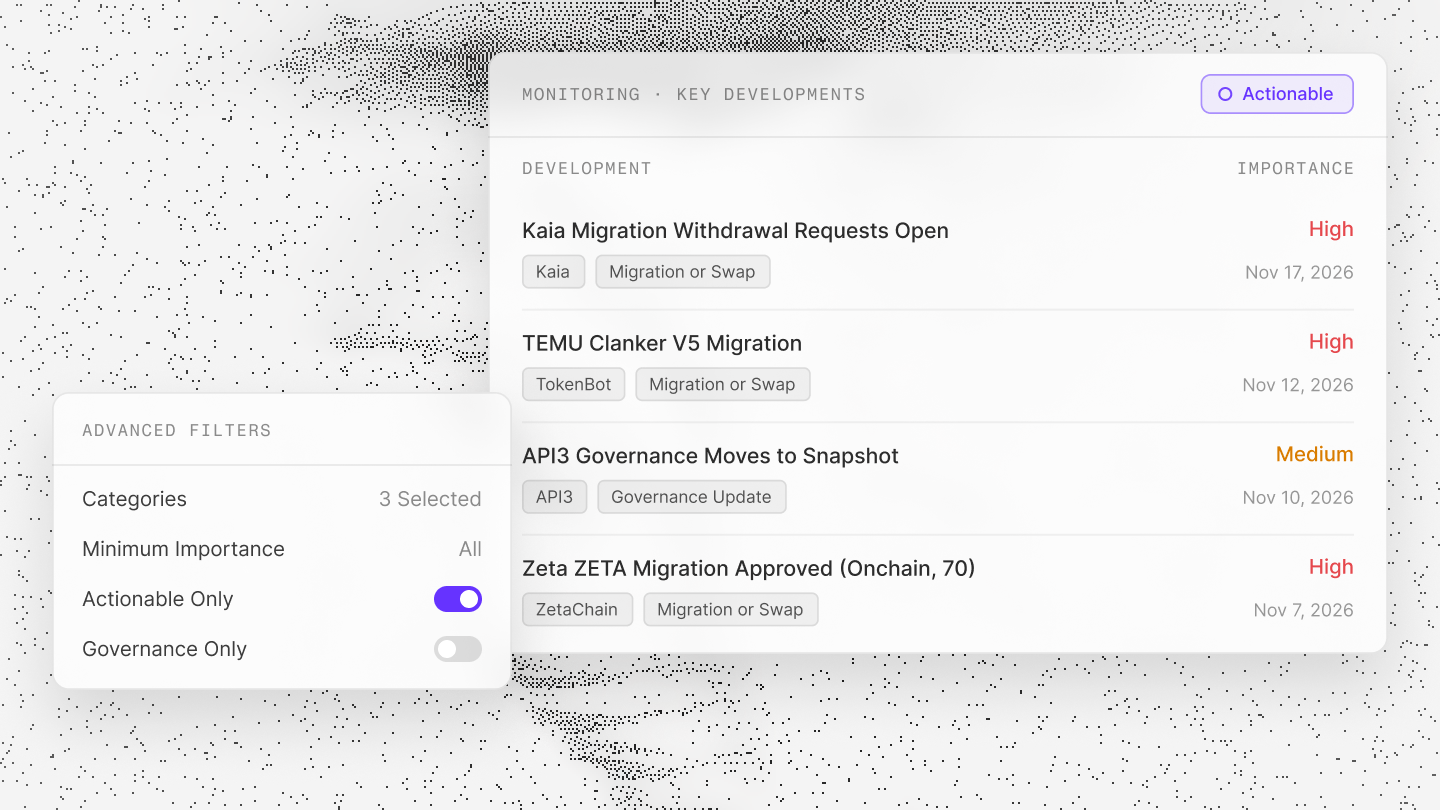
Asked about the impact of Blockworks on the business, Nir pointed to customers first.
“The main thing is the client experience. We could get the information a lot sooner, so we could take the right action and notify clients faster.”
Diligence that supports etoro’s listing process
Listings were the turning point in the relationship. Every asset etoro considers goes through etoro’s own diligence under its listing policy, and then through internal approvals. Blockworks’ diligence reports complement that process as an independent point of reference.
“We do our own diligence on every asset we list,” Nir says. “Cross-referencing it with the reports from Blockworks’ analysts adds an independent view for our approval process, and it helps us list faster.”
As the pace of new tokens picked up, etoro worked with the Messari (now Blockworks) team on AI diligence reports built on etoro’s own template. Those reports feed into the same internal review.
Deciding where to focus is part of the job too.
“One day it’s L1s. The next it’s memecoins. And the next it’s tokenization. There’s so much happening that it’s hard to stay on top of everything. Blockworks helps me narrow down which projects are relevant for further diligence and where we should spend our time.”
AI in the workflow
etoro’s Crypto Operations team has built AI into its daily work. The team works mainly in Claude Code and Codex, connecting to the data through the Blockworks MCP and API.
“Since we’re using AI, I’m using the API and MCP more than ever,” Nir says. “I’m creating my own reports and customizing them through AI agents.”
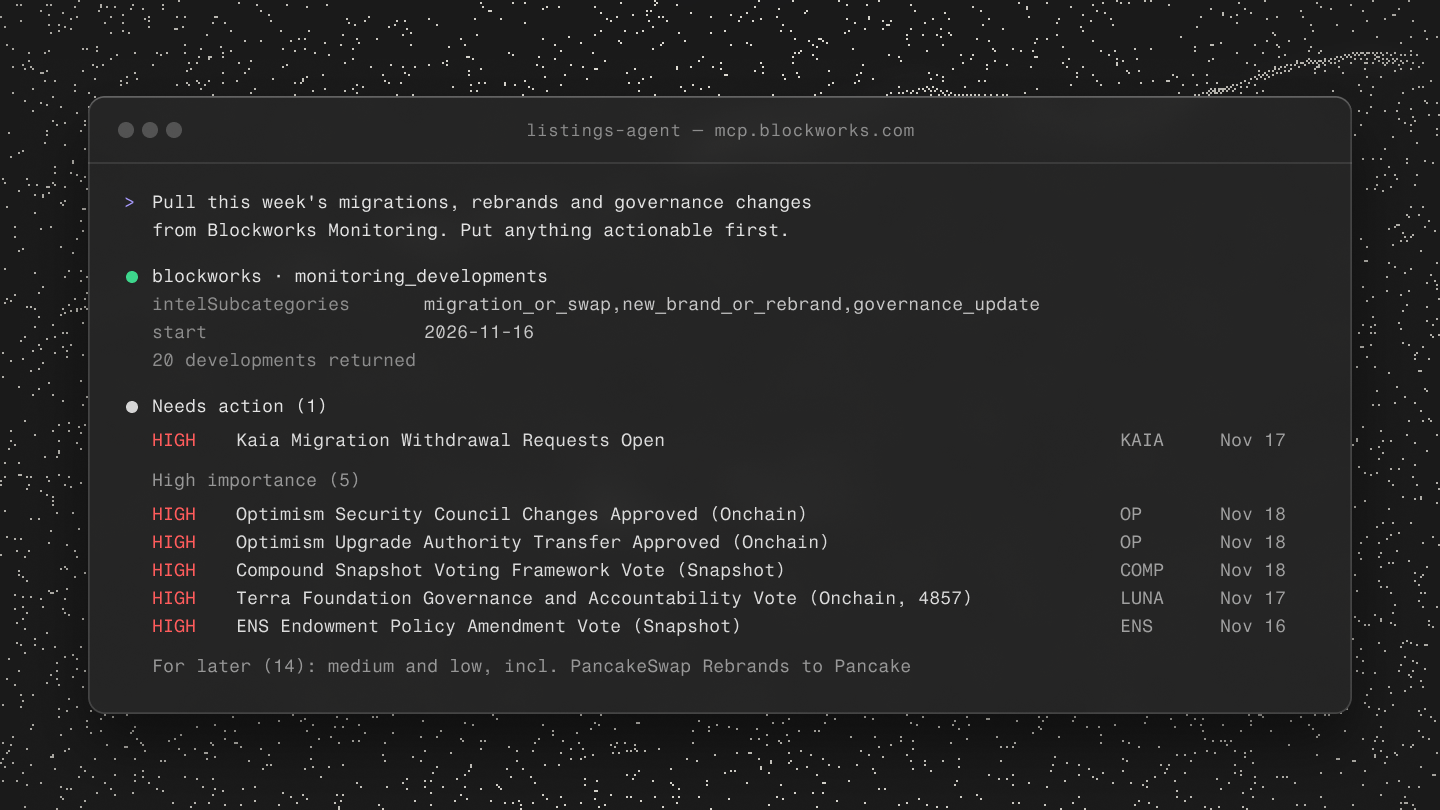
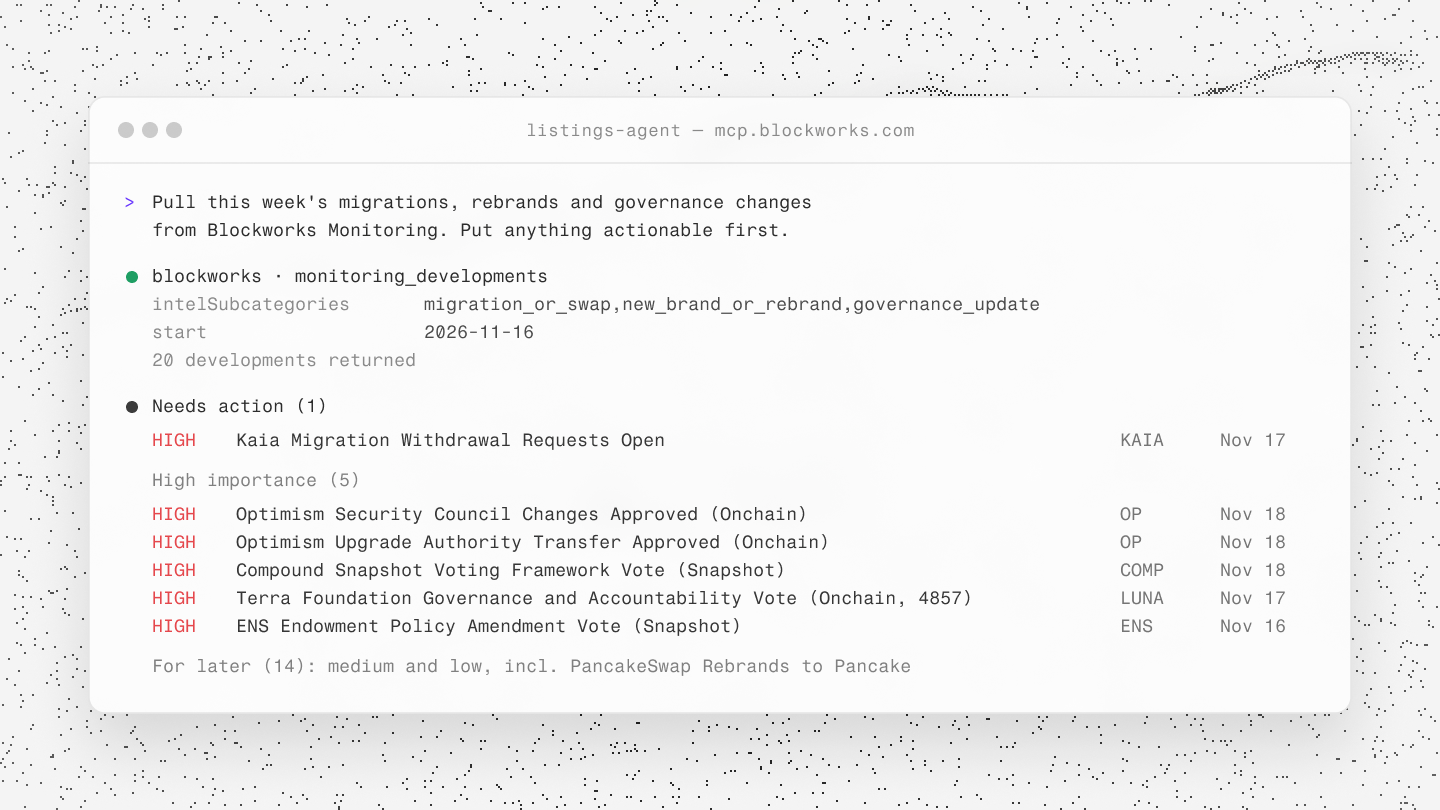
The team has built a listings dashboard with Blockworks data as a core input. It tracks assets etoro doesn’t offer yet, along with market narratives and mindshare, so the team can see what belongs on the roadmap.
Alerts arrive as email notifications across a wide set of topics. AI agents sort those alerts by keyword and context, put anything that needs action at the top and hold the nice-to-know items for later. “As we grew to 200 coins, AI really helps us focus on what’s important and what’s not,” Nir says.
The build question
We asked Nir whether etoro had ever looked at building this itself. “We considered doing it in-house,” he says. “Today, maybe with AI and API keys, we could have created something a little bit similar. But having everything already in one place, organized, categorized, and filtered has been a game changer for us. We don’t need to spend precious resources building it in-house.”
He also points to the features he wouldn’t have thought to build. “Blockworks opened my eyes to a lot of features I didn’t think I needed, and eventually I needed them,” he says. “If I had built it in-house, I probably would have missed them.”
“Blockworks has the infrastructure for discovery, monitoring and diligence, all in one place.”
Across etoro
Several etoro teams use the platform. The Security team uses it to monitor assets in custody and for the security side of diligence. The Risk team draws on it for quarterly reviews of each listed asset.
etoro’s listing, monitoring and staking processes are subject to regular internal and external review, and the team shows reviewers how the Blockworks platform can fit into each process.
Building the product together
etoro has worked closely with the Blockworks team on the product. It was a design partner on the diligence reports and the info section, and some features came straight from etoro’s requests.
“If there’s a migration, I wanted to make sure I never missed it. That’s actually where the urgent tag in the Blockworks platform came from. The platform keeps evolving as we evolve.”
“I always felt like every time I asked for something, Blockworks would try to build it quickly for me,” Nir says.
What’s next
Before Blockworks acquired Messari, etoro told Blockworks that one of the things missing from Messari was onchain data. Onchain activity and token concentration are important inputs in etoro’s asset assessment process, and etoro wants that data next to everything else the team uses.
“That’s going to be one of the main benefits of Blockworks and Messari coming together,” Nir says. “Having the onchain data in there to give us an even better picture of what’s happening.”
Blockworks has since brought Messari and Blockworks data, onchain data included, into one API and MCP server.
Products in this story
- Intel
- Research, diligence reports and news that support etoro’s asset reviews
- Monitoring
- Alerts on migrations, rebrands and governance proposals across listed assets
- API
- Market, onchain and research data in one API for internal dashboards
- MCP
- Blockworks data inside Claude Code, Codex and other AI agents