Where is Satoshi’s Nobel Prize? It’s been 11 years since Andreessen made his case
Software has eaten the world. Now, it’s Bitcoin’s turn
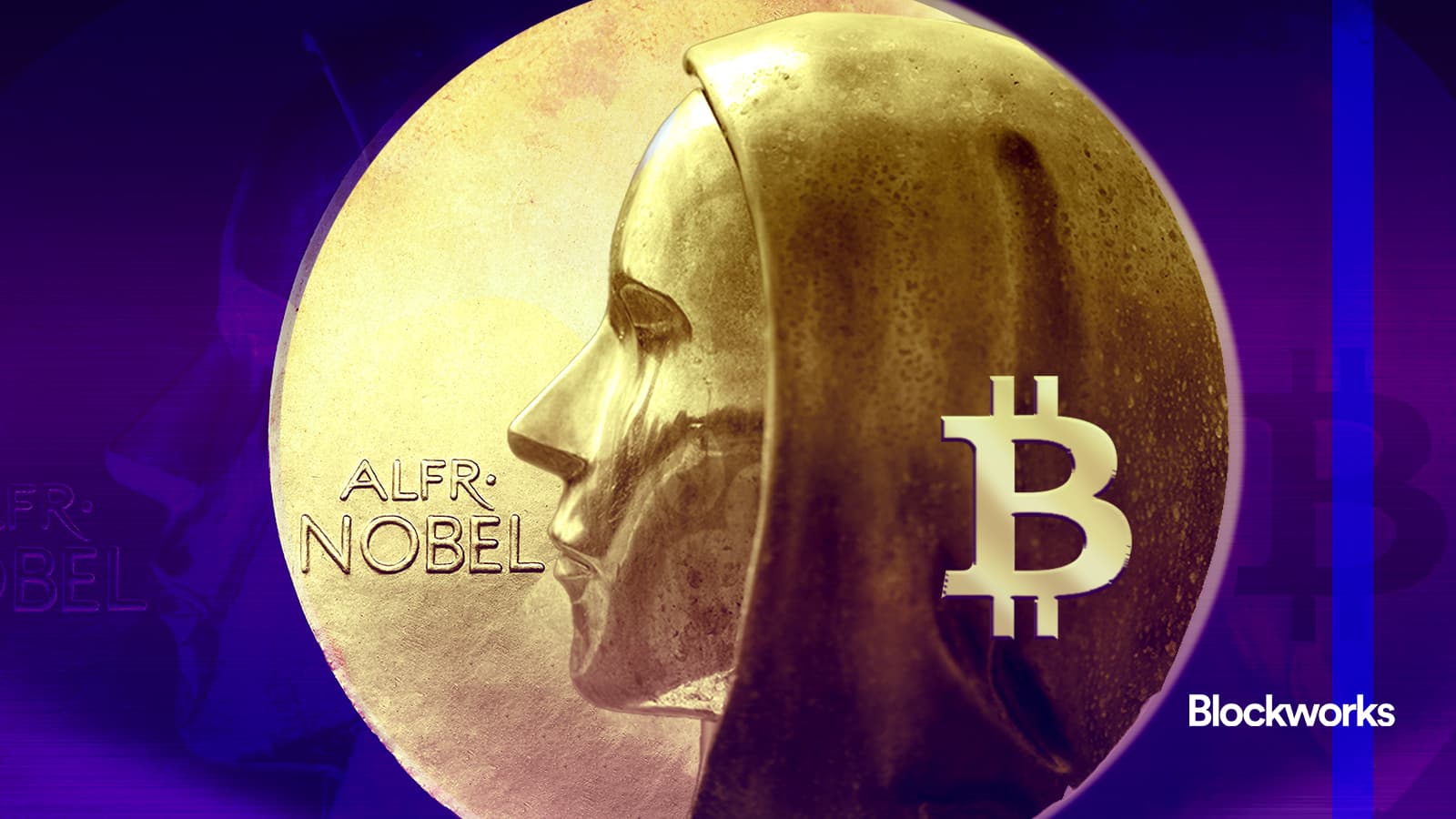
Paramonov Alexander and Istvan Csak/Shutterstock and Adobe modified by Blockworks
This is a segment from the Supply Shock newsletter. To read full editions, subscribe.
Bane, the Batman villain, was famously born in the darkness. Molded by it.
Bitcoin’s deepest darkness was, arguably, the year 2014.
Ross Ulbricht had just been nabbed and was awaiting trial. Rolling, related FBI and DEA raids led to numerous high profile bitcoin seizures, including the January arrest of Charlie Shrem for allegedly assisting in the laundering of coins linked to Ulbricht’s Silk Road.
Then a meteor struck: Mt. Gox went belly up in February. Gox’s market share had been shrinking, from over 70% in late 2013 to about a third when it suspended withdrawals, but the Bitcoin world was still rocked.
Marc Andreessen wasn’t worried.
On This Day
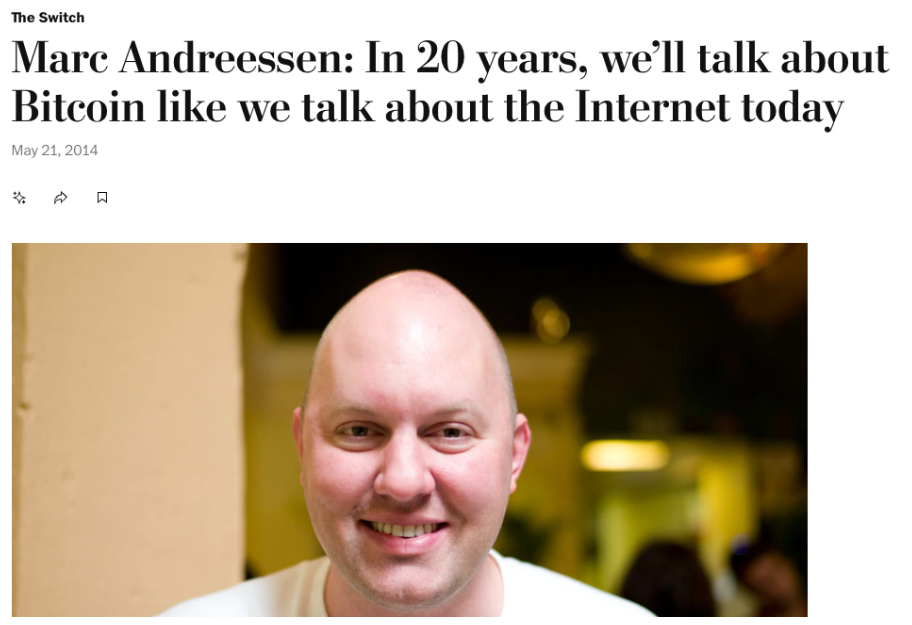
Exactly 11 years ago, the Washington Post ran a prescient interview with Andreessen. His venture fund Andreessen Horowitz had led Coinbase’s $25 million funding round about six months earlier, which at the time was the largest fundraise in Bitcoin history to date.
“In 20 years, we’ll talk about Bitcoin like we talk about the internet today,” Andreessen said. It might be an old adage now, but the sentiment was a big deal in 2014. After all, it had come from one of the original architects of the 90s internet boom. Who else would know better?
Bitcoin’s perception in the media was weighing heavily on its prices. BTC/USD had retraced by 60% from its November 2013 bull run peak, from over $1,100 to around $440 as the Andreessen piece was published.
The price of bitcoin would go on to fall by another 50% over the next seven months.
Granted, there was more going on in the world of tech outside of Bitcoin. The world was still processing Edward Snowden’s revelations about the NSA’s wide-reaching internet surveillance, which all told took more than a year to fully sink in.
 We’re now more than halfway to Andreessen’s predicted future.
Trust in US tech had been “seriously damaged,” Andreessen said, which alongside the resulting “balkanization of the internet,” had led to standstill in public policy over how internet technologies should evolve.
“Governments are very worried about what citizens are going to be able to do with these new technologies,” Andreessen said. “Citizens are very worried about what governments are going to do, and everybody’s worried about what businesses are going to do. It’s this three-way dynamic that’s playing out.
“And so for any of these individual issues, it’s not just ‘What is one leg of this triangle going to be doing?’ It’s, ‘What are all three of them going to be doing, and how will the tension resolve itself?’”
The answer was Bitcoin.
“I have a lot of friends who are programmers. The programmers have always gone like, ‘Those [Bitcoin] guys are crazy.’”
“And then, almost 100% of the time, they sit down, read the paper, read the code — it takes them a couple weeks — and they come out the other side. And they’re like: ‘Oh my god, this is it. This is the big breakthrough. This is the thing we’ve been waiting for. He solved all the problems. Whoever he is should get the Nobel prize — he’s a genius. This is the thing! This is the distributed trust network that the internet always needed and never had.’”
Some of the interview borders on blockchainism, even if Andreessen was suggesting that some eventual use cases would be underpinned by data written to the Bitcoin ledger: “Digital stocks. Digital equities. Digital fundraising for companies. Digital bonds. Digital contracts, digital keys, digital title, who owns what — digital title to your house, to your car…digital voting, digital contracts, digital signatures. You’ve got unique pieces of digital content.”
“And, by the way, if we had had this technology 20 years ago, we would’ve built it into the browser,” he said, referring to Netscape.
This 40-minute panel alongside Balaji Srinivasan gives a deeper window into how Andreessen thought about Bitcoin in 2014.
Bitcoin may or may not be an appropriate venue for all that activity. Still, Andreessen got something very right more than a decade ago, when journalist Brian Fung asked: “Is this, like, a billions-of-dollars kind of industry?”
“Yeah,” Andreessen replied.
“Trillions…?”
“Yeah!” he said. Before laughing like Mr. Burns. Almost six years later exactly, in April 2021, Bitcoin achieved a $1 trillion market cap for the first time.
Now, we just need to wait another nine years to confirm that Andreessen was right about the rest. See you then!
Get the news in your inbox. Explore Blockworks newsletters:
- The Breakdown: Decoding crypto and the markets. Daily.
- 0xResearch: Alpha in your inbox. Think like an analyst.
