RWAs could top $35B by year-end: Securitize
Securitize CEO Carlos Domingo says institutions are eager to get exposure to tokenization
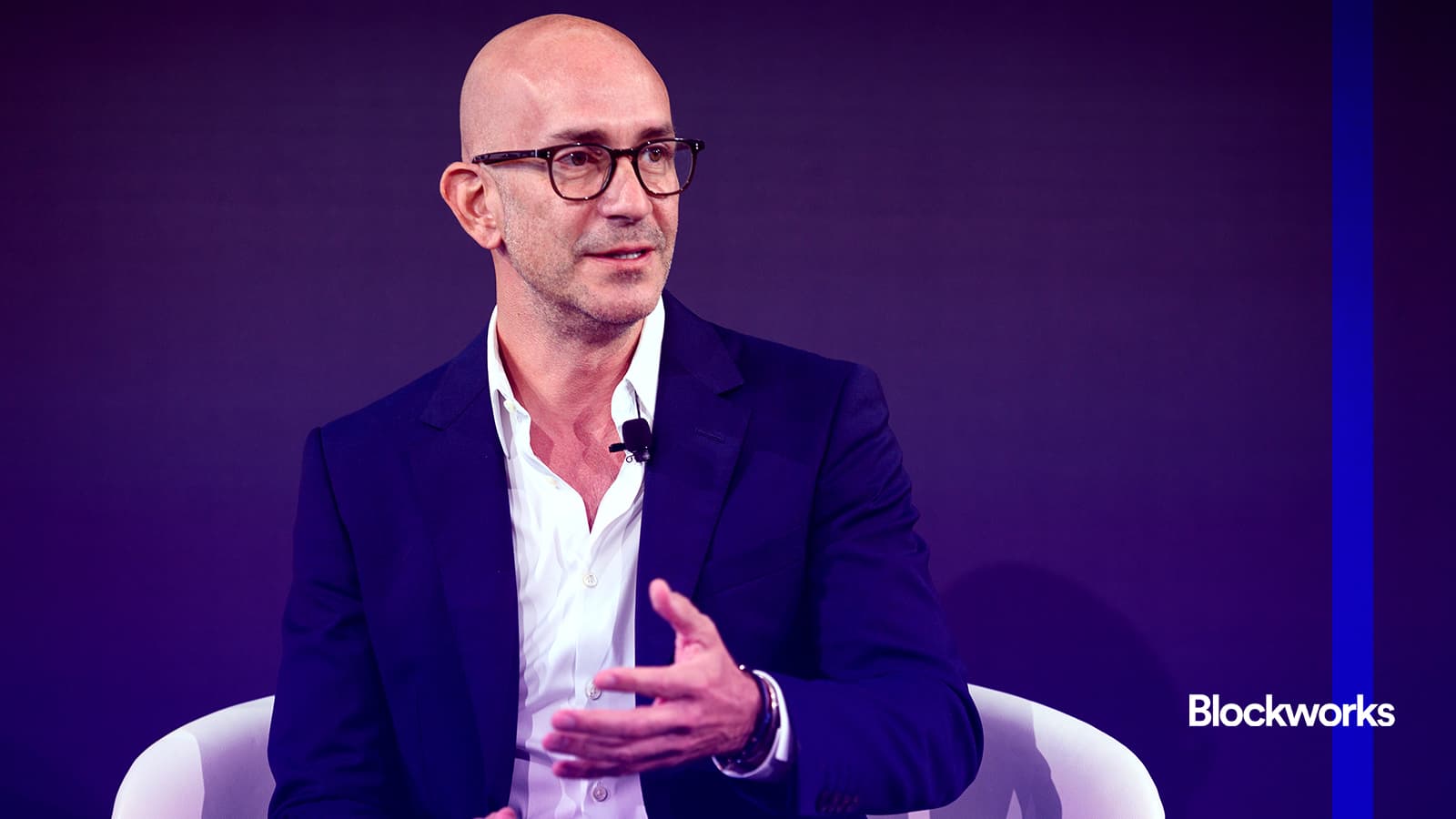
Securitize CEO Carlos Domingo | DAS 2022 New York by Blockworks
This is a segment from the Empire newsletter. To read full editions, subscribe.
Real-world asset tokenization has been quietly growing, topping $25 billion just last week, so let’s check in with Securitize CEO Carlos Domingo, shall we?
Since inking its deal with BlackRock last year, Securitize has managed to really grow its presence in this sector. It started out this year, in January, with $1.1 billion, but that’s grown over 250% to $3.94 billion, per both rwa.xyz and Securitize’s own data.
Then you look at subparts of the RWA market, like tokenized treasuries, which have also seen huge growth this year alone. At the beginning of this year, it sat at $4 billion, but it’s now at $7.5 billion — an increase of 87%.
“Every single asset manager and bank in the US…is now looking at tokenizing something,” Domingo said.
“The concerns in the past [were] about, is this legal or not? Does it have product-market fit? Is there investor demand that has completely disappeared? So now the question is more about, when and what do I tokenize, as opposed to, why should I tokenize? Or is this legal?”
The problem for institutions at this point is that they don’t necessarily understand where the demand is, Domingo said.
“They will come to us and they will ask us, what do you think are good products to do it? There is still a bit of a perception that you should be tokenizing illiquid assets like real estate and private equity. I personally think that’s a bad place to start, because the fact that you tokenize them is not going to make them liquid,” he noted.
Instead, he’s seeing more of a pickup in tokenizing yield-bearing liquid assets.
Domingo said that one of the biggest unlocks he’s seen has been the integration with DeFi, which not only gives institutions the ability to explore DeFi, but it also has a huge benefit for projects in the space as well.
“All the DeFi companies know that they need to bring institutions into DeFi, for DeFi to continue to grow. So all these companies that didn’t want to touch institutions now realize that without institutions participating in DeFi, and without high-quality assets to be able to process collateral, etc, [then] DeFi is not going to grow back to where it was [during DeFi summer in 2021],” he explained.
Specifically, we’re going to see a pickup in lending and automated market making as institutions and DeFi projects team up in this space, though Domingo also thinks that there’s very healthy demand for tokenized stocks, which make for a “good combination” with DeFi.
As for outlooks, Domingo told Empire back in January that he could see the market growing to $50 billion over the next year. However, he’s pulling back on that slightly. He could see the sector adding another $5 to $10 billion to the current overall figure of $25 billion by year-end.
As for when we could see the RWA market cap hit $50 billion? That’s going to come when the institutions feel secure and ready to enter, which could take some time. But players like BlackRock and Apollo have helped pave the way.
Get the news in your inbox. Explore Blockworks newsletters:
- The Breakdown: Decoding crypto and the markets. Daily.
- 0xResearch: Alpha in your inbox. Think like an analyst.