Reshaping the data layer of AI with Grass
A look at one of 2024’s breakout DePIN successes
Grass and Adobe stock modified by Blockworks
This is a segment from the 0xResearch newsletter. To read full editions, subscribe.
Before “AI” came to be synonymous with “agents,” there were far humbler AI projects with functional use cases. Grass was one such DePIN project on Solana.
The Grass elevator pitch: Big Tech bad because it scrapes your data on the internet for their profit, Grass good because you can now use it to activate your idle internet bandwidth to sell that access.
Rather than buying it from Big Tech, AI companies (or businesses that find it useful to track media sentiment) that want your textual data can now purchase it from you via Grass as an intermediary.
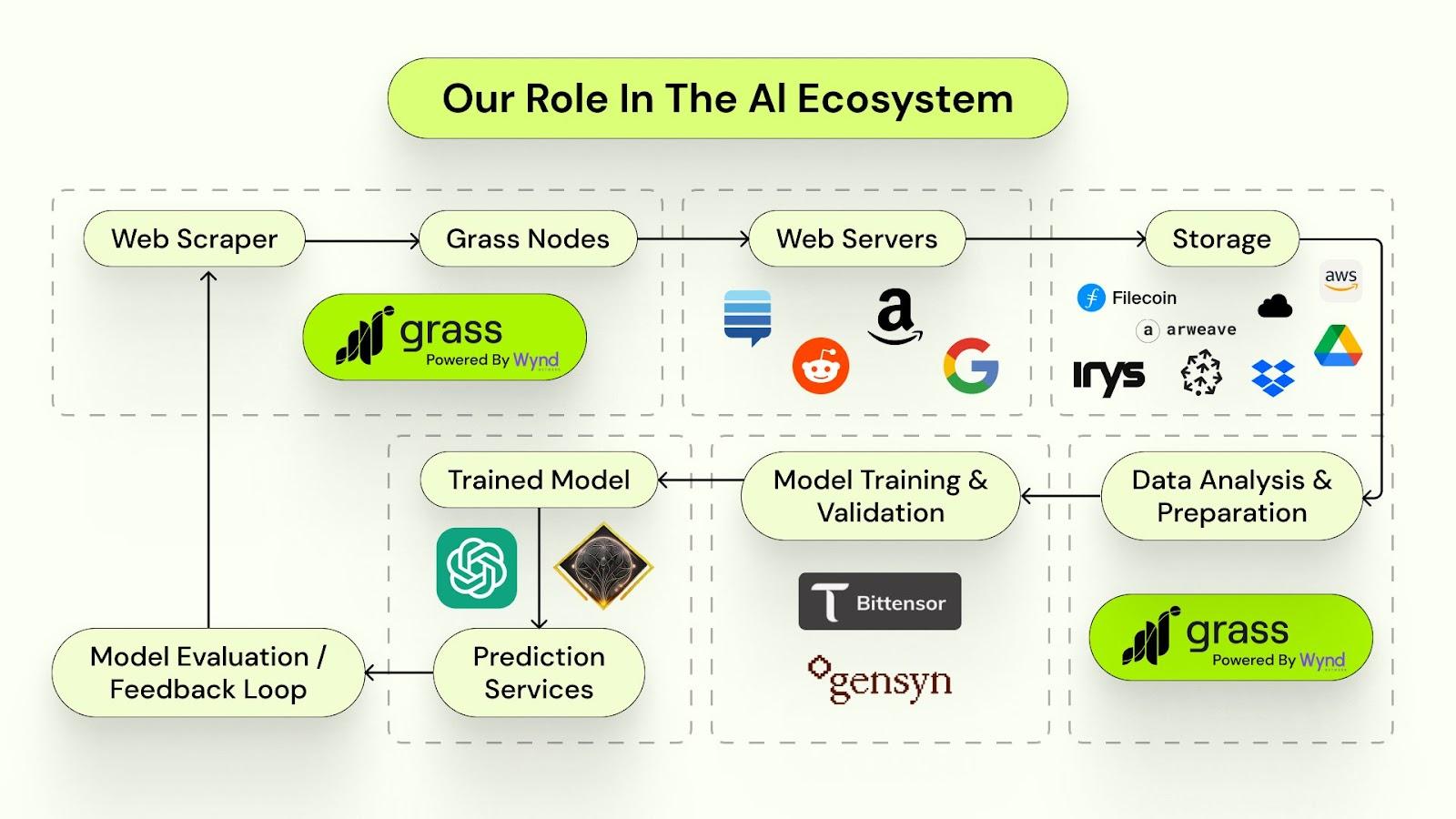
Grass blew up mid-2024, growing to more than 2 million+ active nodes in less than a year. These nodes scrape about 90TB of data daily (about 445x less than Google), which is then sold to AI companies.
The GRASS token airdropped in October, with multiple major CEX listings and a 380% appreciation since.
That’s impressive considering most tokens see a down-only trend on TGE. It’s even more particularly impressive since GRASS farmers don’t suffer an opportunity cost, i.e., staking capital. The more costless it is to farm something, the higher tendency for a token to dump aggressively, but that hasn’t been the case for Grass.
Based on @Daveeemor, Grass generates about $33 million in annualized revenues, which it plans to eventually share with its node operators and GRASS stakers.
At a $702 million market cap today, that gives GRASS a 21.3x MC/F multiple. If one believes Grass can continue to scale as it did in 2024, that suggests a very attractive token valuation relative to other fee-generating DePIN protocols, like Helium or Akash, which trade at a much higher 265-334x MC/F multiple.
In Q1 2025, Grass plans to introduce the ability to better capture real-time data with its “Live Context Retrieval” technology, enabling more performant and specific AI models that depend on time-sensitive information such as market trading.
For more on Grass, see our previous Blockworks research report by Boccaccio.
Get the news in your inbox. Explore Blockworks newsletters:
- The Breakdown: Decoding crypto and the markets. Daily.
- 0xResearch: Alpha in your inbox. Think like an analyst.
