Crypto promises ‘institutional adoption’. What does that mean?
“Every asset manager and bank doing ‘crypto’ is earning insane fees for putting things ‘onchain,'” read a slide from Meltem Demiror’s DAS talk
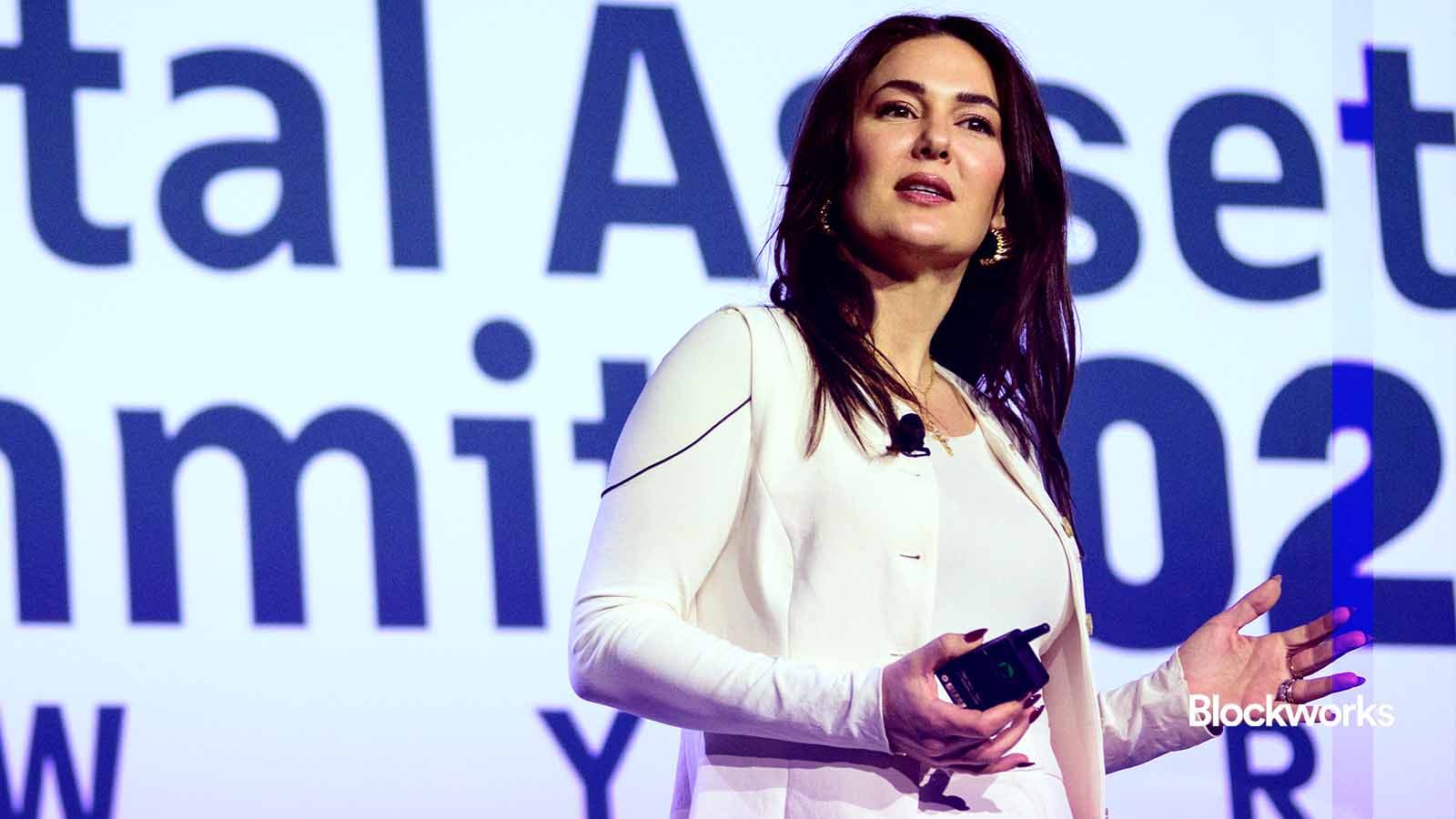
CoinShares chief strategy officer Meltem Demirors | DAS 2025 New York by Mike Lawrence for Blockworks
This is a segment from the Lightspeed newsletter. To read full editions, subscribe.
Yesterday marked the end of Blockworks’ Digital Asset Summit, where attendees seemed doggedly bullish on the reality of institutional crypto adoption — but somewhat vague on the particulars.
The Solana faithful showed real belief in stablecoins — the network’s co-founder Anatoly Yakovenko during our panel called them “the most disruptive thing that crypto’s built.” There was also real belief in spot SOL ETFs gaining the SEC’s approval as soon as CME futures — and the first SOL futures ETFs — began trading. But above all, I left with the impression that crypto can be imprecise when it refers to institutions.
Institutional adoption can probably be broken down roughly into two buckets: institutions gaining exposure to crypto assets and institutions using crypto technologies for their existing businesses. The first is certainly bullish for crypto asset prices, although Crypto Twitter seems to have rather outsized expectations in this area. Bitcoin plummeted once investors found out a strategic bitcoin reserve wouldn’t mean the US government market buying bitcoin.
The second, I would think, is more of a mixed bag. If institutions were to use stablecoins for cheaper and faster money transmission, then that sounds like a win. But outside of a few examples, that kind of thing doesn’t appear to be happening much. Crypto tech is also useful for speculation, and institutions adding crypto to their business portfolios could just look like major asset managers pumping liquidity into the casino.
“Every asset manager and bank doing ‘crypto’ is earning insane fees for putting things ‘onchain’ [i.e.] holding treasuries, or in the case of TRUMP, selling retail crypto pipe dreams,” read a slide from Crucible VC’s Meltem Demirors’ DAS kickoff talk.
Even if they’re not so malevolent, institutional crypto plays can feel more like marketing than real business. Franklin Templeton has an onchain mutual fund, for instance, that connects with Solana. I’m not sure what makes this product necessary nor why so much of it has been minted on the Stellar network.
But lest I be too bearish on a Friday, I’ll note that the DAS bonhomie wasn’t meaningless. Industry folks I spoke with seemed to be experiencing a dealmaking frenzy. I heard it remarked that following all the years of halfhearted crypto initiatives from TradFi, 2025 is different, and the institutions are actually serious now. We’ll just have to wait and see what that means exactly.
Get the news in your inbox. Explore Blockworks newsletters:
- The Breakdown: Decoding crypto and the markets. Daily.
- 0xResearch: Alpha in your inbox. Think like an analyst.
