No forks given — Bitcoin DeFi without upgrades
Cryptographic breakthroughs are unlocking Bitcoin programmability — without changing a single line of Core code
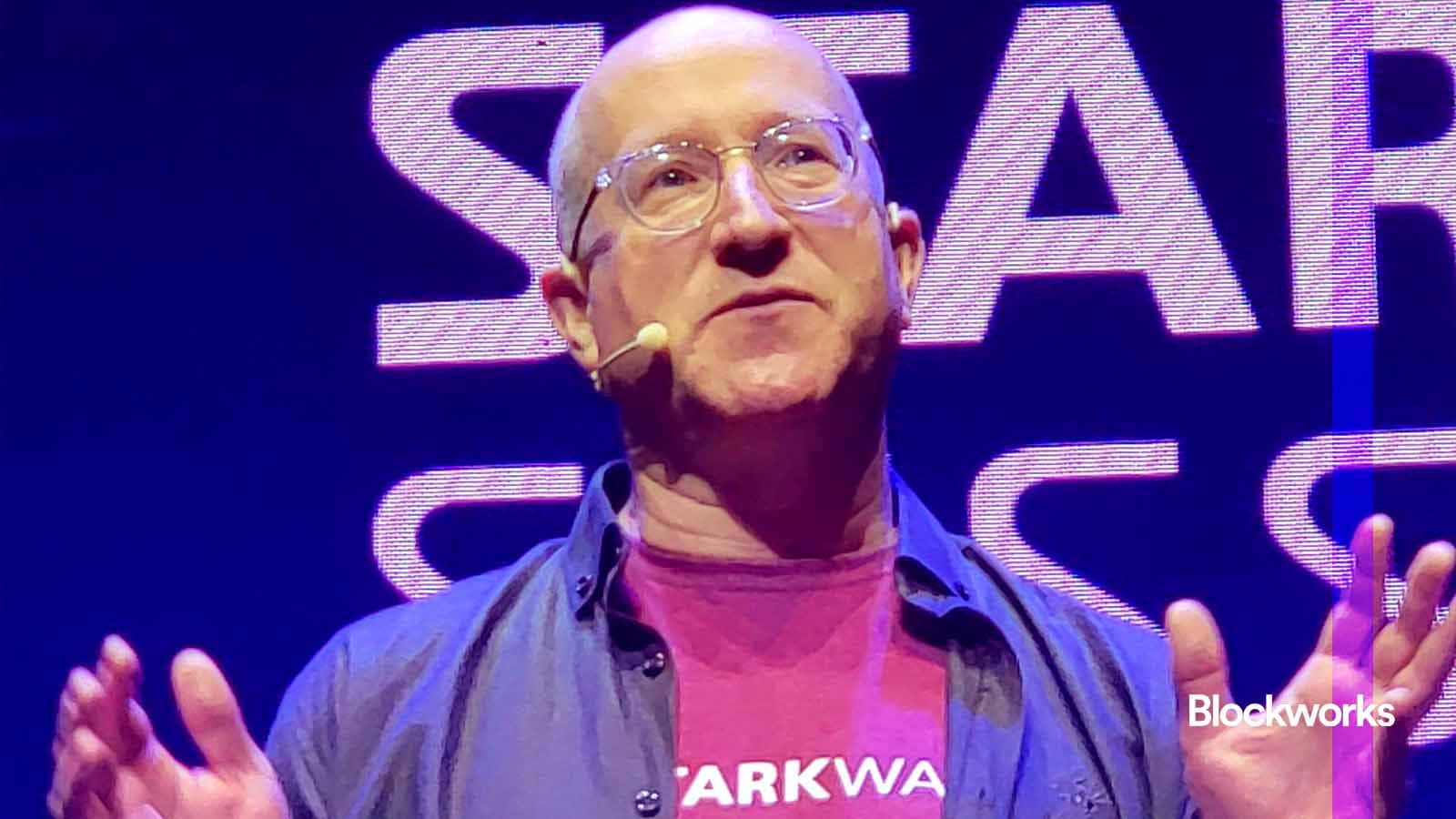
StarkWare CEO Eli Ben-Sasson | StarkWare modified by Blockworks
This is a segment from the 0xResearch newsletter. To read full editions, subscribe.
Bitcoin programmability is evolving fast — without waiting for a single line of Bitcoin Core code to change. As debates over additional opcodes such as OP_CAT continue, new solutions are proving that Bitcoin can enable zk rollups, covenants and even full DeFi ecosystems right now.
Xverse, a popular Bitcoin wallet, today announced its upcoming integration with Starknet — the Ethereum-native L2 now expanding to Bitcoin. Starknet, which struggled to attract users in the crowded Ethereum L2 rollups market, is positioning itself as “Bitcoin’s execution layer.” The goal is to scale Bitcoin to thousands of transactions per second while introducing all the DeFi trappings like yield farming, staking, and lending — but without waiting for Bitcoin’s meandering governance process.
The idea has growing proponents. A broader push to unlock Bitcoin’s smart contract potential without protocol changes started with research breakthroughs in the form of BitVM, followed by Starknet-backed ColliderScript, and most recently Bitcoin PIPEs.
Enter PIPEs
Bitcoin PIPEs (Polynomial Inner Product Encryption) is one of the more ambitious projects in this space. The Polychain Capital-backed project has developed a cryptographic method to verify zk-SNARKs on Bitcoin without new opcodes — offering a trust-minimized alternative to existing solutions.
They key promise of PIPEs is to reduce the process to checking Schnorr signatures, as Misha Komarov of cryptography research and development company [[alloc] init] explains:
“What can we verify on Bitcoin? We can verify signatures,” Komarov told Blockworks. “We turn the zk verification into a signature verification,” thus sidestepping Bitcoin’s script limitations using cryptography.
This approach avoids contentious opcode upgrades, proving that zk rollups and covenants don’t need a protocol change. The tradeoff is that it’s expensive to compute — for now.
Komarov sees PIPEs as a potential replacement for BitVM, which relies on challenge-response mechanics to provide trust-minimized bridging to off-chain layers. While innovative, it lacks the instant finality of PIPEs, which offer a single-transaction verification method.
ColliderScript and Starknet’s push
Bitcoin PIPEs is also an alternative to ColliderScript, developed by Starknet researchers to enable covenants on Bitcoin without a fork. Starknet has pitched this as a stepping stone to its broader Bitcoin expansion, which now includes the impending Xverse integration.
StarkWare CEO Eli Ben-Sasson calls Bitcoin PIPEs “an interesting approach” that “has the potential to be cheaper than ColliderScript, but its feasibility is much less certain.”
“ColliderScript has a complete proposal and security analysis, whereas PIPEs rely on more cryptographic conjectures,” Ben-Sasson told Blockworks. “In other words, it requires more leaps of cryptographic faith.”
Starknet’s integration with Xverse is the latest step in the Bitcoin L2 race. While it involves some trust assumptions, the goal is similar: deliver a seamless DeFi experience to Bitcoin users without protocol changes.
As Ben-Sasson sees it, Bitcoin’s power as a store of value is cemented. Now, it’s time to unlock its utility.
With Bitcoin PIPEs v2 unveiling in April, and the Starknet Xverse integration also launching in the second quarter, 2025 is shaping up to be a pivotal year for Bitcoin — whether it upgrades or not.
“Functionally speaking, Bitcoin can now ossify,” Komarov said. “We can even start simplifying it, to be honest.”
Get the news in your inbox. Explore Blockworks newsletters:
- The Breakdown: Decoding crypto and the markets. Daily.
- 0xResearch: Alpha in your inbox. Think like an analyst.
