Sens. Warren, Marshall Delay Reintroducing Crypto Bill Due to Lack of Sponsors
The latest version of the bill text, which has not been publicly released, includes the same language opponents originally found troubling, according to documents obtained by Blockworks
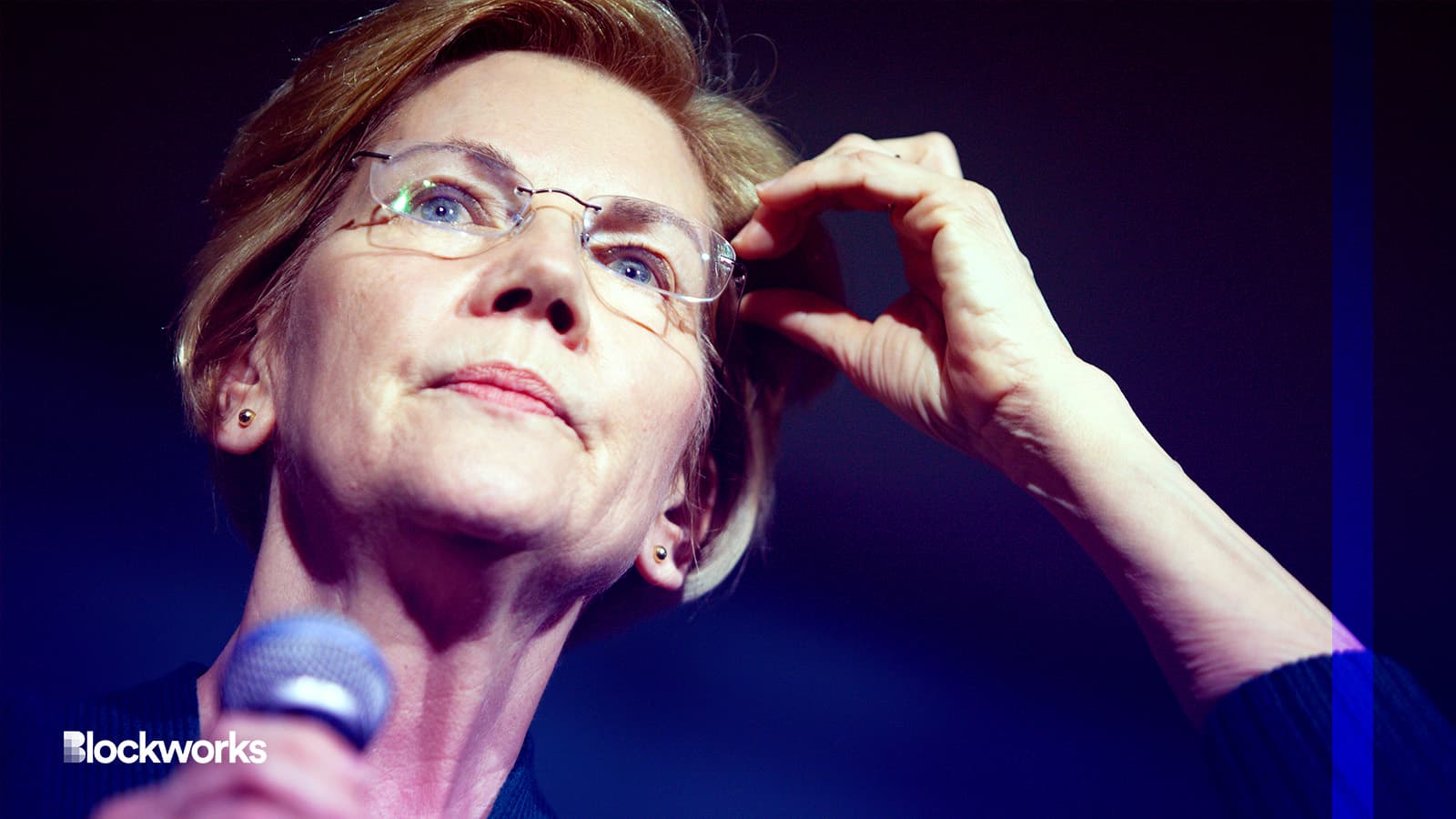
Senator Elizabeth Warren | Maverick Pictures/Shutterstock modified by Blockworks
Senators Elizabeth Warren, D-Mass., and Roger Marshall, R-Kan., have pushed back reintroducing their crypto anti-money laundering bill in an effort to recruit more cosponsors, according to two people familiar with the matter.
The bill, which was first introduced in the Senate last session in December, looks to require the crypto industry, including individual miners and validators, to abide by know-your-customer (KYC) rules.
Industry members were expecting a revamped version of the bill to debut on the floor this week, but two insiders shared with Blockworks that the senators have delayed its reintroduction because they want to find more cosponsors.
Read more: Crypto Bills Didn’t Die Last Session: Lawmakers Plot Reintroductions
The latest version of the bill text, which has not been publicly released, includes the same language opponents originally found troubling, according to documents obtained by Blockworks.
The following groups will be responsible for adhering to KYC policies: “unhosted wallet providers, digital asset miners, validators, or other nodes that may act to validate or secure third-party transactions, independent network participants, including maximal extractable value searchers, miner extractable value searchers, and other validators or network participants with control over network protocols,” per the documents.
Warren announced in early 2023 that the bill would be making the rounds again, highlighting heightened concerns about increased hacks and illicit actors overseas.
“Roger Marshall and I are reintroducing our anti-money laundering bill to clamp down on crypto crime and give regulators the tools they need to stop the flow of crypto to drug traffickers and places like North Korea,” Warren said during a Senate Banking Committee hearing in February.
Bill opponents argue the legislation goes too far; the expectations being put on the industry are unattainable, crypto advocacy group the Chamber of Digital Commerce said earlier this week in response to the bill.
The proposed law “aims to eradicate digital asset innovation from the United States at the expense of market security by imposing impractical and unworkable compliance burdens on industry participants,” the Chamber of Digital Commerce said in their statement.
Representatives from Warren and Marshall did not respond to Blockworks’ request for comment.
Get the news in your inbox. Explore Blockworks newsletters:
- The Breakdown: Decoding crypto and the markets. Daily.
- 0xResearch: Alpha in your inbox. Think like an analyst.
