The Irresistible Central Bank Digital Currency
Global trends are pointing to central bank-backed digital currencies (CBDCs) soon becoming standard. China started testing the “e-yuan” in February with an issue of 40 million yuan ($6.2 million). European officials reportedly plan to launch a digital euro within the next […]
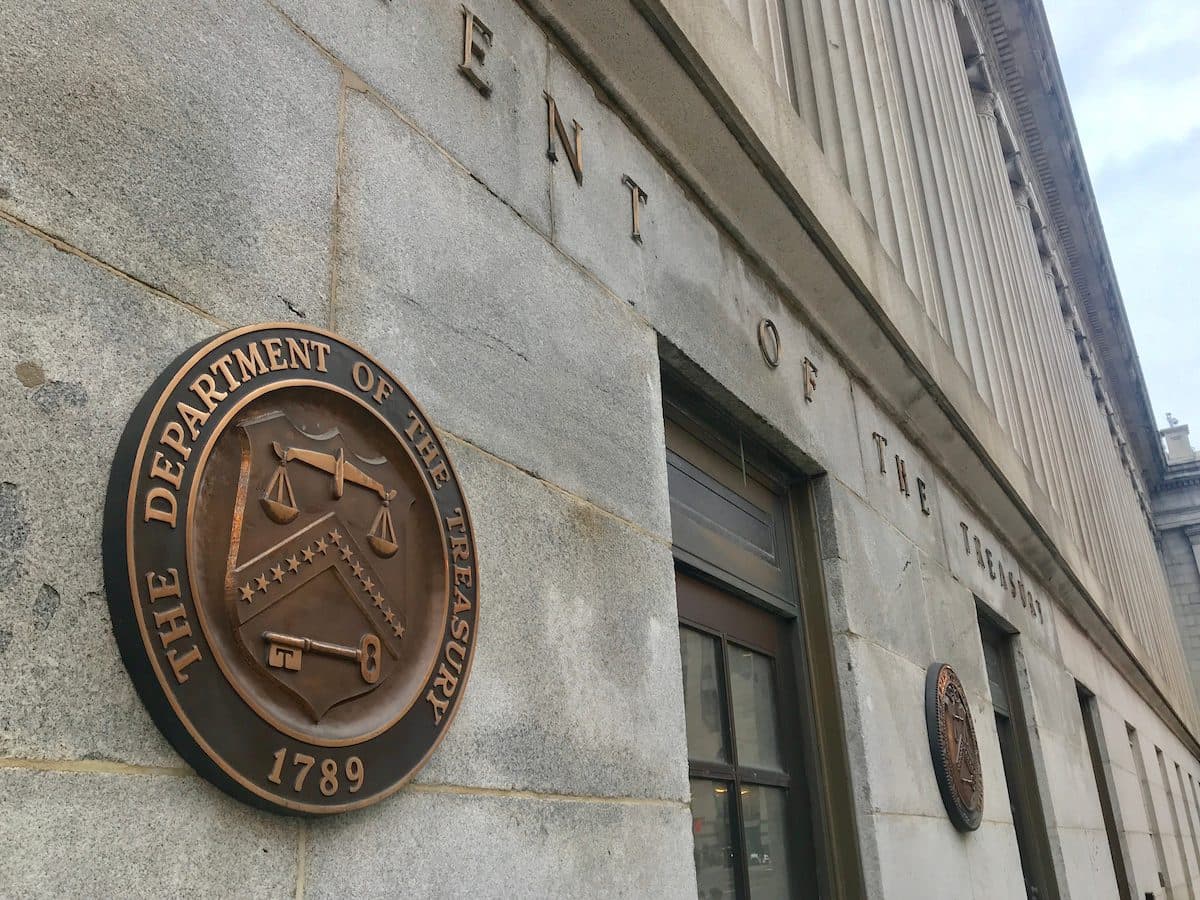
Source: Shutterstock
- Cashless payments are becoming global norm and creating CBDCs allows central banks to reduce risk
- US Fed Reserve Chair Powell and Treasury Secretary Yellen have expressed interest in a digital dollar and will start testing designs
Global trends are pointing to central bank-backed digital currencies (CBDCs) soon becoming standard.
China started testing the “e-yuan” in February with an issue of 40 million yuan ($6.2 million). European officials reportedly plan to launch a digital euro within the next four years. The sand dollar currency, a digital version of the Bahamian dollar, launched earlier this year, becoming the first of its kind to be fully functional.
US Federal Reserve Chair Jerome Powell and Treasury Secretary Janet Yellen have expressed interest in a digital dollar and will start testing different designs. Yellen pointed out that CBDCs offer accessibility and safety in a way that physical currencies cannot.
“I see central bank digital currencies as an inevitability,” said Matthew Walsh, founding partner at Castle Island Ventures, “but the implementation details will be widely variable by region.”
The appeal is simple: cashless payments are becoming the global norm and creating a CBDC is the only way for central banks to reduce risks associated with the practice.
Central banks are, at their core, responsible for ensuring that people can use currencies to make purchases. As digital wallets like Apple Pay and Venmo grow in popularity, citizens are increasingly reliant on public companies as opposed to central banks.
A private-only payment system poses a threat to financial stability, and CBDCs offer a way for central banks to be more involved with online transactions.
“The promise of a CBDC will be too hard to resist for almost all nations, they are a better settlement system that enable more targeted interventions in monetary policy,” said Walsh. “They also open the availability for far more enhanced surveillance of the citizenry, which should be a big concern.”
Who the ‘winners’ in the space will be largely depends on how governments decide to implement the technology. Traditional financial institutions will play a big role in how CBDCs are rolled out, particularly in the US.
“The bank lobby will be a powerful force in trying to defend existing market structure in the US,” said Walsh. “I don’t see a US CBDC ever being a retail direct-facing product. It is far more likely that it is intermediated by a bank.”
Today, it’s unclear how CBDCs will interact with or disrupt existing digital wallets and private companies.
“The focus should be on interoperability and allowing either traditional finance or traditional fintech wallets, like PayPal and Square, to deliver those services,” said Tyler Whirty, founder of HODLpac and investor at the Takoma Group. “Then, hopefully, we’re able, to see a world where, the Coinbase wallets, etc., can hold US digital currency and interact with whatever token-based digital dollar that comes out of all this.”
Some fear that CBDCs pose a threat to existing digital assets, like bitcoin, because they may ultimately replace the coin as the top digital token. Others argue that any digital currency brings legitimacy and awareness to the industry, and, for now, it is unlikely that any CBDC would have more freedom or fewer restrictions than bitcoin.
“The big trend here is that money is headed on-chain,” said Whirty. “I think it’s safe to say that a token-based digital dollar would be good for digital assets, because it’s just going to be easier to buy bitcoin with a digital dollar than it is to wait for money to clear from a traditional bank account using old rails.”