Starkware’s new appchain attracts DeFi derivatives dex with CeFi liquidity
Institutional liquidity network Paradigm plans to launch a derivatives dex on Starknet

CryptoFX/Shutterstock modified by Blockworks
The increasingly crowded crypto derivatives market is about to get busier.
Decentralized exchange Paradex — built on the newly announced Starknet appchain stack — officially came out of stealth today from crypto liquidity network Paradigm.
The DEX is unusual in that it’s being pitched as a “a hybrid derivatives exchange that combines CeFi liquidity and performance with DeFi’s transparency, trustlessness and self-custody,” according to a statement.
“This CeFi-to-DeFi transition is the kind of thing we dreamed about when first entering the blockchain space,” StarkWare co-founder Eli Ben-Sasson said in the statement.
In a Wednesday talk at the EthCC conference in Paris, Ben-Sasson sought to differentiate the Starknet Stack by emphasizing its decentralization.
“It’s a little bit more like the Bitcoin stack or the Ethereum stack or a frontend stack.” Ben-Sasson said. “And indeed already, you have multiple teams, separate teams building a lot of components, many of them open source for various parts inside the stack.”
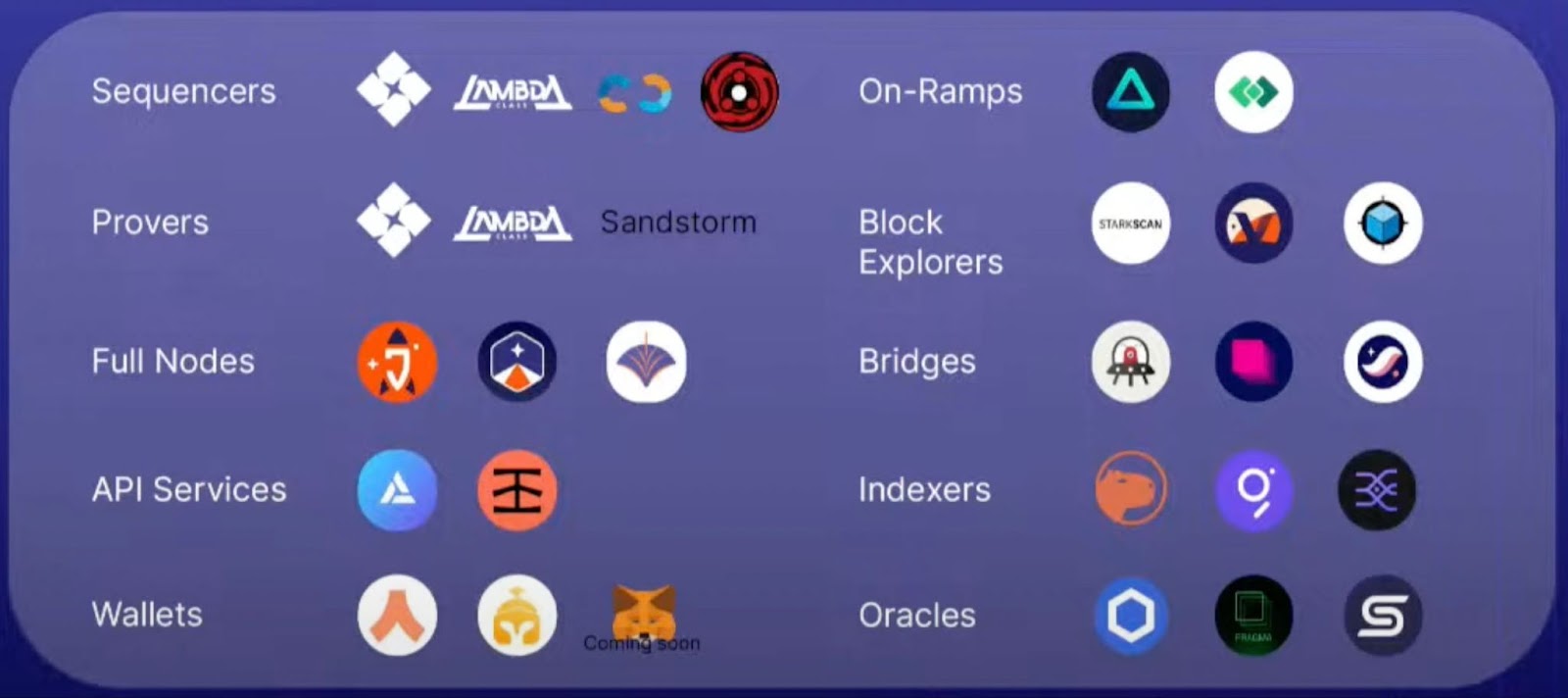 Decentralized Starknet stack | Source: Starknet
The announcement follows six months of collaboration between Paradigm and Starknet teams, as the DEX concept searched for a layer-2 home that would provide the scalability and customization needed for the derivatives trading experience to rival centralized exchanges.
“A private instance of Starknet, or Appchain, provides this in abundance,” Nafaa Hendaoui, Paradex’s head of product, said in a statement.
Other derivatives DEXs have followed a similar conceptual approach, notably dYdX, which launched in 2021 on a StarkEx rollup — the precursor rollup technology from Starkware — but is now migrating to a Cosmos-based sovereign appchain. The DEX recently initiated its public testnet as it prepares for the new version.
Aevo, a futures and options exchange from the Ribbon Finance team, opted for an app-specific rollup on Ethereum, and Synthetix is in the process of refining its derivatives offering on the OP stack.
The derivatives market offers plenty of competition, but according to Aevo co-founder Julian Koh, the market remains small.
“The [derivatives DEXs] are all somewhat competitive with each other, but every protocol has their own edge or focus,” Koh told Blockworks. “For example, Aevo is focused primarily on options order books, and we’re the only one in [the] market to offer both options [and] perps within a single margin account.”
The Paradex team declined Blockworks’ request to comment on whether it would be adding options to its platform.
Among Paradex’s edges: It will leverage Paradigm’s liquidity network, which should help alleviate a common shortcoming faced by many new entrants to crypto derivatives markets — the challenge of bootstrapping a trader base.
Like Aevo, Paradex will operate an off-chain cloud-based order book, but will also be non-custodial with trade settlement and custody occurring on Starknet.
Paradex says it will launch a closed beta in August, and while it is a project of Paradigm, the company says “it will be progressively decentralized and community-driven over time,” much like Starknet’s trajectory itself.
Get the news in your inbox. Explore Blockworks newsletters:
- The Breakdown: Decoding crypto and the markets. Daily.
- 0xResearch: Alpha in your inbox. Think like an analyst.
