The US Supreme Court could reshape the SEC’s powers — and how the agency approaches crypto
A defendant sued the SEC after the agency took him to trial in its own court system — now it’s up to the Supreme Court to decide that system’s constitutionality
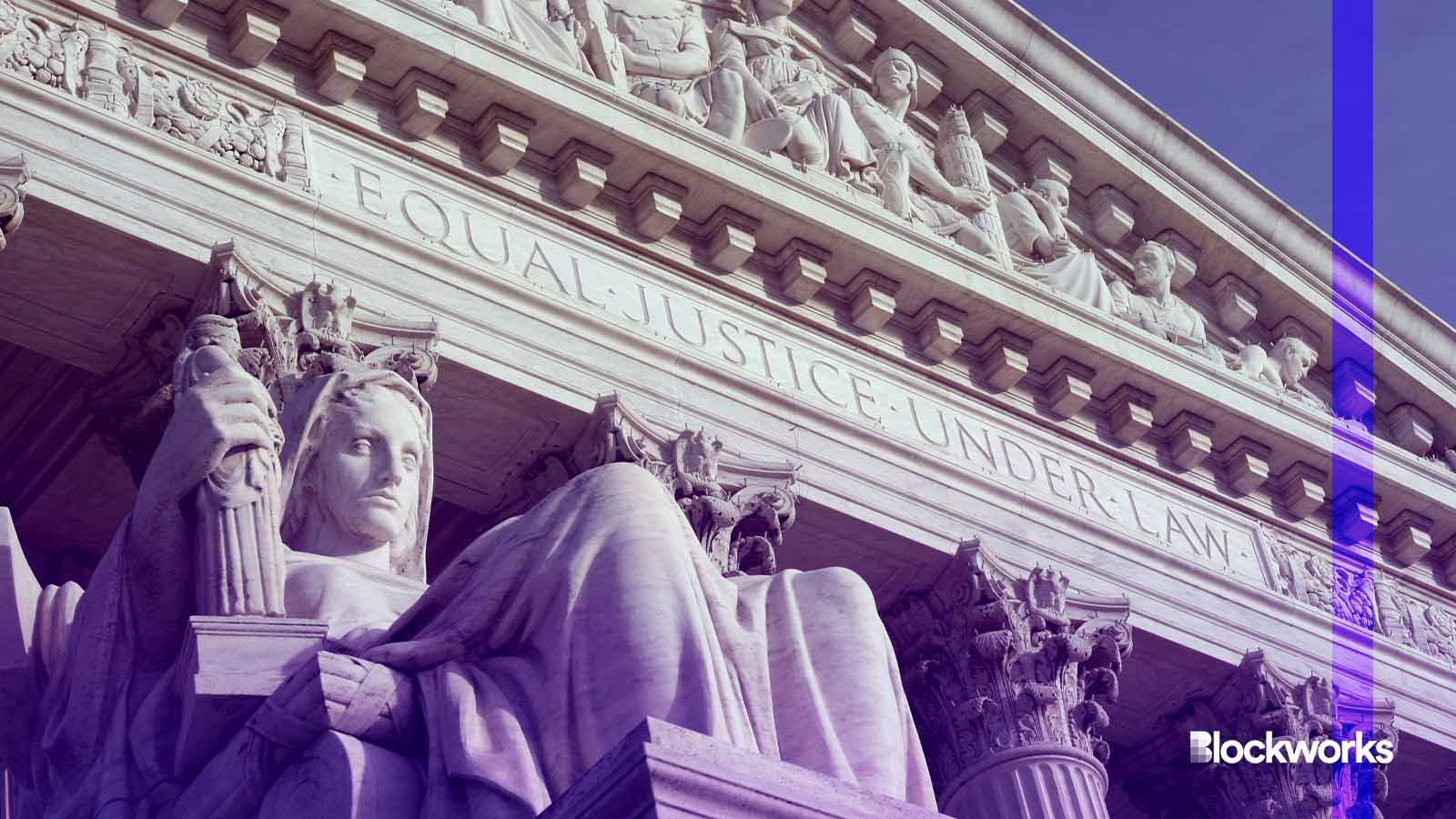
Kim Seidl/Shutterstock modified by Blockworks
A Supreme Court case could change the way the US Securities and Exchange Commission and other federal agencies bring enforcement actions — but legal experts warn the crypto industry not to hold its breath.
Following a 2011 investigation, the SEC sued hedge fund founder George Jarkesy for securities fraud, allegeding he inflated asset prices to boost his own management fee. By the SEC’s choice, the case was an “administrative proceeding,” a non-judicial process overseen by an administrative law judge instead of a federal court.
In an appeal to the Fifth Circuit, Jarkesy argued the administrative proceeding violated the US Constitution’s seventh amendment by denying him a right to a trial by jury.
The appellate judge sided with Jarkesy. But the SEC maintains that seventh amendment rights only apply when private rights are at stake, not public.
Now, the case is in the hands of the Supreme Court. Justices heard oral arguments at the end of November and their opinion is pending.
“If the Supreme Court determines that jury trials are required in all administrative matters, there would be a very widespread impact on all administrative agencies – and a corresponding big impact on the Federal courts which would have to absorb all of those cases,” said Sam Dibble, partner at Baker Botts.
Justices could opt to create a new process for determining which cases brought by federal agencies go to federal court versus administrative tribunal. As of now, the SEC has the power to decide the venue, which is supported by the 2010 Dodd Frank Act.
Other legal experts are less certain the Supreme Court case could materially change much — especially for the crypto industry, where most cases are already advanced in federal court.
Read more: Coinbase walks away with Supreme Court victory in arbitration case
“Some have suggested that Jarkesy might mark the end of the administrative state,” Andrew Kim, partner at Goodwin, said. “Such sentiments are hyperbolic, to say the least. And it’s quite clear now that Jarkesy isn’t going to deal a death blow to either the SEC or the administrative state writ large. Regardless of how Jarkesy comes out, an Article III court will usually remain available to the SEC for enforcement proceedings, so you will continue to see actions like Coinbase, Binance, Kraken, etc.”
The SEC’s cases against Coinbase, Binance and Kraken are all currently playing out in federal district courts as opposed to administrative proceedings. But for settlements, which are also common in the crypto space, the Supreme Court cases could change things, Kim said.
Read more: ‘Fundamental Difference’ between SEC’s Binance and Coinbase suits
“Historically, the SEC has used administrative proceedings to finalize settlements with private parties,” Kim said. “In a post-Jarkesy world, the SEC may well have to go to an Article III court, which can exercise independent discretion, every single time it wants to settle a potential enforcement action and extract civil money penalties as part of the agreed-upon resolution.”
Article III court judges — i.e. federal judges — could easily approve consent orders for settlements, or “some may decide to put the SEC through the ringer,” Kim said.
“While Jarkesy won’t mark the end of the SEC or the modern federal administrative state, whatever the Court decides will be in line with a consistent theme of limiting the reach of the federal government and providing a check against the Executive Branch,” he added. “You’ll see a lot more of that this term.”
Get the news in your inbox. Explore Blockworks newsletters:
- The Breakdown: Decoding crypto and the markets. Daily.
- 0xResearch: Alpha in your inbox. Think like an analyst.