Dueling crypto anti-money laundering bills face off in the Senate
The Digital Asset Anti-Money Laundering Act of 2023 aims to add “crypto participants,” including wallet providers, miners and validators, to the definition of “financial institutions”
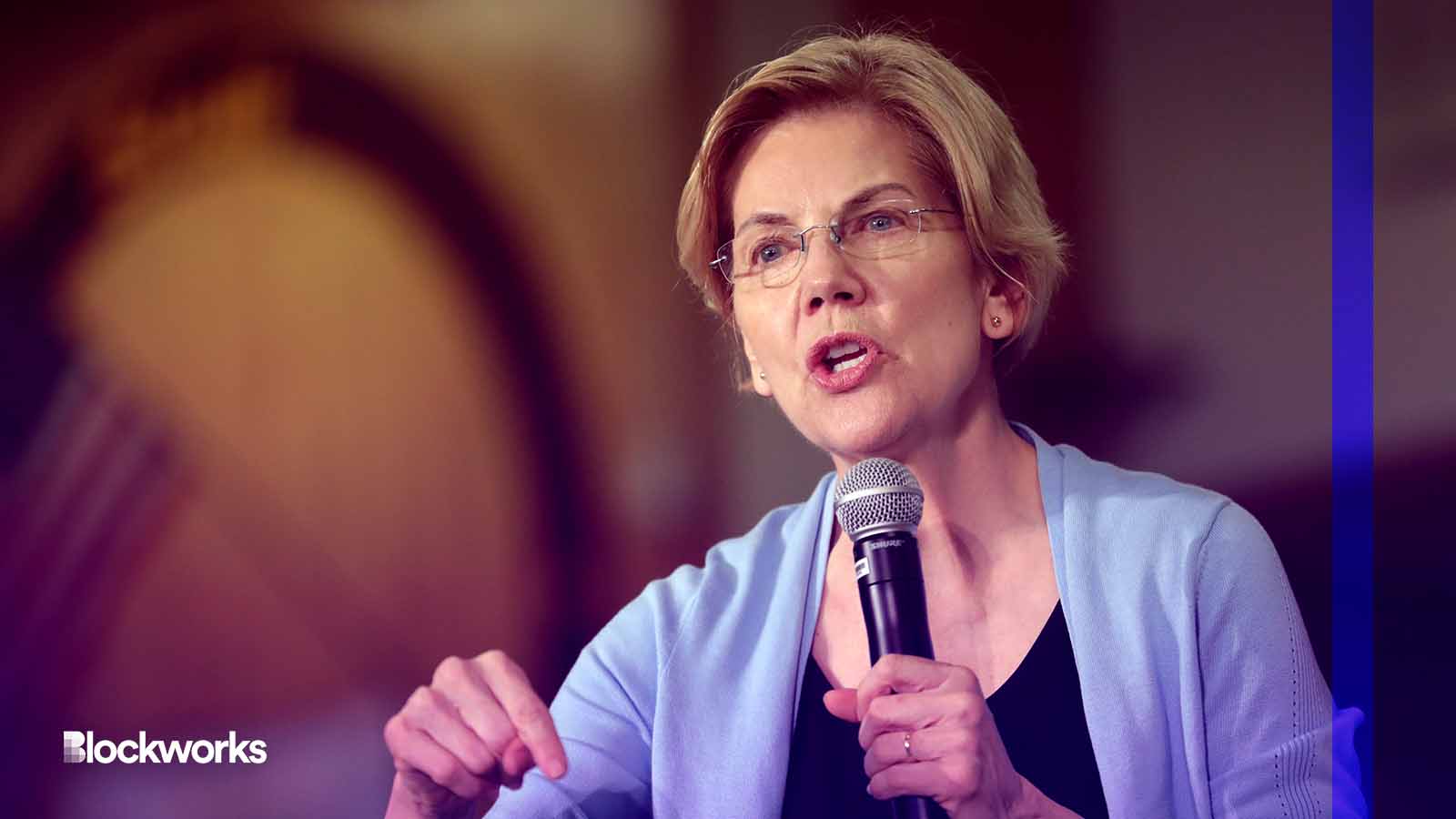
Senator Elizabeth Warren | Source: Gage Skidmore “Elizabeth Warren” (CC license)
After months of delays due to an alleged lack of cosponsors, Sens. Elizabeth Warren, D-Mass., and Roger Marshall, R-Kan., have reintroduced their crypto anti-money laundering bill.
This time, the bill features an even greater emphasis on targeting individual industry members, such as miners and validators.
The Digital Asset Anti-Money Laundering Act of 2023 aims to bring “crypto participants” — defined in the bill as wallet providers, miners and validators — under compliance requirements for financial institutions. If the bill passes, these entities will have to file reports for any transactions exceeding $10,000 and report any activity that could signify money laundering or tax evasion.
Opponents of the bill argue that these players are not equipped to follow such requirements and doing so would hinder their ability to conduct business.
“Treating these entities commensurate with the largest banks, hedge funds, and money transmitters would weigh them down with unnecessary compliance, stifle innovation, hinder industry growth, and force activity offshore to jurisdictions with less adequate security and oversight,” the Chamber of Digital Commerce wrote in a statement opposing the legislation.
The bill also requires anyone in the US with more than $10,000 in crypto held in accounts outside of the US to report this to the Financial Crimes Enforcement Network (FinCEN).
Warren and Marshall first introduced a version of the bill late last Congressional session, but the text never made it to committee markup. The two recruited Sens. Joe Manchin, D-W.V., and Lindsey Graham, R-S.C., as cosponsors on the revamped bill.
The Digital Asset Anti-Money Laundering Act of 2023 is similar to the Crypto Asset National Security Enhancement Act of 2023, introduced in the Senate earlier in July. The latter bill also enjoys bipartisan support, sponsored by Sens. Jack Reed, D-R.I., Mark Warner, D-Va., Mike Rounds, R-S.D., and Mitt Romney, R-Utah.
Reed’s bill puts a greater emphasis on DeFi and bringing the industry under existing Bank Secrecy Act and sanctions requirements. Warren and Marshall’s effort focuses on redefining “financial institutions” and bringing crypto under this umbrella.
Both bills have been referred to the Senate Committee on Banking, Housing and Urban Affairs, although neither has been scheduled for a markup.
Get the news in your inbox. Explore Blockworks newsletters:
- The Breakdown: Decoding crypto and the markets. Daily.
- 0xResearch: Alpha in your inbox. Think like an analyst.
