DeSantis Says Florida ‘Should Be Willing’ To Accept Taxes in Crypto
DeSantis said he is working with state agencies to figure out the logistics of businesses paying taxes with crypto, indicating that Florida could adopt the new tax strategy
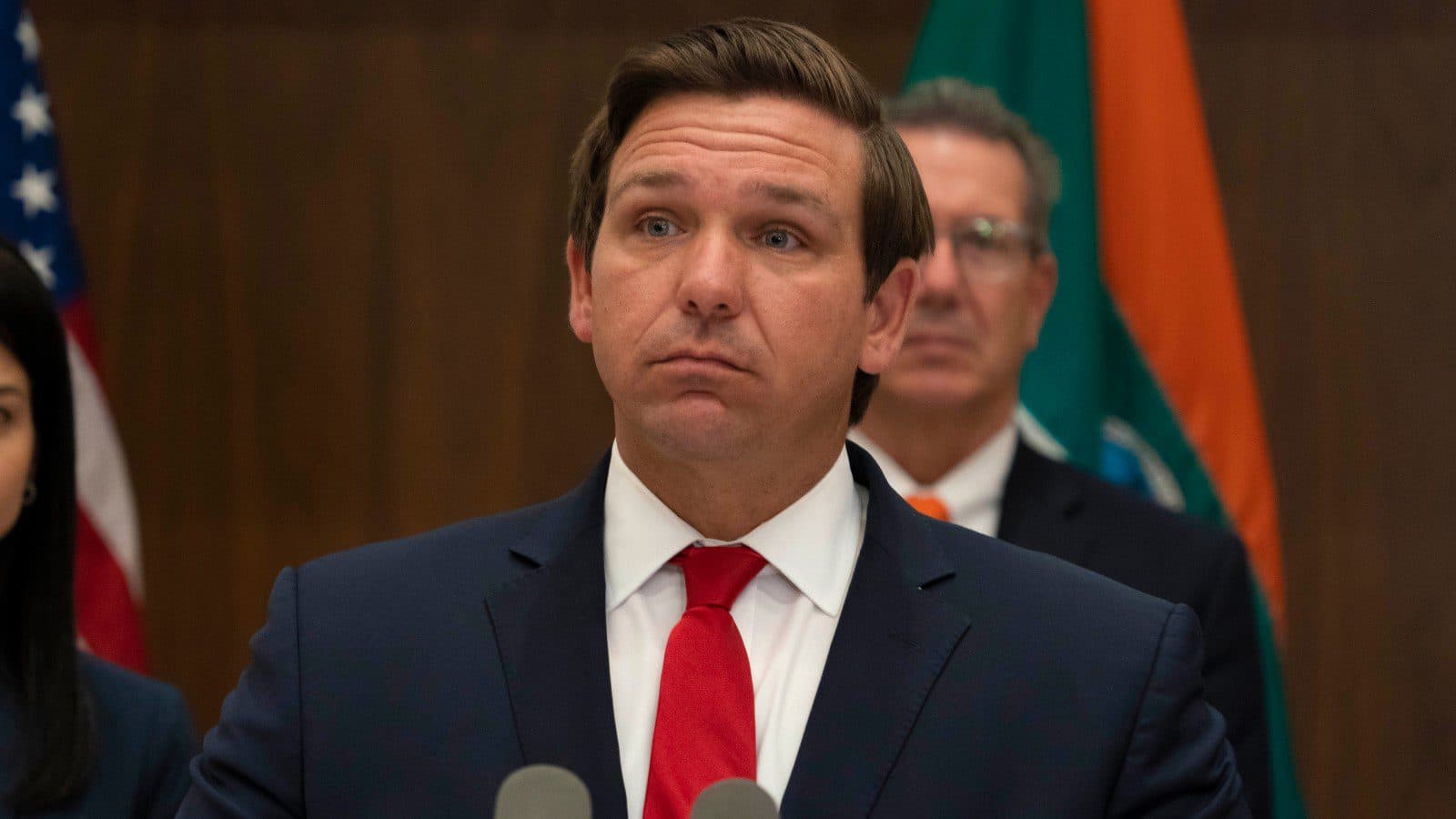
Flordia Governor Ron DeSantis | Source: Shutterstock
- Florida Gov. Ron DeSantis said he is working with state agencies to figure out means for businesses to pay tax in crypto
- Fellow Floridian politician Miami Mayor Francis Suarez pushed for city residents to receive their paychecks and pay for their property taxes in bitcoin
Ron DeSantis, Florida’s 46th governor, said Tuesday his office is working to allow businesses to pay taxes using cryptocurrency.
DeSantis, who has been serving as governor since 2019, said he is working with state agencies to figure out the logistics of businesses paying taxes with crypto, indicating the tax strategy was something Florida could adopt.
The governor responded to questions from the media following his signing of a bill that requires financial literacy classes for high school students.
“Clearly something like a bitcoin and other cryptocurrencies — that’s something we should be willing to accept,” he said in relation to tax payments.
It’s not the first time DeSantis has floated the idea of allowing Floridians to utilize crypto as a form of state payment. Last year, DeSantis proposed measures in the 2022-23 budget that sought to enable businesses to pay state fees in crypto.
He also proposed leveraging blockchain technology for use in pilot programs to govern certain backend functions within the Florida Highway Safety and Motor Vehicles and Medicaid payments, among other areas.
“I actually had some money in the budget the legislature didn’t pick up to try to do some experiment with blockchain technology on some of the state functions,” DeSantis said Tuesday. The proposed measures failed to pass into law via the Florida Legislature’s 2022 session, which ended on March 14 with bipartisan approval of a $112 billion budget.
Florida possesses a number of high-profile politicians opting for local crypto and blockchain regulation, including Miami Mayor Francis Suarez who previously pushed for city residents to receive their paychecks and pay for their property taxes in bitcoin.
Crypto proponents view the city, as well as the state, as forward-looking for the industry often criticized by other policymakers for facilitating money laundering.
The governor, who has for some time pushed bitcoin adoption alongside Suarez, also noted the difference between cryptos that were decentralized versus that of a centrally issued digital dollar, which he said presents “a lot of hazards” when it’s “centrally controlled.”
“I worry about the amount of power that would give someone — an essential authority — to basically be able to shut off access to purchasing certain goods,” DeSantis said. “We’d be in uncharted territories.”
Get the news in your inbox. Explore Blockworks newsletters:
- The Breakdown: Decoding crypto and the markets. Daily.
- 0xResearch: Alpha in your inbox. Think like an analyst.
