Crypto markets can win by frequently failing
In crypto investing, quantity has a quality all its own.
Art by Crystal Le
This is a segment from The Breakdown newsletter. To read full editions, subscribe.
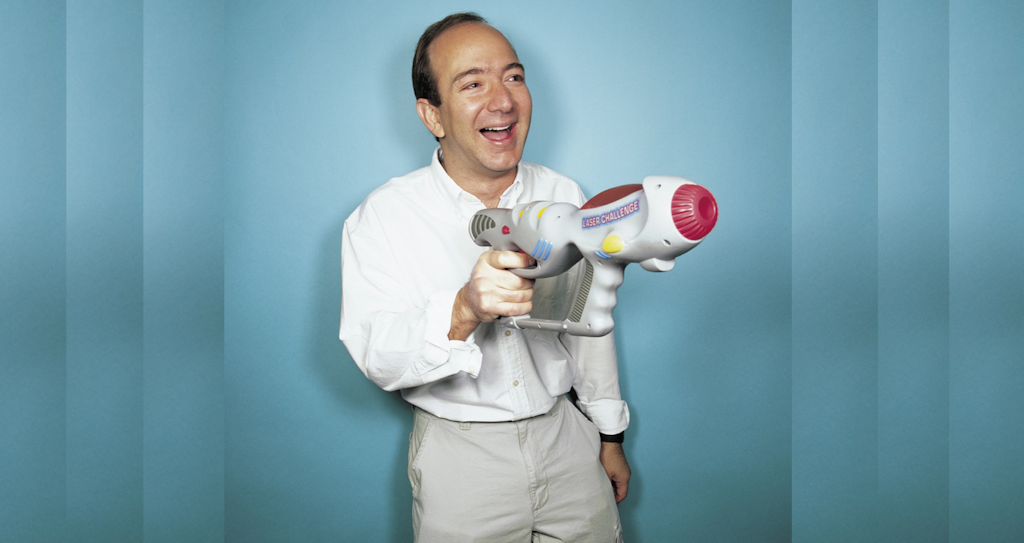
“We are the best place in the world to fail.”
— Jeff Bezos
Crypto markets can win by frequently failing
Charlie Munger once said that in 50 years of reading Barron’s, he had found just one investable idea.
It was an unusually good one, though.
After a Barron’s article caught Munger’s eye in 2020, he spent just 90 minutes researching the auto parts company Tenneco before investing around $5 million.
Two years later, Tenneco was taken private at 15 times the price Munger had paid.
Munger then rolled his $80 million windfall into a fund managed by his friend, Li Lu, who more than quadrupled his money from there.
“So I have made $400 or $500 million reading Barron’s for 50 years and following one idea,” Munger concluded.
The twofold moral of the story, he implied, is that 1) it only takes one great idea to make it big, and 2) you should ignore all the others while you wait for it.
“The trick in investing,” Warren Buffett liked to say, “is just to sit there and watch pitch after pitch go by and wait for the one right in your sweet spot.”
I’m not sure how actionable that advice is for us mere mortals of investing; few of us will be able to pick out the one winner in 50 years of Barron’s articles.
But we can take heart in the idea that one big winner can more than offset a lot of our inevitable losers.
This is even more true in business.
In baseball, to extend Buffett’s analogy, swinging for the fences can only ever earn you four runs.
In the stock market, you might get the occasional “10-bagger” (or maybe even a 15-bagger, like Munger’s Tenneco investment), but not much more.
In business, however, “that upside isn’t really capped,” as Jeff Bezos explains. “Every once in a while in business, you step up to the plate, you swing as hard as you can, and you get 1,000 runs.”
Bezos was always swinging as hard as he could.
Unlike Munger, he usually struck out.
Worse yet, many of the pitches he swung and missed on seem a bit ridiculous in hindsight.
At one point, Bezos hired staff jewelers to craft custom rings over an open flame on the mezzanine of an Amazon fulfillment center in Kentucky because he briefly believed that the retail jewelry market was the key to Amazon’s future.
Personalized “zShops,” auto retailing, partnering with Toy“R”Us, and no-checkout stores are among Bezos’s other passing enthusiasms that failed to get anyone else enthused.
His investing track record wasn’t much better.
Bezos used money raised in Amazon’s 1997 IPO to make venture-capital investments in Drugstore.com, Pets.com, Gear.com, Wineshopper.com, Greenlight.com, Homegrocer.com, and Kozmo.com, all of which, perhaps predictably, turned out to be losers.
(A seed-round investment in Google was a giant winner, but he made that one with personal money.)
In other cases — such as auctions, search engines, and mobile phones — he picked a reasonable pitch to swing at, but whiffed.
He never regretted the misses, however, because if he wasn’t so willing to swing hard at seemingly every pitch, Amazon wouldn’t be anything more than an online bookstore.
From the beginning, he was always looking for opportunities to become much more than that.
When an employee suggested a subscription service for unlimited free shipping, for example, Bezos not only adopted the idea, he committed Amazon to losing an unknowable amount of money to make it not just a big bet, but a transformational one.
Similarly, when Amazon engineers began working on an early version of cloud computing — while they were still unsure it could work — Bezos demanded that they think bigger: “This has to scale to infinity. Infinity!”
Amazon Web Services does now effectively scale to infinity, which makes Bezos look like a prescient tech genius.
But he was equally high-conviction on all of his misses, too, which suggests that his real genius was in his willingness to always swing so hard — just in case he hit something.
That strategy won’t work for most of us; we’d all quickly go bust if we invested as aggressively as Bezos.
But the best financial markets encourage this kind of risk taking — where would we be without business founders willing to take irrational risks?
We’re fortunate that every entrepreneur wildly overestimates their odds of success because society captures the uncapped upside of all that risk-taking without bearing any of the downside risks.
At its best, crypto will enable more of this.
During Permissionless last week, I heard, for example, that “AI arbitration” would be a perfect use case for crypto; that crypto will turn data into an asset class; that decentralization is the only way to audit artificial intelligence; and that “DeSci” might accelerate the development of personalized medicine.
Whatever the investment merits of these ideas may be, I find it notable that they’re being floated at all, because the stock market, with all its centralized gatekeepers, is unlikely to encourage these kinds of bets.
Not that “permissionless capital markets” are perfectly decentralized. Far from it.
But they are permissionless in the sense of allowing anyone to take a swing at building something significant, and allowing anyone to back them.
It might be a long wait still for the next big crypto hit, of course.
In addition to finding just one investable idea in 50 years of reading Barron’s, Munger also said he read Fortune magazine for 60 years without finding any at all.
No one has that kind of patience in crypto.
But Permissionless capital markets could be well suited to the Bezos model of swinging hard at every reasonable pitch that comes by, no matter what the odds of connecting.
Like Amazon, crypto could win by being the best place to fail.
Get the news in your inbox. Explore Blockworks newsletters:
- The Breakdown: Decoding crypto and the markets. Daily.
- 0xResearch: Alpha in your inbox. Think like an analyst.