Crypto needs more no-fee, open-source payment tools
BlueYard’s head of crypto research developed FreePay to make fee-free, tap-to-pay crypto payments a reality
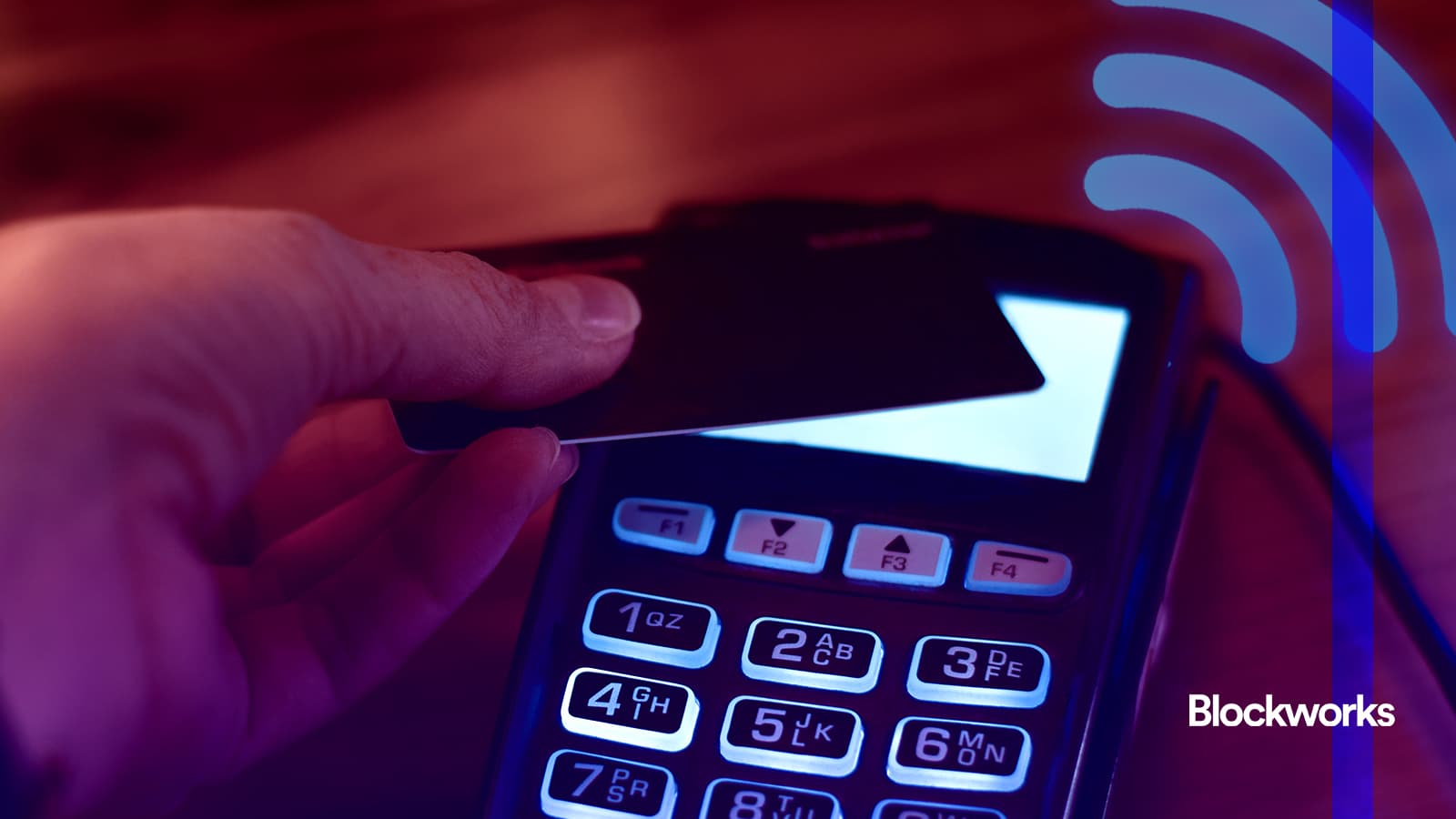
JulieK2/Shutterstock and Adobe modified by Blockworks
This is a segment from The Drop newsletter. To read full editions, subscribe.
A crypto researcher has whipped up an open-source payment processor within a week that lets a buyer tap a crypto wallet on a mobile device to pay for items without any processing fees typical of credit cards and terminals like Square.
Tim Robinson, head of crypto research at VC firm BlueYard, shared a video of the device in action this week making a payment with the MetaMask app on his phone.
The terminal, which he’s dubbed FreePay, has a few different components, including an NFC reader and a screen for the seller to type in the amount they want to charge.
“We’re supposed to be replacing TradFi, not joining them,” Robinson said.
Robinson built a companion app for sellers using FreePay and an Android app for customers, but notes that FreePay only works with MetaMask and Coinbase Wallets (at least in its current form).
In recent months, crypto firms — from Coinbase to MetaMask, Avalanche to Solayer — have all unveiled their own various crypto payment cards using traditional payment processors like Visa, Mastercard and even American Express.
But while these big-name TradFi firms have widespread reach, their fees aren’t inconsequential and can cut into businesses’ bottom lines or result in those higher costs being passed on to consumers.
Visa credit card fees per transaction can be anywhere from 1% to over 2%, while Amex fees are typically higher, and can range from 1.4% to over 2.5%.
Of course, blockchains come with their own set of fees, but ultimately that depends on the chain used. Ethereum L2 and Solana fees are much, much lower, especially when considering credit card fees plus the 2.6% and up additional fee added just for using a Square terminal.
“I started with L2 support because that’s what I know best, but because it’s open source anyone can extend it,” Robinson told me in a DM of FreePay, adding: “Would love to see others add more chains and more wallets to support the standards needed to work with it.”
Crypto use in the US does come with some tax rules, though, which can deter some from using it as a payment method because it’s more complex than a stablecoin or fiat currency payment.
But hey, if you want to spend your crypto directly from your wallet in a tap-to-pay method, FreePay looks like one potential way for merchants to let you do just that.
I personally think we’re still a little ways away from actually seeing crypto being used for daily, small payments at scale, but the crypto industry really should reconsider its full-tilt embrace of fee-heavy, decidedly centralized payment systems (and systems that refuse to bank businesses like legal dispensaries and sex workers).
As others have pointed out, crypto could also benefit from more open-source tech more broadly, including hardware wallets. Open-source tech is inherently more decentralized by design — and allows different motives besides maximizing profits alone to come into play.
A lot of compromises have been made by big crypto firms in pursuit of “mass adoption.” But maybe it’s time we look back at history and remind ourselves why bitcoin was even invented in the first place.
Get the news in your inbox. Explore Blockworks newsletters:
- The Breakdown: Decoding crypto and the markets. Daily.
- 0xResearch: Alpha in your inbox. Think like an analyst.
