International payments are a pain — SAP touts a blockchain solution
SAP says it’s “as easy to use as online banking” and “a true solution for businesses”
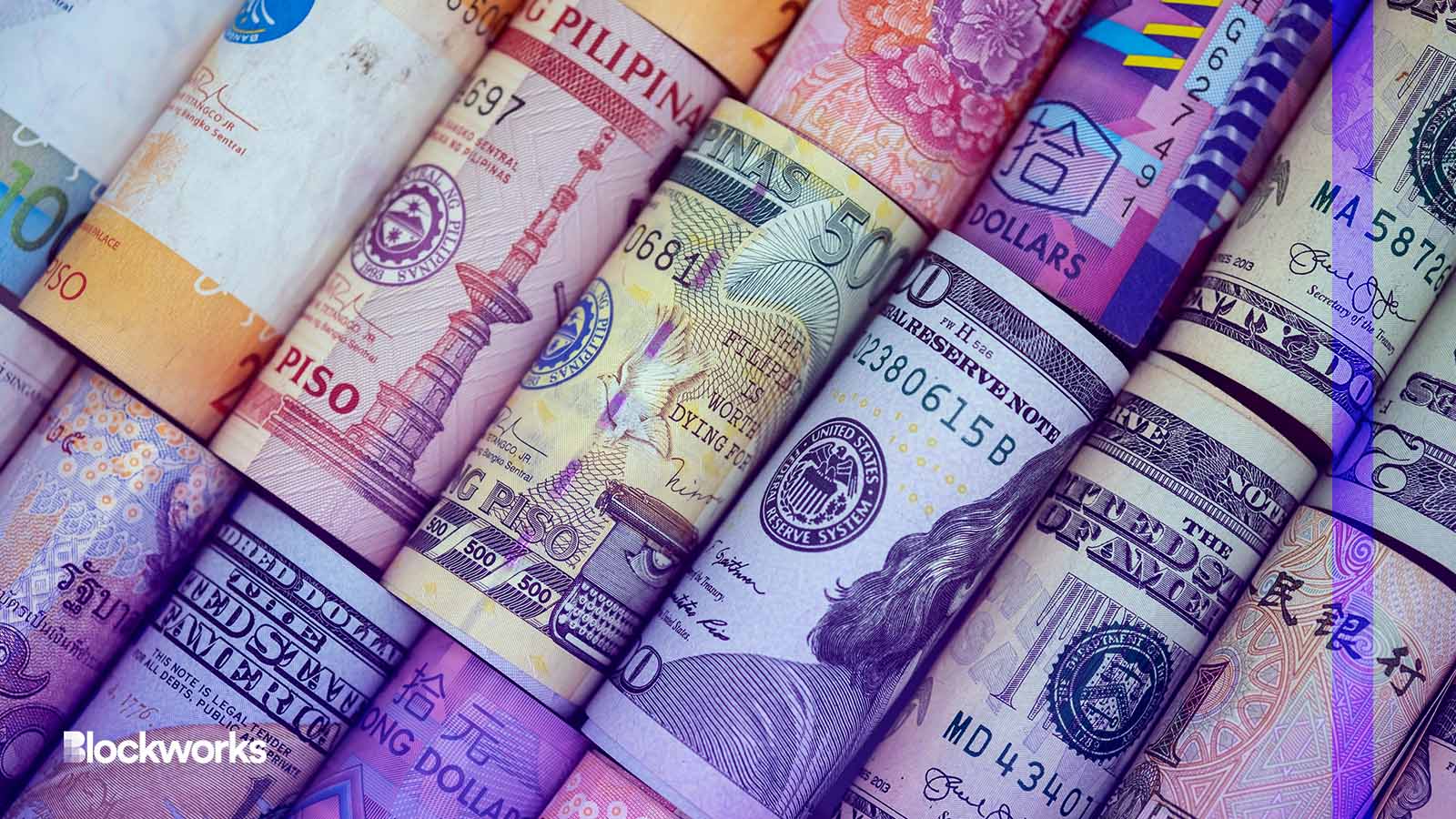
Dilok Klaisataporn/Shutterstock modified by Blockworks
Cross-border payments.
Anyone who has ever tried sending or receiving an international wire transfer knows the pain of the process all too well.
It can take days to resolve, can’t be tracked, and often costs up to $50 for what should be a simple transaction from one country to another.
When the word “blockchain” first entered the mainstream vernacular years ago, one dominant narrative was that it would solve the daunting problem.
As much as it’s a useful application of blockchain tech, it is kind of boring, Jason Yanowitz admits on the Bell Curve podcast (Spotify/Apple). Competing phenomena like DeFi and NFTs took over the scene for a period of time, leaving the more practical but less engaging topic to fade into the background.
But that doesn’t mean people haven’t been working on it in the meantime.
SAP, an enterprise software company that powers the underlying payment structure of a range of Fortune 500 and Fortune 1000 companies, has been working on a blockchain solution to the problem of international payments.
In a community blog, the company explains that the challenges of cross-border payments can be solved “with Digital Money as a means of settlement and Blockchain as the underlying technology.”
Using the stablecoin USDC, SAP is currently testing cross-border payments for their customers in a process they tout as being “as easy to use as online banking” and “a true solution for businesses.”
Time for a narrative comeback?
“This is a narrative that is completely dead” but it could make a comeback, Yanowitz says.
“You can really quickly imagine a world where millions of businesses all around the world,” he says, “can settle this intercompany trade instantaneously using USDC and other stablecoins.”
Michael Anderson, co-founder of Framework Ventures, notes that Federal Reserve Chair Jerome Powell recently stated that stablecoins should be considered money.
“It was one of the comments that he made yesterday, which I thought was pretty profound.”
Natively minting USDC on layer-2 solutions would further boost efficiencies in cross-border payments, Anderson suggests. Sending a token on a layer-2 rollup is “getting close to that one cent cost basis,” he says.
In a couple more iterations, he says, users could send “unlimited amounts of value for less than a cent over a layer-2.”
With native USDC minting, Anderson says, “you then have the security guarantees of USDC and the cost reduction that make payments viable.”
Podcast host Mike Ippolito is not as optimistic. “If you have a product and you can make something, like a service or product an order of magnitude better, but you have to add one step, good luck. You’re toast.”
The “three-hop friction point” persists, Ippolito says, requiring conversion from a currency to USDC and then finally to a foreign currency.
Yanowitz insists it’s at least a step forward. “Remember when everyone was talking about private ledgers? SAP is using public Ethereum for global trade with USDC.”
Adoption of the technology, Yanowitz says, “probably takes ten times longer than we realize.”
“Baby steps.”
Get the news in your inbox. Explore Blockworks newsletters:
- The Breakdown: Decoding crypto and the markets. Daily.
- 0xResearch: Alpha in your inbox. Think like an analyst.
