RBA Bond Buy Signals Yield Curve Control Now in Play
News from Sydney that the Reserve Bank of Australia has doubled down on its daily bond purchases to create a form of yield curve control has pushed up markets in Asia as traders see central banks beginning to cap yields. The […]
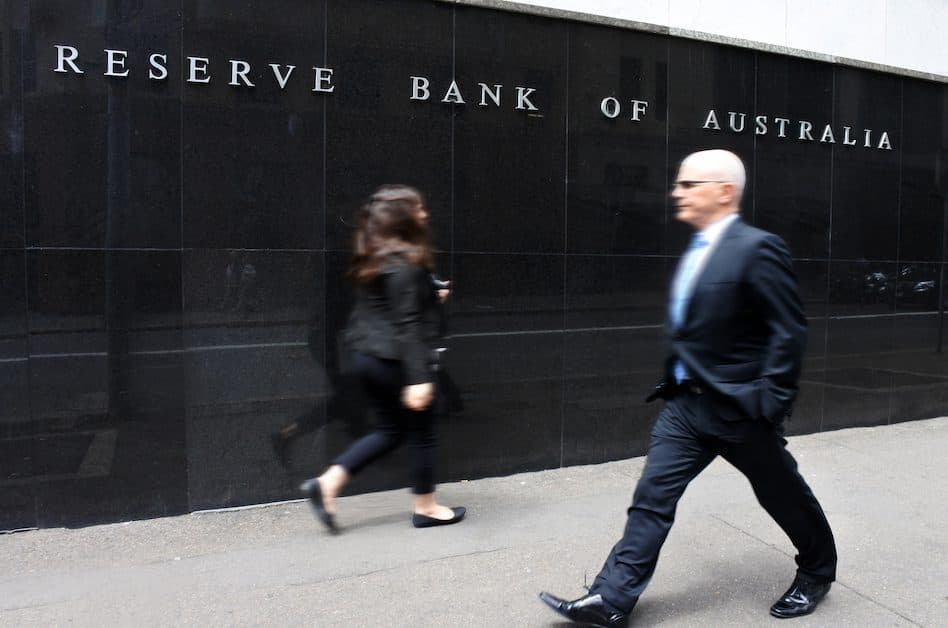
Source: Shutterstock
- Reserve Bank of Australia’s doubling of daily bond purchases is a move to control borrowing costs
- Cap on yields is key ingredient for a bullish market on risk assets like tech stocks and bitcoin
News from Sydney that the Reserve Bank of Australia has doubled down on its daily bond purchases to create a form of yield curve control has pushed up markets in Asia as traders see central banks beginning to cap yields.
The RBA announced Monday, Australia time, that it will be upping its bond buy from AUD $2 billion ($1.54 billion) to AUD $4 billion ($3 billion). This sent the Australian 10-year bond yield down to 1.61% after the announcement from 1.72% at the start of the trading day. Overall the ASX 200 was up 1.7%, with IT contractor Austal soaring 8.4% during the trading day followed by Commonwealth Bank advancing 3.1%.
With debt from the prolonged Covid-19 pandemic ramping up worldwide, central banks are aware that a spike in yields on long-term debt could create the very real possibility of insolvency and yield curve control is now on the table. In the US, the 10-year yield has been steadily climbing back from an August low of 0.51% to a peak of 1.6% Thursday. By the end of the US trading week rates had stabilized, dipping back down to 1.51%.
“Last week bond yields spiked. The RBA has responded to push interest rates down because high interest rates would mean economic, governmental and social implosion. Other central banks are acting likewise,” Clem Chambers, CEO of equity research platform ADVFN, told Blockworks.
This signal that central banks will step in to control yield, and thus the cost of long-term debt, was met with positive sentiment from traders in Asia. Tokyo’s Nikkei 225 index ended the trading day up 2.4%, Hong Kong’s Hang Seng index up 1.6%, and Singapore’s SGX was flat. In London, the FTSE 100 began the day strong up nearly 2%.
Yield control bad news for commodities and metals
While Asian markets and the ASX overall was up on the news, Australian commodities stocks posted mixed results to the news, as yield curve control makes inflation-hedging commodities less attractive to investors, with Iron ore giant BHP Group down 2% and Newcrest Mining down 0.73%. On a recent Blockworks webinar, panelists agreed that reflation-induced demand for tangible assets like precious metals would be a boon to resource rich economies such as Latin America or Australia.
“The next year is going to be a supercycle for tangible assets,” said Tavi Costa, a Partner at Crescat Capital, during the webinar, adding that there will be pumped-up demand for anything that “protects you against the destruction of fiat currencies.”
This next week, with fresh monetary policy announcements, will be a big test of Costa’s prediction. The RBA meets Tuesday where it is expected to announce interest rates, bond yield targets, and a new quantitative easing program.
All eyes are on bitcoin in era of yield curve control
Bitcoin and other digital assets are likely primed for recovery this week, after it posted its worst performance since March 2020 down over 20% to just over $43,000 from a high just below $60,000.
The price of bitcoin is up nearly 9%, blowing past $48,000 as investors turn back to alternative assets in search of yield now that central banks have signalled an intent to control rising yields.
In a report published Monday by Citi, the bank’s analysts wrote that bitcoin was at a “tipping point” arguing that now is the time for it to hit mass adoption or collapse via “speculative implosion”.
Traders are also noting potential supply-side issues, as China’s Inner Mongolia, a mining hotspot, announced Monday that it intends to ban all mining projects by the end of April in the name of cutting carbon emissions.
“Crypto is driven by central bank printing and it is already overheated by these actions. Whether more QE can push bitcoin much over a trillion in the near future is an open question,” ADVFN’s Chambers said.