El Salvador Makes Good on $800M Debt Despite ‘Bitcoin Bet’
Previous calls to reverse bitcoin as legal tender in El Salvador have been met by derision from the country’s president
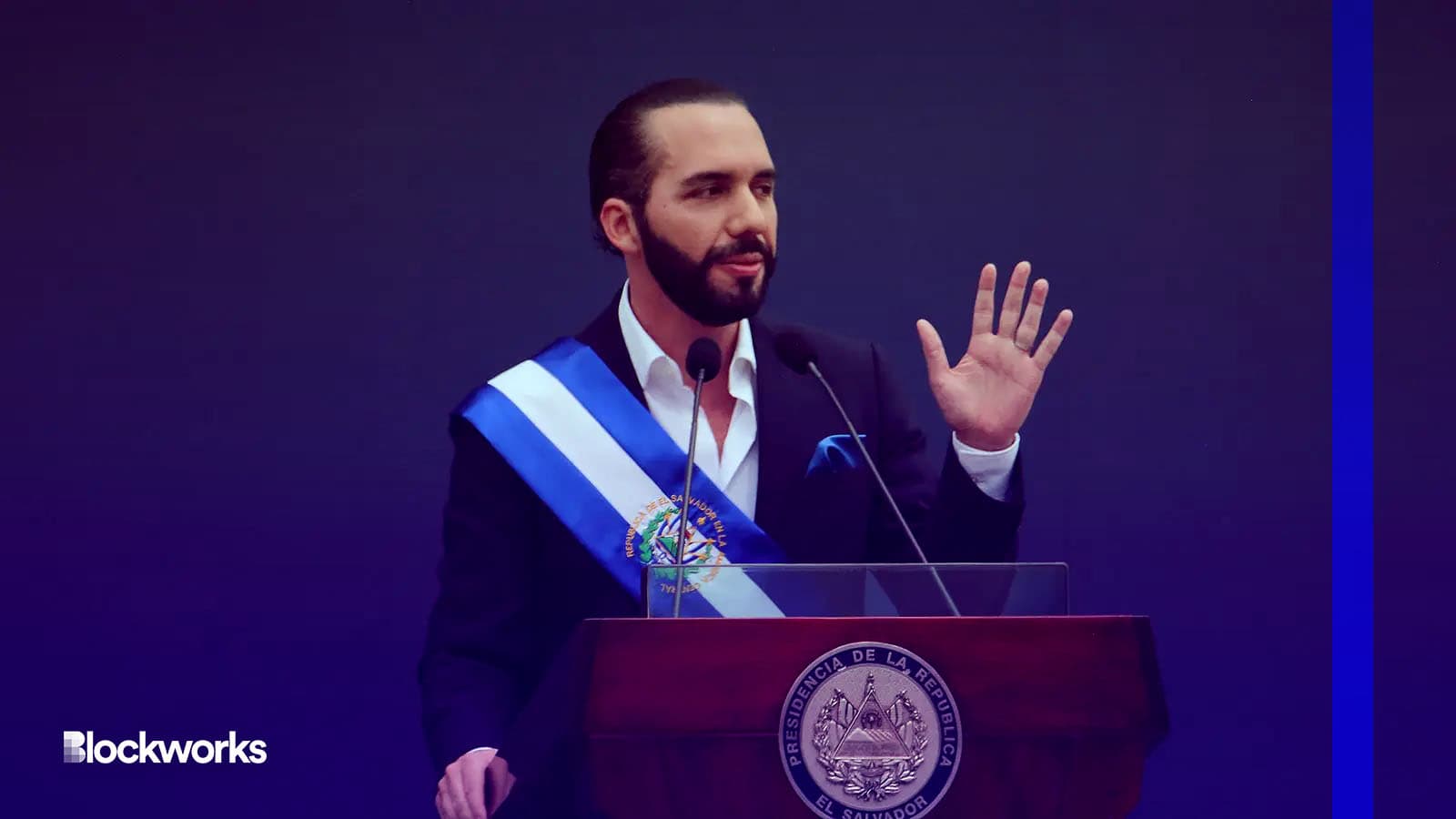
President Nayib Bukele | Source: Carlos Moronta/Presidencia República Dominicana (CC BY-NC-ND 2.0), modified by Blockworks
El Salvador’s President, Nayib Bukele, said Monday his country has paid back $800 million on an external bond despite concerns last year the country would default due to its “bitcoin bet.”
Investors holding the Eurobond have been paid out after the country completed its transfer of funds to international creditors, offering a rebuttal of sorts to criticisms levied at the president’s regime.
“In the past year, almost every legacy international news outlet said that because of our ‘bitcoin bet,’ El Salvador was going to default on its debt by January 2023,” Bukele tweeted Monday. “Well, we just paid in full, $800 million dollars plus interest.”
Last year, El Salvador offered to buy back some of its debt as part of a repurchase plan in a bid to counter criticisms the country would default. Eurobonds assist organizations and countries in raising capital for infrastructure projects, among other uses, and are typically issued in another currency.
Bukele’s government had initially set a purchase price of $910 for its January 2023 bonds and $540 for bonds maturing in 2025 in September, both totaling $800 million.
Bitcoin play
El Salvador became the world’s first nation to adopt bitcoin as legal tender, alongside the USD, in September 2021 amid praise from digital asset industry participants and investors.
The project saw the purchase of bitcoin using public funds, as well as the rollout of a national digital wallet dubbed “Chivo.” The wallet initially saw a large uptick due to an offering for citizens to claim $30 in BTC for signing up.
Despite its initial uptake, major rating agencies and the International Monetary Fund throughout last year warned against bitcoin’s volatility, as concerns over the country’s exposure to the asset class mounted following a severe market rout in the second quarter.
By May, bitcoin had fallen more than 50% courtesy of an implosion of Terra’s ecosystem, sending markets reeling and prompting calls from the IMF to reverse El Salvador’s decision.
Despite industry headwinds, Bukele’s government has continued to buy up the asset, including purchasing a further 80 BTC at $19,000 apiece in July, shortly after the market had tanked.
Bukele announced in November that he would begin buying 1 bitcoin per day — a dollar-cost-averaging strategy that, if pursued from the outset, would have saved the country millions.
According to NayibTracker, which tracks the country’s total holdings as well as the time of its purchases based on Bukele’s tweets, El Salvador holds some 2,516 BTC worth $57.9 million, down about $51.5 million at a cost of $109.5 million.
Get the news in your inbox. Explore Blockworks newsletters:
- The Breakdown: Decoding crypto and the markets. Daily.
- 0xResearch: Alpha in your inbox. Think like an analyst.
