Bigcoin mining game faces Ponzi allegations amid token price swings
Abstract app Bigcoin has polarized Crypto Twitter with its mining simulator
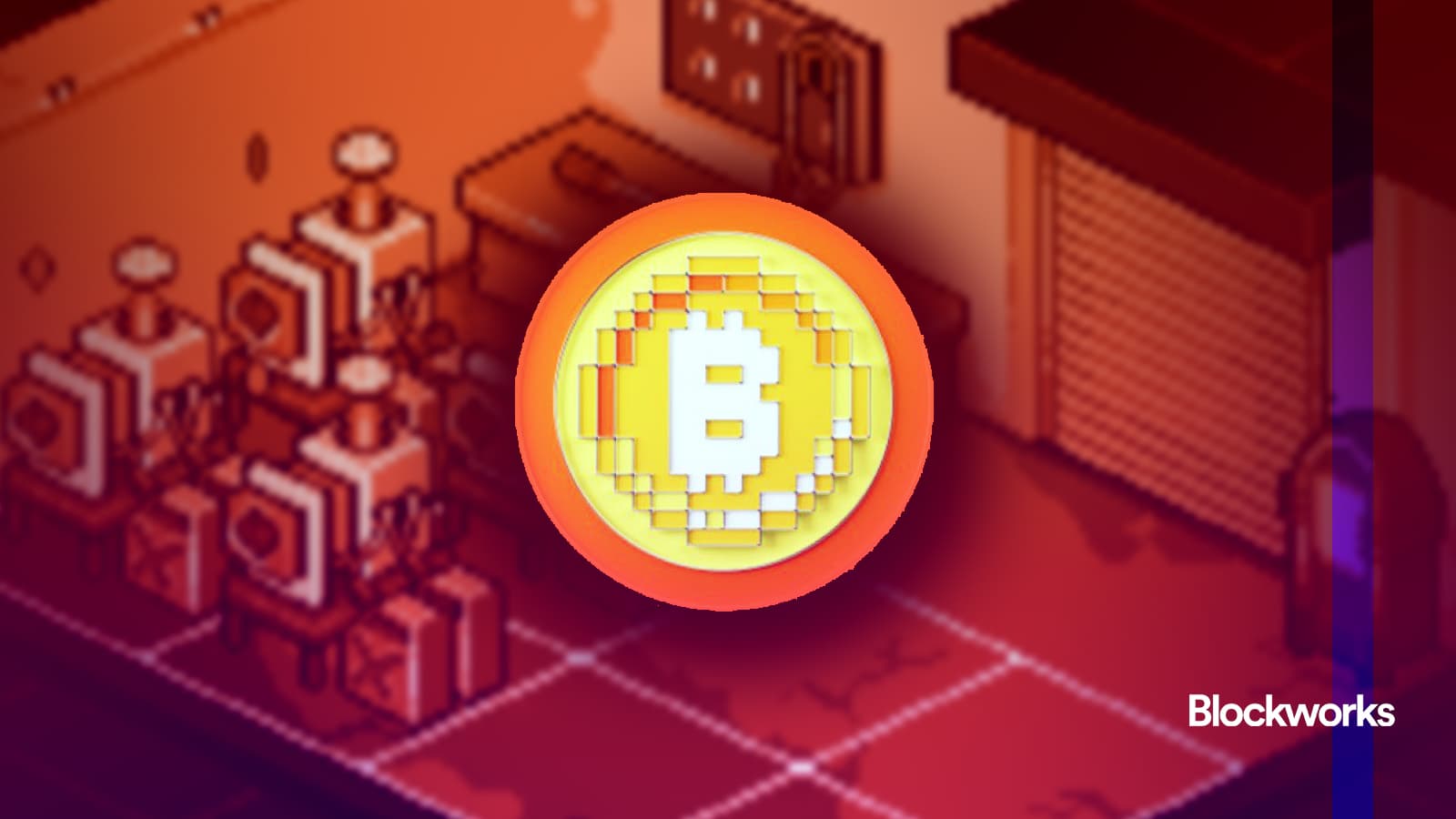
Bigtoin and Bigtoshi, modified by Blockworks
This is a segment from The Drop newsletter. To read full editions, subscribe.
Abstract, the Ethereum L2 blockchain that claims it’s “leading the next generation of consumer crypto,” is featuring and endorsing a crypto mining game that some have accused of being a Ponzi scheme.
Abstract has added “The Big Badge” as a visual badge reward for users who engaged with Bigcoin, an app that gamifies the BIG token and lets players “mine” the token from their virtual “facilities.”
“Bigcoin aims to become the most recognized coin on the planet by combining the proven emission mechanics of Bitcoin with viral, community-driven incentives,” the token’s white paper reads. Pseudonymous X user “Satoshi Bigmoto,” also known as “Bigtoshi,” is listed as Bigcoin’s creator and white paper author. Their account was created in February, just a few months ago.

But to “mine” BIG and increase their hash rate, players have to buy “miners” for their pixelated “facilities” using BIG itself (both the size of one’s facility and the number of miners increase one’s hash rate). Players also have to spend BIG to “upgrade” those virtual mining rooms.
Abstract Marketing Lead Phin Totten confirmed to me that Bigcoin isn’t actually using players’ physical computers to mine the token — and that the token isn’t actually being mined at all. Instead, what’s happening is a simulation, facilitated by the token’s smart contract.
One X user declared over the weekend that “Bigcoin has taken the timeline by storm and made a lot of money for people who got in early,” adding, “Congrats to everyone who got in early.”
While others have argued that all of crypto is a Ponzi scheme, Bigcoin has less utility and less legitimacy than its inspiration, Bitcoin, which has been adopted by Wall Street in the form of bitcoin ETFs.
Cornell Law School defines a Ponzi scheme as: “a type of investment fraud in which investors are promised artificially high rates of return with little or no risk. Original investors and the perpetrators of the fraud are paid off by funds from later investors, but there is little or no actual business activity that produces revenue. The scheme generates funds for previous investors so long as there is a consistent flow of funds from new investors.”
It’s currently unclear what the point of Bigcoin is, however, besides enriching miners who “got in early” with a layer of gamification on top.
Despite its token burn and sink mechanisms intended to help keep the token’s price higher, BIG’s price has fluctuated and can be as volatile as other low-cap tokens. It had a market cap of $6.9 million as of 11:15 am ET Monday morning, per Gecko Terminal data.
A few minutes later, its market cap spiked to $7.5 million. It then lost about 15% of its market cap in less than an hour, then regained that loss just as quickly and then lost it again.
The token’s price had spiked 40% in the past day as of Monday morning, but it quickly fell to just a 12% gain, showing big price swings.
Get the news in your inbox. Explore Blockworks newsletters:
- The Breakdown: Decoding crypto and the markets. Daily.
- 0xResearch: Alpha in your inbox. Think like an analyst.
