Biden’s $18B Crypto Tax Tweet Puzzles Industry
Joe Biden says crypto tax loopholes cost the government $18 billion, but where does that number come from?
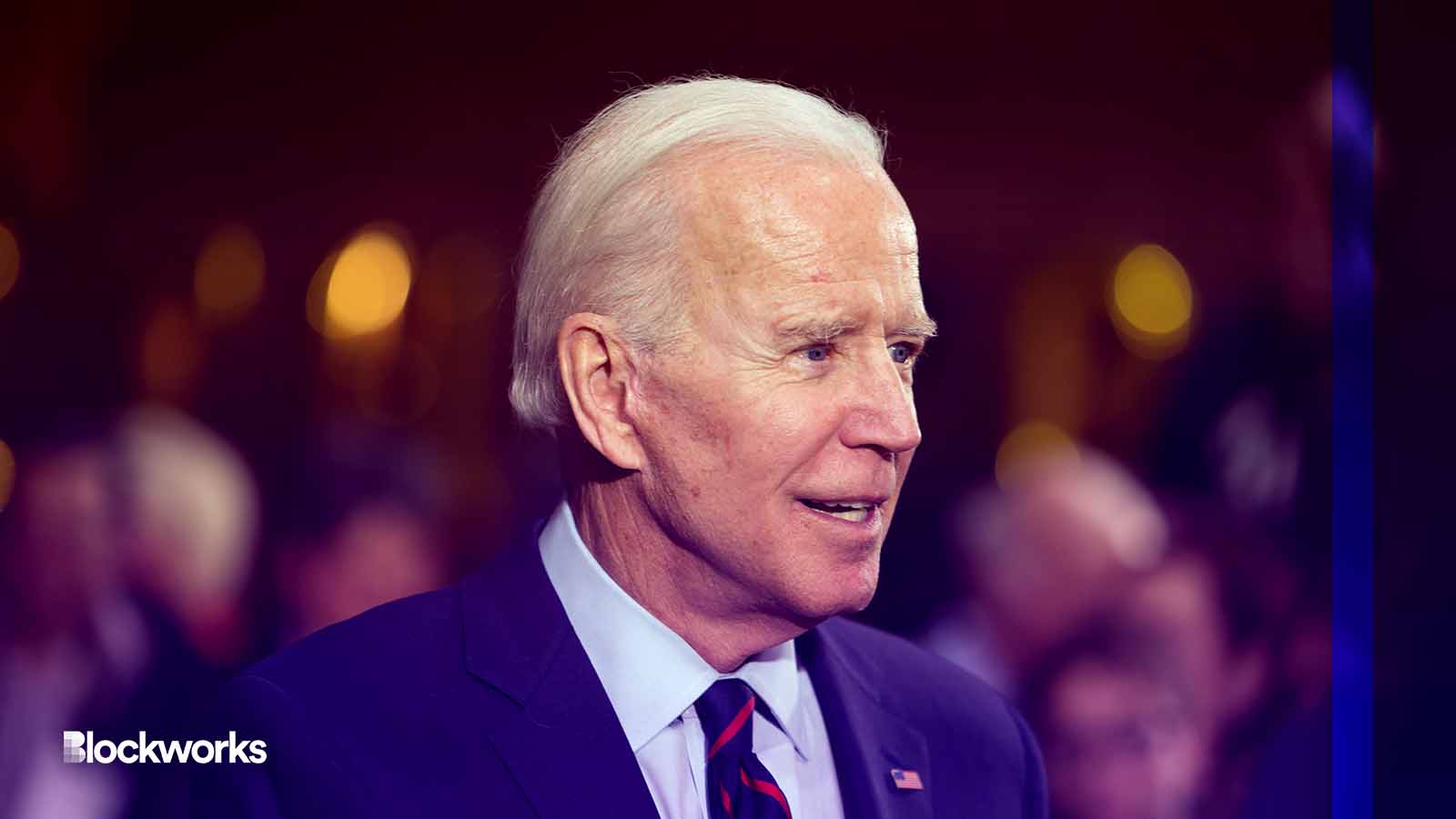
US President Joe Biden | Trevor Bexon/Shutterstock modified by Blockworks
In a tweet castigating Republicans for their budget priorities, President Joe Biden claimed on Tuesday that if Congress got rid of “tax loopholes that help wealthy crypto investors,” it would net the government $18 billion.
Crypto industry participants were confused, to put it mildly, with no small number decrying the president’s assertion — and denying the very existence of a so-called crypto tax loophole.
Adam Cochran, a managing partner at the digital assets-focused Cinneamhain Ventures, tweeted, “Crypto actually suffers compared to other assets on how gains are taxed on transfer between asset types. I’d challenge absolutely anyone to cite this supposed loophole.”
In the Biden budget, eliminating the wash sale loophole for digital assets is forecast to bring in $23 billion over the next ten years. In 2024, however, that number is only anticipated to be $1.24 billion.
The question is, where is Biden getting the $18 billion figure from?
The Wall Street Journal reported in March ahead of the budget’s release that the president proposed a change to how crypto transactions are taxed that would raise $24 billion. The administration, at the time, said that crypto assets weren’t subject to the same wash trading rules that apply to stocks and bonds.
The wash trading exception in crypto has previously allowed traders to sell assets at a loss and buy them back rapidly. Stock traders in the US are prohibited from wash trading, which can result in illicit tax benefits.
Bloomberg reported last week that crypto traders have still been avoiding billions of dollars in taxes by exploiting wild price swings and employing wash trade tactics.
In a paper the outlet cited from the National Bureau of Economic Research, if traders had been sophisticated enough to use these tactics in 2018 (when Bitcoin crashed) at the scale they are now using the wash trading exception, the US Treasury would have lost a projected $16 billion.
And a 2022 research note from Joseph Abate at Barclays estimated that the funding gap from unpaid taxes by crypto traders could amount to around $50 billion a year, an extrapolation based on a 2017 IRS calculation.
But nowhere except for the president’s tweet does the crypto tax loophole seem to amount to $18 billion.
This isn’t the first time Biden has drawn the ire of those in the crypto industry. He recently proposed a 30% tax on the cost of the electricity used by bitcoin mining, prompting mining companies to push back in strong terms.
The White House didn’t immediately return a request for comment on Biden’s tweet.
Get the news in your inbox. Explore Blockworks newsletters:
- The Breakdown: Decoding crypto and the markets. Daily.
- 0xResearch: Alpha in your inbox. Think like an analyst.
