Blog / Blockworks Update
Blockworks launches the Transparency Alliance
A collective of leading exchanges, market makers, funds, and protocols are backing the Token Transparency Framework
By Robert Burkhart ·
Today, Blockworks launches the Transparency Alliance, an industry group that exists to establish transparency around tokens via standardized disclosures, market integrity, and the adoption of the Token Transparency Framework (TTF).
The founding cohort spans leading crypto exchanges, custodians, market makers, venture funds, launch platforms, and stablecoin issuers.
Token markets have an asymmetry problem, where issuers and insiders have access to material information that ordinary tokenholders cannot easily access. Unlike public markets, no widely adopted standard exists for accessing this information for tokens, which reduces tokenholder trust.
The TTF establishes the standard, and Transparency Alliance members, who collectively span every major layer of token capital markets, drive its adoption.
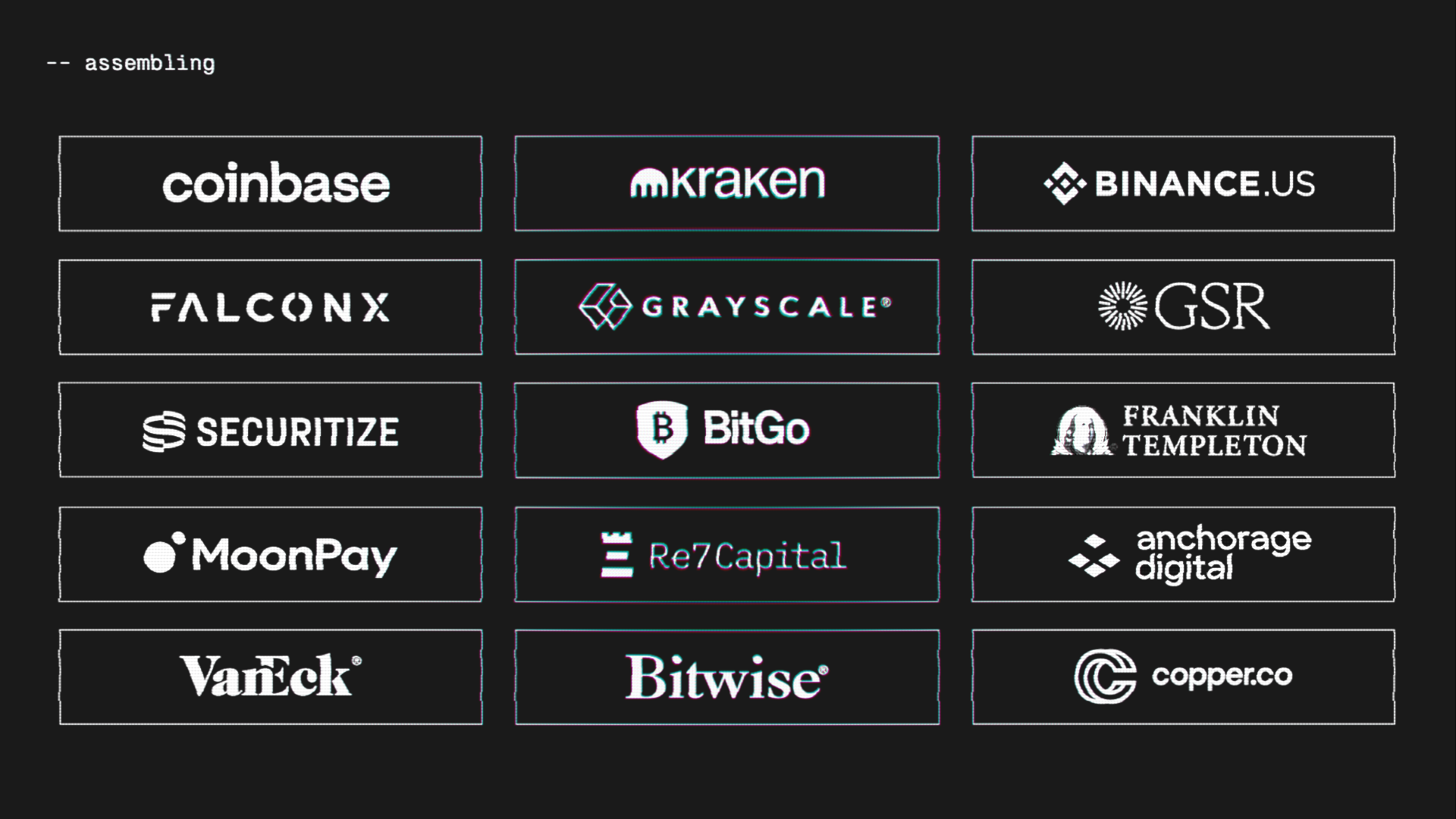
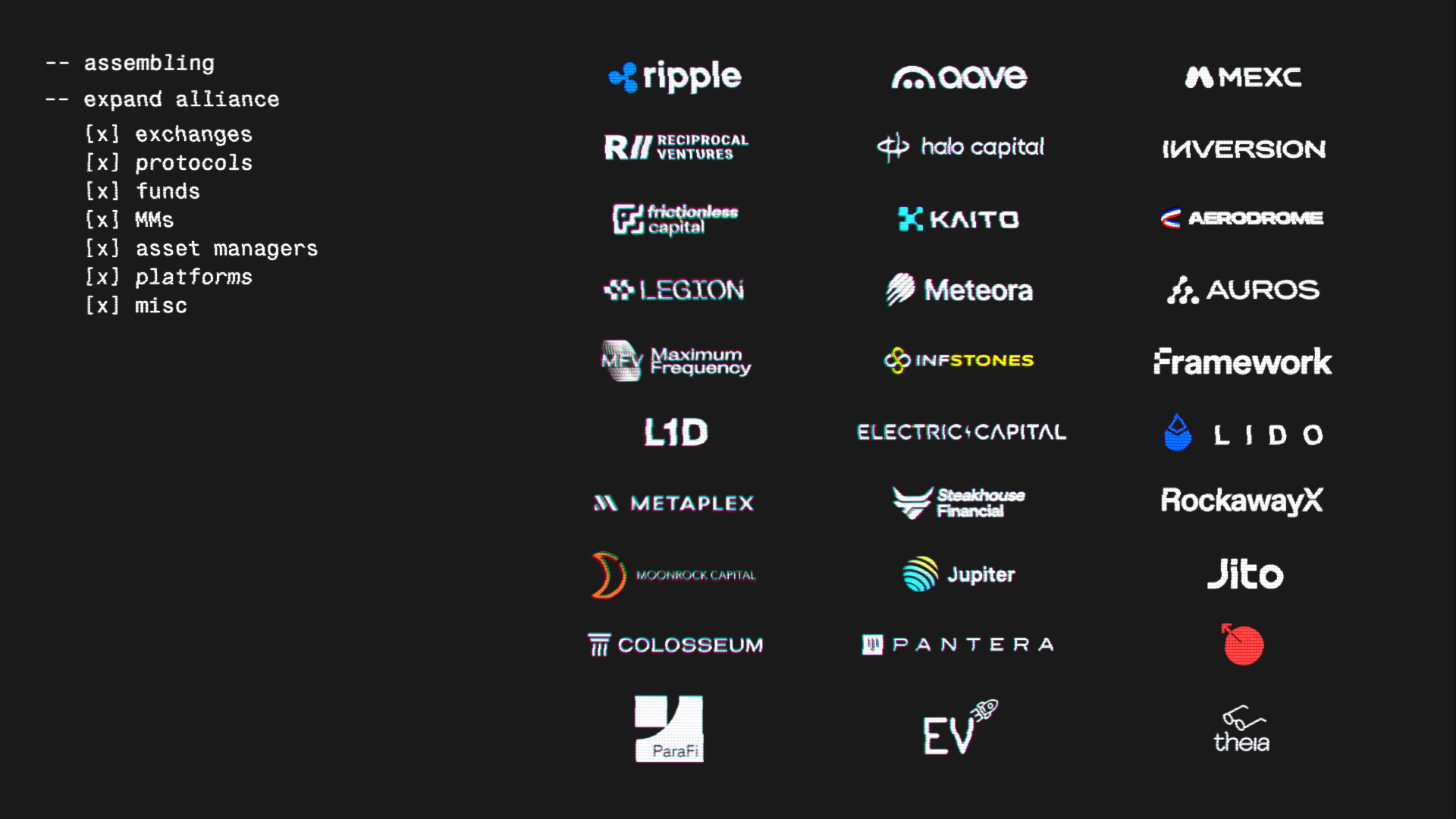
Founding members include: Coinbase, Binance.US, Kraken, Grayscale, Anchorage Digital, Moonpay, BitGo, Vaneck, Bitwise, Copper, Jito, Securitize, GSR, FalconX, Auros, Aerodrome, Aave, Ripple, MEXC, and more.
There is a pattern in financial markets that often repeats itself: markets innovate, industries establish standards, and governments later formalize some of those practices through regulation.
As Congress advances the CLARITY Act, it is clear that crypto markets are moving toward stronger classification, disclosure, and transparency standards. In the lead up to formal rule making, the industry can help develop the disclosure norms that responsible markets deserve.
We need a voice at the table, and the Transparency Alliance is how we give the industry that voice.
"We at Coinbase have long supported stronger disclosure standards and market integrity for token markets. We are excited to work with others across the industry to help make this a reality with the Token Transparency Framework. ” – Clay Maffett, Director of Asset Listings, Coinbase
“The Token Transparency Framework provides straightforward, clear criteria to evaluate crypto assets. We are pleased to join the Transparency Alliance in support of its mission to create stronger disclosure standards and market integrity in token markets.” – Stephen Gregory, CEO, Binance.US
The Disclosure Gap
The problem is not that projects are unwilling to be transparent. The problem is that the industry has never had a standard for transparency.
Every exchange runs its own due diligence. Every fund builds its own models from scratch. Every tokenholder pieces together information across governance forums, Discord channels, X threads, and Medium posts.
And the information that matters most, market maker agreements, insider token allocations, entity structure, buyback programs, is almost never disclosed. Not because it cannot be, but because the framework necessary to make it happen has not existed. Until now.
The Token Transparency Framework
The Token Transparency Framework is the bedrock of the Alliance’s early efforts.
“Our mission is to build trust in onchain markets. The core issue is simple: when investors buy a stock, they understand what they own. When they buy a token, they do not. Critical information is often scattered, incomplete, or unavailable. We launched the Token Transparency Framework to bring disclosures to crypto and to improve the industry.” – Jason Yanowitz, Co-founder, Blockworks
In June 2025, Blockworks launched the Token Transparency Framework, the first open-source disclosure framework for digital assets. The TTF provided a standardized way for any project to put material information on the record. Blockworks met with the SEC and the CFTC about the TTF as recently as April 2026. Since then, the standard has expanded.
Two distinct filing options now live under the TTF: the B-1, a one-time filing around token generation events that can be thought of as the S-1 of digital assets, and the B-2, a continuously updated filing for mature protocols. Both filings are classification-agnostic and do not predetermine legal classification under any specific regime.
Each filing is assessed for completeness, not quality. They receive a completeness label that displays the items yet to be fully completed. For example, a “Partial” label indicates the project has not fully disclosed all information, whereas a “Complete” label indicates the project has fully disclosed all information.
Since the TTF launched, 44 protocols have completed filings, including protocols like Jito, Aerodrome, Morpho, DYDX, Spark, Jupiter, and ZKsync.
By the end of 2026, we aim to have more than 200 protocols with public disclosures.
What Comes Next
Alliance members have agreed to utilize the TTF as a core input in their diligence processes. They have the opportunity to shape the standard going forward by exploring, creating, or removing line items.
The TTF is designed to be built from the ground up by the industry.
For founders, the B-1 filing should become the new default for market entry. For mature protocols, the B-2 should be the standard for continual disclosure. For exchanges and tokenholders, these filings are the fastest way to evaluate the integrity of a project.
The Transparency Alliance exists to make certain we bring trust back to onchain markets.
Find the Token Transparency Framework at blockworks.com/token-transparency.
Reach out to [email protected] to get involved.
Back to Blog
Markets, protocols, and policy, read by 200K+ professionals.